- Focus on productivity and sustainable cultivation
- Technology transfer to support farm-level adoption
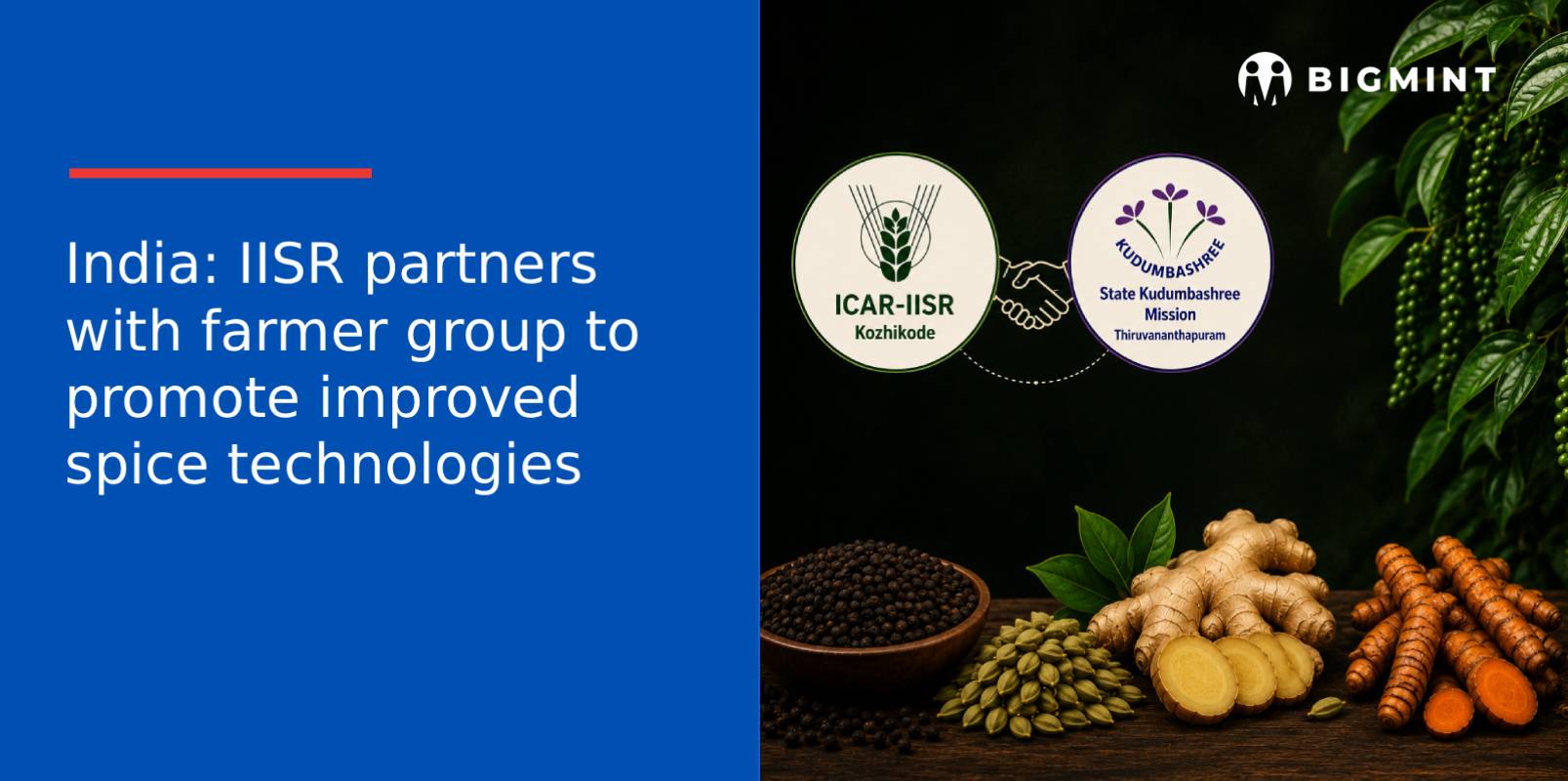
The Indian Institute of Spices Research (ICAR-IISR), Kozhikode, has entered into a Memorandum of Understanding (MoU) with the State Kudumbashree Mission, Thiruvananthapuram, to promote improved spice production technologies and strengthen technology transfer at the farm level.
Focus on key spices
The initiative covers key spices, including black pepper, cardamom, ginger, and turmeric, with emphasis on improved planting material, nutrient management, pest and disease control, and post-harvest practices. IISR has developed technologies including soil-test-based fertiliser recommendations, micronutrient mixtures, biofertilisers, Plant Growth-Promoting Rhizobacteria (PGPR), and biocapsules.
Strengthening technology transfer
The partnership is expected to help bridge the gap between research and field-level adoption through farmer training, demonstrations, and wider dissemination of improved cultivation practices. IISR’s recent field programme reached around 29,128 farmers across 165 villages in Kerala and Karnataka, supporting the transfer of improved varieties and sustainable production technologies.
The initiative comes as spice production in Kerala faces challenges related to productivity, crop health and changing weather conditions. Black pepper production in the state declined to 29,503 tonnes (t) in 2024-25 from 46,298 t in 2012-13, while ginger production fell to 11,260 t from 37,125 t over the same period.
The MoU is expected to support gradual improvements in farm productivity, crop quality, and production sustainability. Its impact on overall spice supply is likely to become visible over multiple crop cycles as technology adoption expands.
Leave a Reply