- LME inventories fell 32% m-o-m to 207,725 tonnes
- Sulphur prices raised sulphuric acid costs for SX-EW producers
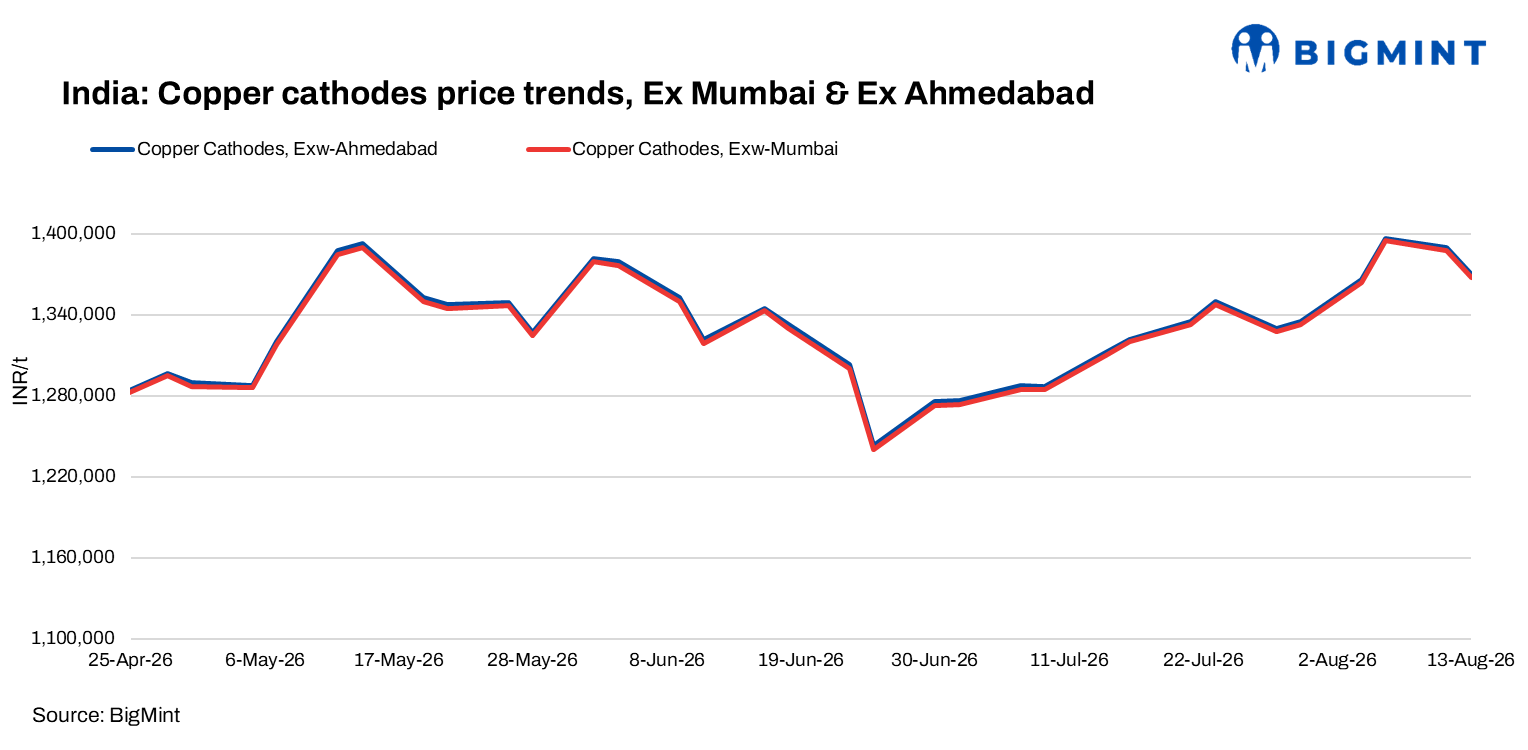
Copper cathode prices in western India eased w-o-w during the week ended 13 August 2026, as high global copper prices continued to suppress downstream demand. As per BigMint’s assessment, ex-Mumbai copper cathode prices declined to around INR 1,368,000/t on 13 August from nearly INR 1,395,000/t last week. Similarly, Ahmedabad prices eased to around INR 1,370,000/t from approximately INR 1,397,000/t over the same period. Elevated raw-material costs prompted consumers to defer purchases and limit procurement to immediate requirements, weighing on fresh orders and downstream operating rates.
The decline in domestic prices was primarily driven by subdued downstream demand. LME copper prices eased slightly to around $14,091/t from $14,217/t last week but remained above the $14,000/t mark and at elevated multi-month levels. MCX copper prices also remained firm, rising around 4% w-o-w. High global copper prices have increased procurement costs for downstream manufacturers, prompting them to reduce inventory holdings and purchase only against immediate requirements.
The weakness in domestic demand came despite firm global copper fundamentals. LME inventories declined around 32% m-o-m and 7% w-o-w to 207,725 tonnes, reinforcing concerns over tightening physical availability. The sharp inventory drawdown continued to provide underlying support to international copper prices and limited the downside in the global market.
Market sentiment
Market sentiment in the Indian copper cathode market remained cautious to weak, with high copper prices emerging as the key factor weighing on physical demand. Downstream consumers were reluctant to chase prices at elevated levels and largely adopted a hand-to-mouth procurement strategy, purchasing only to meet immediate production requirements.
Lower operating rates among copper-consuming industries, particularly wire and cable manufacturers, further weakened demand as high copper prices raised raw-material costs, squeezed margins and reduced buying interest. The traditional seasonal slowdown in copper consumption amplified the impact, prompting manufacturers to cut production, reduce raw-material requirements and avoid inventory accumulation.
Consequently, fresh orders and spot demand for copper cathode remained weak, while sellers faced greater resistance to higher offers.
Global supply concerns also remained intact. Weaker-than-expected Chilean mine production continued to weigh on the supply outlook, while improved production from Peru provided only limited relief. The global concentrate market therefore remained relatively tight, supporting elevated copper prices even as downstream consumption weakened.
Adding to supply-side concerns, rising sulphur prices have increased sulphuric acid costs for SX-EW copper producers. Higher input costs could encourage some producers to reduce or curtail cathode output, potentially further tightening refined copper availability.
The pending US Section 232 decision remains another key uncertainty for the global copper market. The possibility of continued copper flows towards the US to capture regional premiums could tighten availability in other markets and keep global prices elevated. However, sustained high prices could simultaneously weigh on consumption, particularly in price-sensitive downstream markets such as India.
Outlook
The near-term direction of the Indian cathode market will therefore depend on the balance between weak downstream consumption and tight global supply. A recovery in downstream operating rates and fresh orders could support prices, while continued high global copper prices and weak end-user demand could exert further downward pressure on domestic cathode prices.
Market sentiment is likely to remain cautious, dominated by fear of high prices, wait-and-see behaviour and limited new orders. Buyers are expected to maintain a hand-to-mouth procurement strategy until prices become more attractive or downstream orders improve.
However, the downside may remain limited by tight global supply conditions. Continued LME inventory drawdowns, constrained mine supply and elevated international benchmarks are likely to provide a floor to copper prices.
Leave a Reply