- Domestic scrap recovery will become increasingly strategic
- EPR needs stronger traceability, financing and market integration
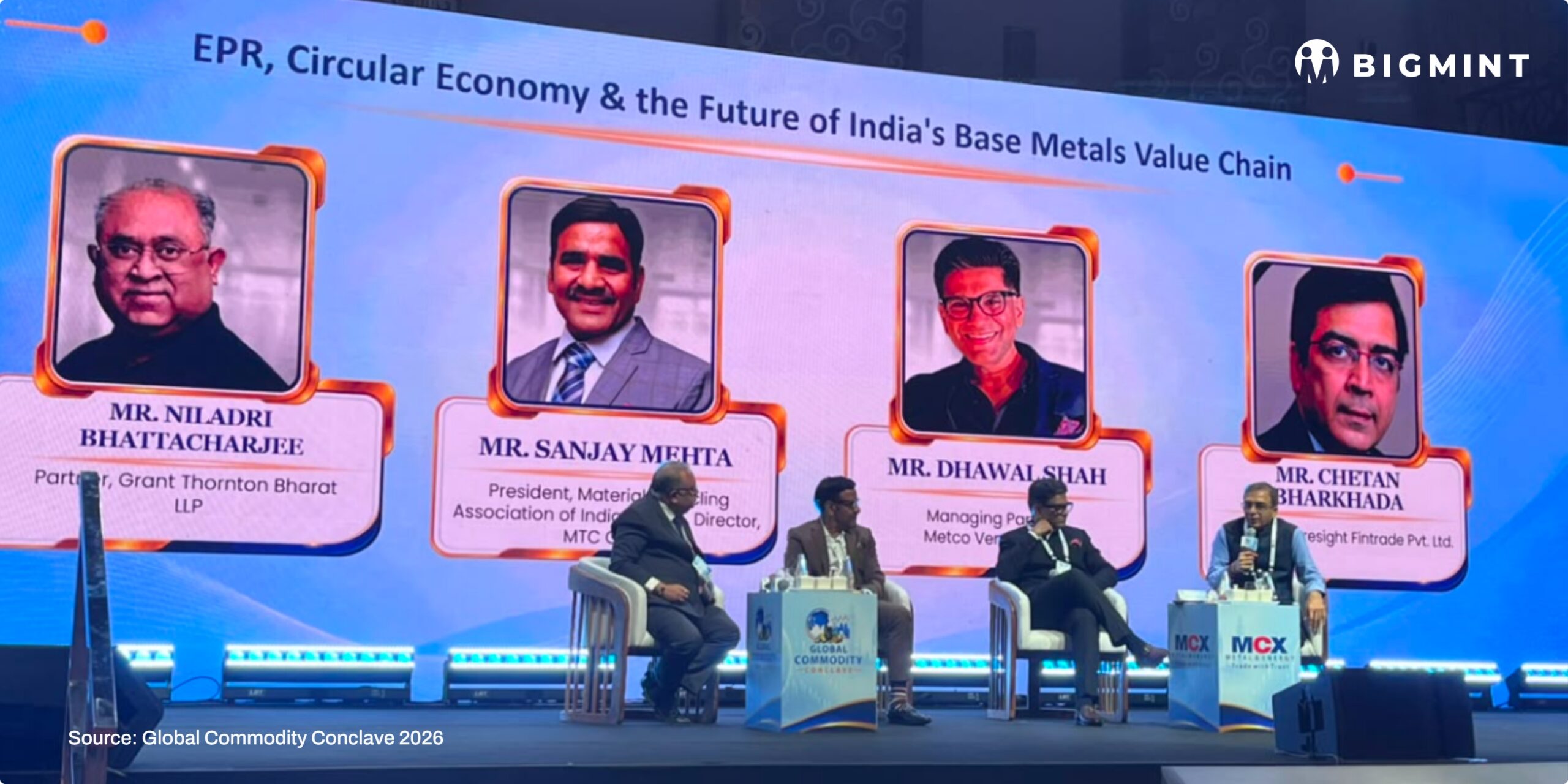
The Global Commodity Conclave (GCC) 2026, hosted by MCX with BigMint as the Event Partner, is being held from 12-14 August 2026 at the Jio World Convention Centre, Mumbai. Speaking at the session “EPR, circular economy & the future of India’s base metals value chain,” panelists highlighted the need to strengthen domestic scrap collection, recycling and secondary metals infrastructure as India moves towards a more circular economy. The discussion focused on EPR implementation, imported scrap dependence, financing, pricing mechanisms, taxation and stronger integration between informal and organized recycling.
Domestic scrap becomes increasingly important
Panelists noted that EPR implementation across waste streams is still evolving. While the framework places greater responsibility on producers and brand owners, its effectiveness will depend on stronger collection networks, better traceability and greater integration of informal recyclers into organized channels.
India’s dependence on imported scrap makes domestic recovery increasingly important. The US, Europe and the Middle East are increasingly seeking to retain recyclable materials within their own economies, potentially making imported scrap more challenging to secure. Vehicle scrappage and stronger domestic collection mechanisms could therefore become important sources of future scrap supply.
EPR needs credible markets and financing
The credibility of EPR certificates will depend on genuine physical recycling, reliable data and effective verification. Linking EPR transactions with relevant commodity prices and organized exchanges such as MCX could improve transparency and price discovery.
A stronger connection between physical scrap markets and commodity exchanges could also support hedging by recyclers. Futures and options could help organized players manage metal-price exposure where scrap quality, metal content and recovery rates vary.
Financing remains another constraint, particularly for smaller collectors and recyclers. Specialized financing, concessional funding and exchange-linked mechanisms could support investment in collection, sorting and recycling infrastructure.
Policy support will shape competitiveness
Tax and trade policies will remain important for formalization and competitiveness. The 18% GST applicable to certain scrap and raw-material transactions can create challenges across the fragmented value chain, while the industry is seeking removal of the 2.5% import duty on aluminium scrap.
Domestic secondary producers also face competition from imported value-added products, with differences in duty structures and free-trade agreements sometimes making imports more competitive. Addressing these gaps could improve capacity utilisation and strengthen India’s secondary metals industry.
Greater cooperation between primary and secondary producers will also be important, with secondary metals helping improve resource efficiency and reduce the carbon intensity of metal supply.
Scrap becomes a strategic resource
India’s long-term metals strategy will need to focus on both mineral resources and secondary metal availability. Stronger links between EPR, domestic scrap generation, formal recycling, transparent pricing, technology and financing could significantly improve secondary metal availability.
With appropriate policy support and greater integration of informal collectors into organized recycling networks, India could significantly expand its secondary metals industry and strengthen its position as a major global recycling hub.
The Global Commodity Conclave (GCC) 2026, hosted by MCX and partnered by BigMint
Leave a Reply