- LME inventories continue to decline despite a m-o-m correction in aluminium prices
- NALCO reverses late-July price cut as global supply-demand fundamentals remain supportive
National Aluminium Company Ltd. (NALCO) has increased the basic prices of all domestic aluminium metal products by INR 8,400/t effective 1 August 2026, according to a notification on the company’s customer portal. The revision follows stronger global aluminium fundamentals and resilient domestic demand.
The latest increase comes just days after NALCO reduced prices by INR 6,200/t on 29 July. It is the company’s largest upward revision in recent weeks and signals renewed confidence in market conditions.
Frequent revisions reflect volatile market
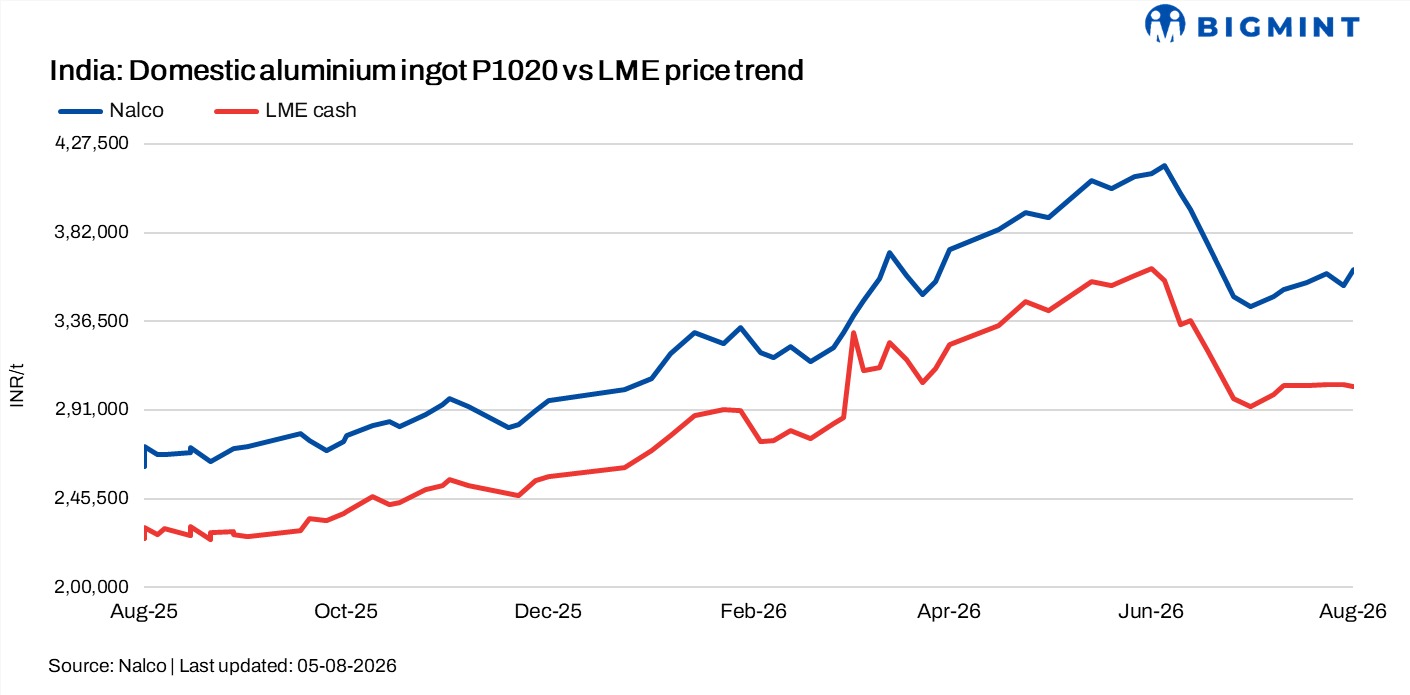
NALCO has revised its domestic aluminium prices 18 times since April. The company raised prices sharply during May before implementing significant cuts in June, when global aluminium prices corrected. It then switched back to a series of upward revisions through July.
After cutting prices by INR 17,300/t on 18 June and INR 27,500/t on 26 June, NALCO announced five consecutive increases totalling INR 22,100/t during July. The company briefly reduced prices by INR 6,200/t on 29 July before raising them again by INR 8,400/t on 1 August.
This pricing pattern shows how closely domestic producer prices continue to track movements in international aluminium markets.
LME inventories continue to tighten
Global aluminium prices remain well supported despite recent volatility.
The London Metal Exchange (LME) three-month aluminium contract traded at $3,223/t, up 0.03% on the day. LME aluminium inventories fell 0.66% to 262,650 t, extending the recent decline in exchange stocks.
On a m-o-m basis, the LME three-month contract stood at $3,236.5/t, down 11.65% from recent highs. However, inventories dropped a much steeper 22.17% to 260,900 t over the same period.
The decline in inventories suggests that physical market conditions remain tighter than headline price movements indicate. Market participants continue to monitor stock levels because lower inventories often support producer prices and physical premiums.
Integrated operations support NALCO’s margins
NALCO remains one of India’s most integrated aluminium producers. The company operates captive bauxite mines, alumina refineries and power plants, reducing its exposure to fluctuations in raw-material costs.
As a result, stronger aluminium prices generally improve the company’s metal realisations more directly than they do for producers that rely on third-party raw materials or power purchases.
Global aluminium fundamentals also remain supportive. Infrastructure spending, transportation demand and the clean energy transition continue to drive aluminium consumption. At the same time, high electricity costs in several regions keep production costs elevated, supporting prices despite increased output from China and Indonesia.
Higher producer prices raise downstream costs
The latest revision will increase input costs for downstream aluminium consumers.
Manufacturers of extrusions, rolled products, cables, conductors, automotive components, packaging materials and renewable energy equipment will all face higher raw-material costs. Many buyers are expected to continue purchasing only for immediate requirements while monitoring future price movements.
Smaller fabricators and MSMEs may experience greater cost pressure because they have less flexibility to absorb higher aluminium prices. Any sustained increase in producer prices could gradually pass through the manufacturing value chain.
Outlook remains constructive
NALCO’s latest price increase suggests that domestic producers remain optimistic about aluminium market fundamentals. Falling LME inventories and resilient demand continue to support sentiment, even after the recent correction in benchmark prices.
Going forward, traders will watch LME inventory movements, Chinese demand, global supply additions and broader macroeconomic conditions. These factors will determine whether domestic aluminium prices extend their recent gains or face renewed pressure from weaker international benchmarks.
Leave a Reply