- Monsoon slowdown to dampen construction-linked demand
- Distributors have ample inventories, reducing need for restocking
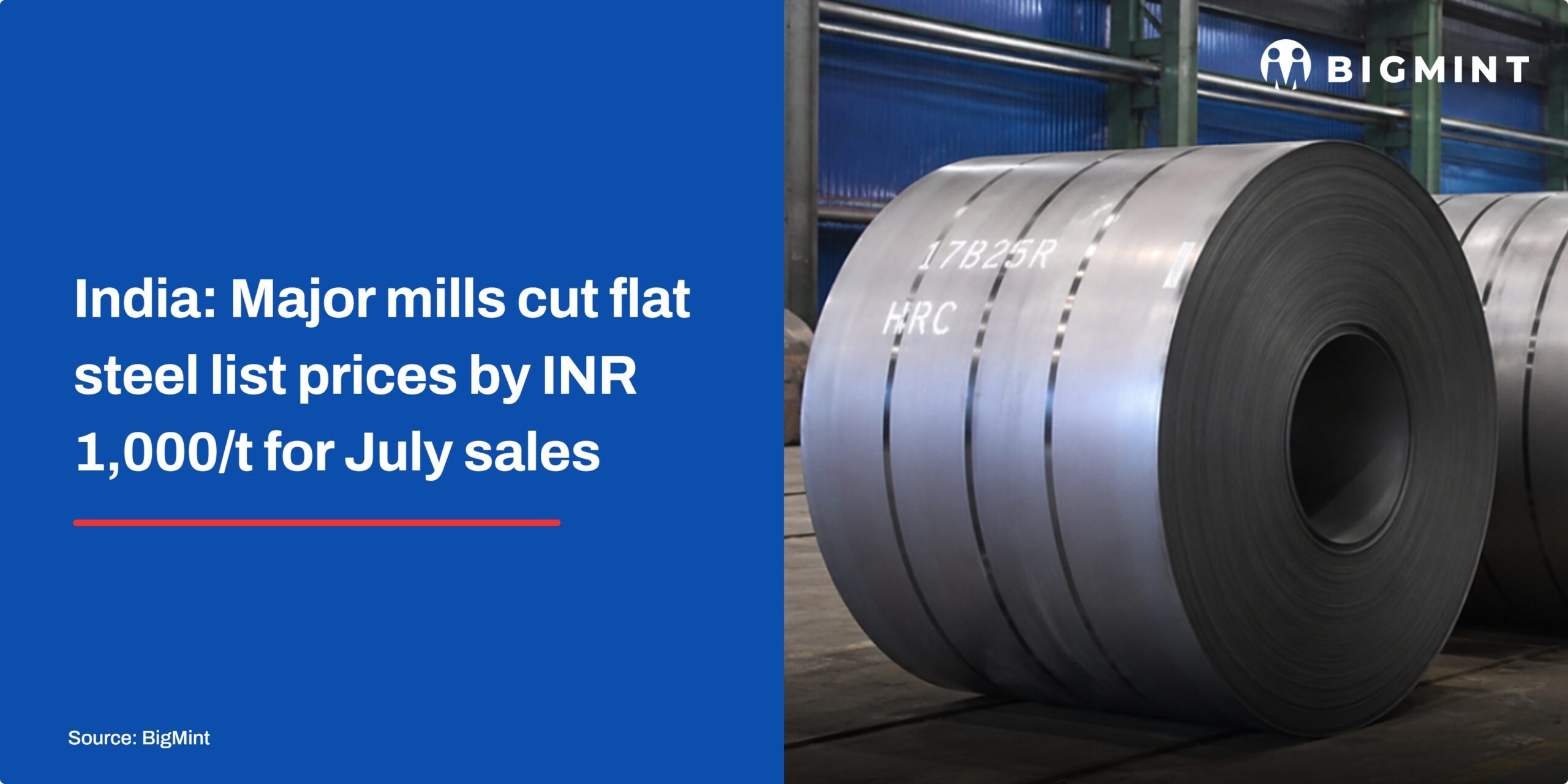
Leading Indian steelmakers have reduced their flat steel mill list prices by INR 1,000/t for July 2026 deliveries, reducing both hot-rolled coil (HRC) and cold-rolled coil (CRC) prices amid subdued market activity and cautious buying sentiment.
HRC list prices (2.5-8 mm, IS2062, Gr E250 Br) are now in the range of INR 57,000-60,000/t ($597-628/t) ex-Mumbai, while CRC (0.9 mm, IS513 CR1) prices have been revised to INR 64,400-67,750/t ($674-709/t).
At the trade level, HRC prices declined by INR 200/t ($2/t) m-o-m in June to around INR 58,300/t ($612/t), compared with INR 58,500/t ($614/t) in May. CRC prices remained broadly stable at around INR 65,200/t ($684/t), reflecting balanced availability despite weak trading activity.

Why did tier-1 mills reduce flat steel list prices in Jul’26?
Subdued market sentiment was the primary reason behind the list price cut in early July. India’s manufacturing purchasing managers’ index eased to 54.2 in June 2026, reflecting slower expansion, with weaker growth in both new orders and output.
The onset of the monsoon has further weighed on consumption by slowing construction and infrastructure activity. In addition, distributors entered July with comfortable inventory levels following earlier restocking, reducing the urgency for fresh procurement. Collectively, these factors outweighed cost-side factors and prompted mills to reduce list prices.
Meanwhile, raw material trends presented a mixed cost environment during June. Premium hard coking coal prices increased to $268/t from $264/t in May, raising input costs for integrated steelmakers. However, domestic iron ore prices declined to INR 5,960/t in June from INR 6,410/t in May, easing overall production costs.
Weekly update
Regional market conditions remained mixed during the week. Inventory levels were relatively higher in northern India at around 20-25 days, while the southern market remained comparatively tighter than the northern market. In the south, trading largely continued on credit terms, albeit at a slower pace than in the previous month, as several participants prioritised clearing outstanding payments before placing fresh orders. Despite the cautious sentiment, selective buying activity continued in certain markets, preventing a complete slowdown in trading.
Import volumes
India’s bulk HRC imports declined sharply to 247,754 t in June, down 42% m-o-m from 423,925 t in May, reducing competitive pressure from overseas material.
The decline also reflects a tightening trade policy environment aimed at protecting the domestic steel industry. The safeguard duty on select flat steel imports continued to discourage low-priced shipments, while the government has also initiated an anti-dumping investigation into hot-rolled flat steel products originating in or exported from China, Japan, and Russia, further tempering buying interest in imported material. Together, these measures moderated import arrivals and provided some support to domestic mills, although subdued domestic demand continues to limit pricing power.

Export volumes
India’s bulk HRC exports stood at 235,773 t in June, up 71% y-o-y, driven by higher shipments to Vietnam amid strong manufacturing demand, competitive Indian pricing, and increased trade restrictions on Chinese steel.
Weak domestic demand in India also prompted mills to divert higher volumes to export markets, although shipments to the EU remained constrained by safeguard quota limits.
Outlook
India’s flat steel market is expected to remain largely stable within a narrow range in July, weighed down by subdued demand and cautious buying sentiment. The price cut comes amid soft on-ground demand. The onset of the monsoon season is likely to further slow construction and infrastructure activities, dampening trading volumes and steel consumption across key markets, particularly in the north and south regions where inventory levels remain uneven. Market participants will closely monitor import trends, demand recovery after the monsoon, and regional inventory movements, as these factors are expected to influence price direction in the coming months.
Leave a Reply