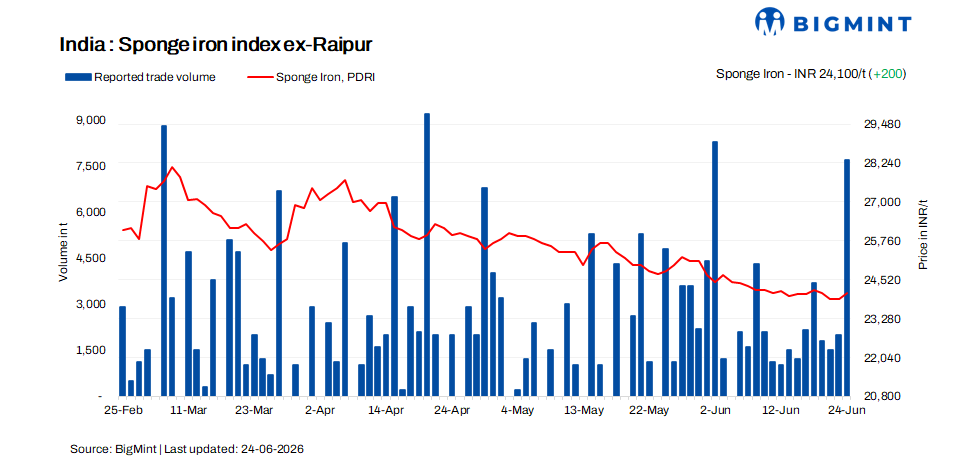
- Sponge iron prices rise d-o-d across most regions
- Trade volumes surge on improved market activity
The domestic sponge iron market witnessed a slight uptick across most regions on 24 June 2026, with prices increasing by around INR 100-250/t d-o-d. Buying activity improved compared to the previous few sessions as buyers came forward to book material, supporting market sentiment and trade volumes. However, Chennai was the only region to record a price decline, with rates falling by INR 100/t due to weak regional demand and subdued procurement activity.
Supported by improved enquiries, sellers raised their offer prices across key regions. After witnessing subdued buying activity over the past few sessions, market participants returned with fresh enquiries and bookings, resulting in improved order volumes. The recovery in buying interest helped strengthen market sentiment, although trade activity remained largely driven by immediate procurement requirements.
Downstream demand from the finished steel segment also improved, providing support to the sponge iron market. A pickup in finished steel demand over the past few sessions translated into better sponge iron bookings, helping improve overall market sentiment.
On the raw material front, pellet prices continued to hover around INR 8,900-9,000/t, limiting the scope for any significant reduction in sponge iron prices. Given the prevailing cost structure, manufacturers found it difficult to offer material at substantially lower rates. Meanwhile, imported non-coking coal prices (RB2 5,500 NAR, South Africa, CNF Gangavaram) remained stable at around $113/t, while domestic non-coking coal prices (portside, ex-Visakhapatnam) declined by INR 150/t to INR 10,600/t.
Trade volumes recorded by BigMint stood at around 23,200t, a sharp increase from approximately 10,100t recorded a day earlier, reflecting improved market participation and buying interest.
Rationale
Prices have been derived based on transactions, offers, bids, and indicative price data sets. Transactions are considered as T1 and given a weightage of 50%, whereas other data sets are considered as T2 and given a weightage of the balance 50%.
Click here for detailed methodology


Leave a Reply