- Lack of demand visibility keeps buying activity subdued
- Stable steel prices provide limited support to scrap sentiment
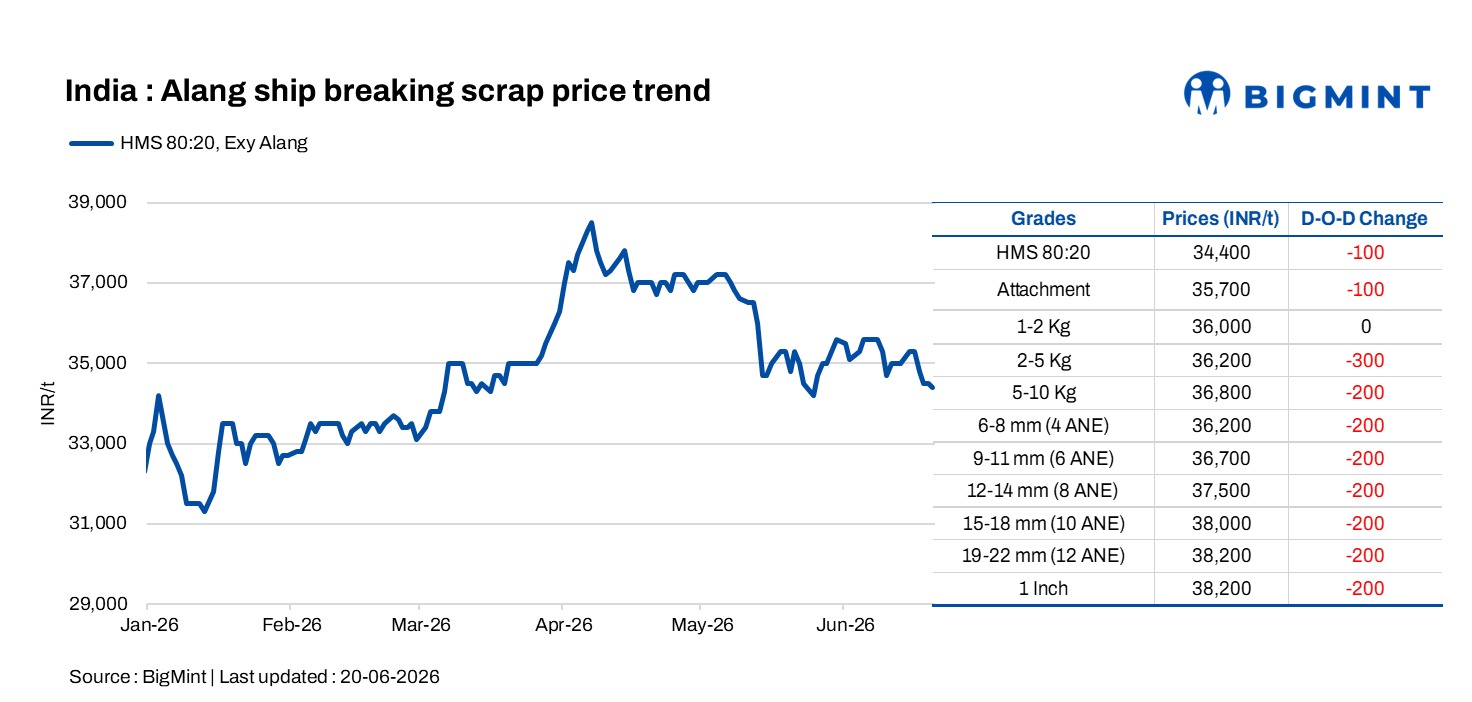
Ship-breaking melting scrap prices in Gujarat’s Alang market edged lower d-o-d on 20 June, with buyers maintaining a cautious approach despite stability in the downstream steel segment. According to BigMint’s assessment, HMS (80:20) scrap was assessed at INR 34,400/t ($364/t) ex-yard, down INR 100/t d-o-d.
Procurement activity remains selective
The marginal correction reflects subdued buying interest among re-rolling mills and induction furnace operators, many of whom continue to procure material only against immediate production requirements. Market participants reported that inventory levels at consuming units remain adequate, limiting the need for aggressive purchases.
The decline comes even as semi-finished and finished steel prices remained largely unchanged in the previous trading session. However, stable steel prices have not translated into stronger scrap demand, as uncertainty surrounding end-user consumption continues to weigh on sentiment.
Stable downstream market offers limited support
Market fundamentals remain mixed. While the absence of further corrections in billets and finished steel products has helped prevent a sharper decline in scrap prices, buyers remain reluctant to build inventories in anticipation of clearer demand signals from the construction and manufacturing sectors.
Traders noted that mills continue to closely monitor finished steel order bookings and margin realizations before committing to larger scrap volumes. As a result, transactions in the Alang market remain largely need-based.
Outlook
The near-term direction of Alang scrap prices is expected to depend on demand recovery in the finished steel segment and procurement trends among secondary steel producers. In the absence of a meaningful improvement in steel consumption, scrap prices are likely to remain largely stable, with sentiment continuing to be driven by downstream market developments.
Leave a Reply