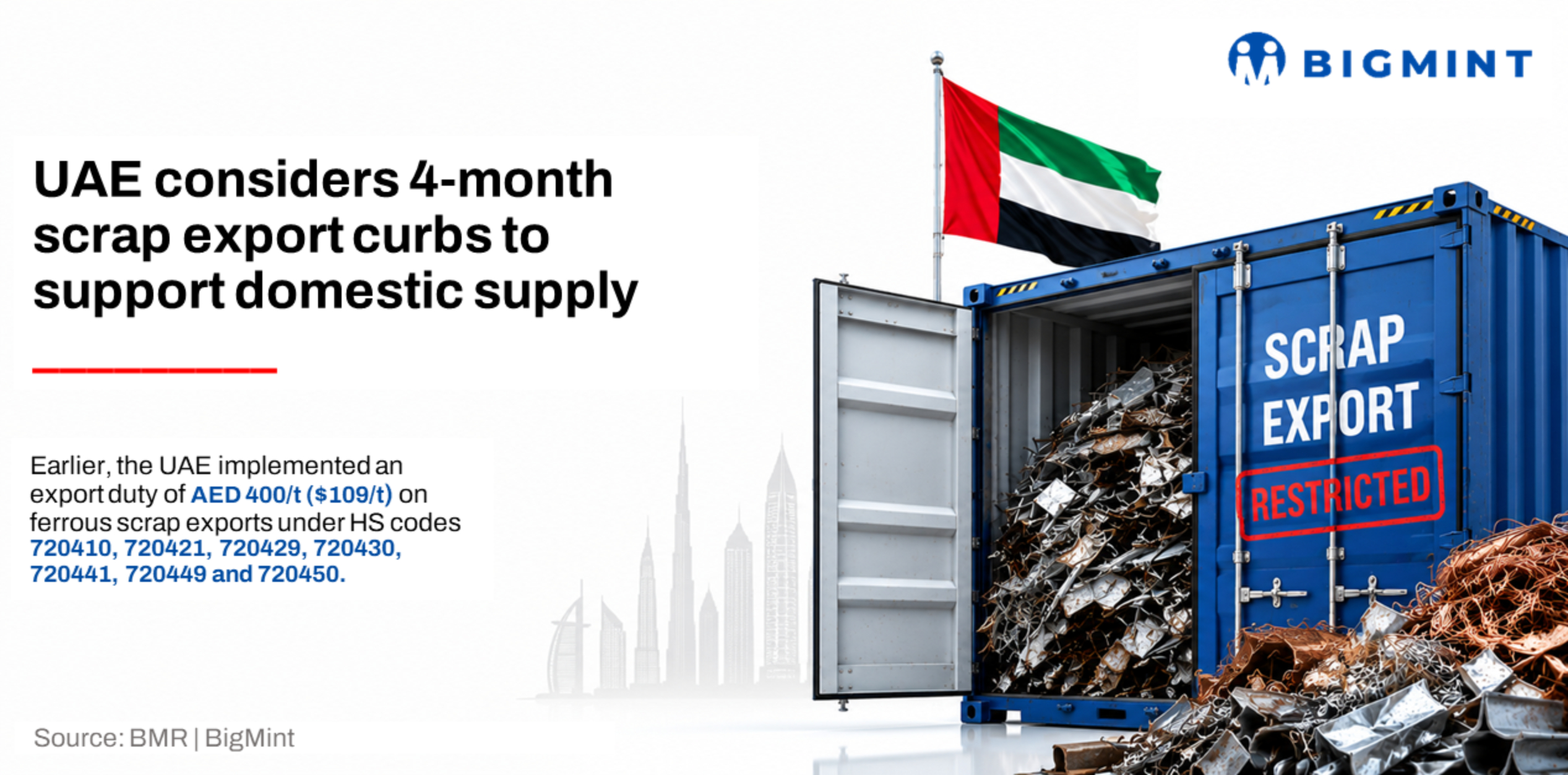
- Four-month export restriction reportedly under consideration
- AED 400/t duty already reshaped scrap trade
The UAE is reportedly considering a temporary four-month ban on exports of ferrous, aluminium, and copper scrap, signalling a further tightening of the country’s scrap trade regulations. While no official government announcement has been issued, market participants reported growing difficulties in securing export approvals for recyclable materials.
According to information circulated within the recycling sector, particularly by the Bureau of Middle East Recycling (BMR), the proposed restrictions could form part of ongoing efforts to retain greater volumes of scrap within the domestic market, ensuring adequate feedstock availability for local steel producers and recycling companies.
Why is the UAE tightening scrap exports?
The reported move follows a series of regulatory interventions introduced over the past year. The UAE previously imposed an export duty of AED 400/t ($109/t) on ferrous scrap exports under HS codes 720410, 720421, 720429, 720430, 720441, 720449, and 720450. Exporters are also required to register shipments through the Ministry of Economy’s online portal and pay applicable fees before cargo movement.
In addition, the government implemented a reverse-charge VAT mechanism for domestic scrap transactions through Cabinet Decision No. 153 of 2025, effective 14 January 2026. Under the system, VAT liability shifted from scrap suppliers to VAT-registered buyers, primarily steelmakers and large processors. Market participants noted that the measure improved the economics of supplying scrap domestically compared with exporting material overseas.
Potential impact on regional markets
If confirmed, the proposed export restrictions would represent a shift from fiscal and administrative measures towards direct control of scrap trade flows. Industry participants believe the objective is to secure feedstock for domestic steelmakers, aluminium producers, and other manufacturing sectors, while supporting the UAE’s industrialisation strategy and circular economy goals.
The UAE remains an important supplier of ferrous and non-ferrous scrap to regional markets. Consequently, a four-month export restriction could reduce export availability, tighten regional scrap supply, and redirect greater volumes towards domestic consumers. While local manufacturers may benefit from improved raw material access, recyclers and exporters could face reduced overseas sales opportunities. Market participants are now awaiting official clarification on the scope and implementation timeline of the reported measures.

Leave a Reply