- Limited import declarations unlikely to ease domestic shortage
- Activity remains focused among select steelmakers, including SeAH Besteel
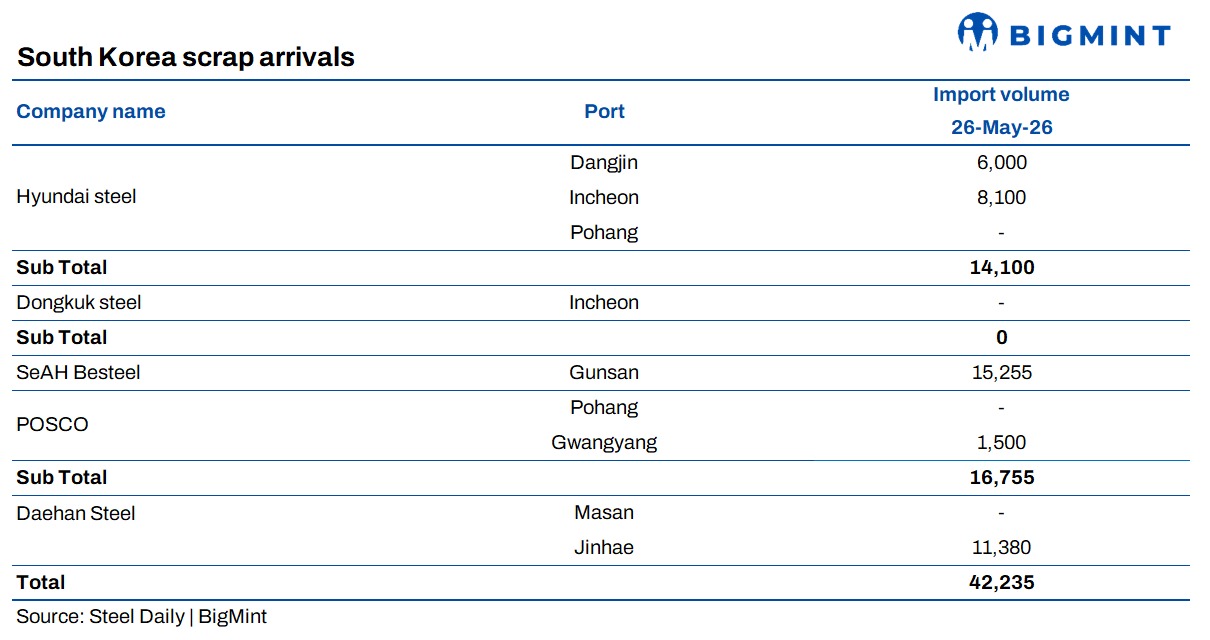
SteelDaily: South Korea’s imported ferrous scrap arrivals remained subdued in late May, with most major ports reporting limited cargo movement and import activity concentrated among only a few steelmakers. As of 22 May, imported scrap volumes awaiting discharge at major ports stood at around 42,235 t. Including nearly 15,000 t of billet imports by Korea Special Steel, total incoming metallics volumes were estimated at approximately 60,000 t. However, low vessel arrival declarations suggest imports are unlikely to significantly ease the domestic scrap shortage in the near term.
Port-wise position
Dangjin Steelworks: Hyundai Steel allocated around 6,000 t of imported scrap to Dangjin, while an additional 2,500 t of domestic scrap from Pohang suppliers was reportedly shifted to the plant.
Incheon North Port: Dongkuk Steel reported three import cargoes totaling around 8,100 t. One vessel completed unloading on 23 May, while two additional cargoes totaling 6,100 t were awaiting discharge.
Jinhae Port: Four cargoes totaling approximately 11,380 t were reported for unloading, with one vessel completing discharge on 22 May. Additionally, around 2,000 t of domestic scrap is scheduled for export loading on 27 May.
Gwangyang Steelworks: POSCO completed unloading of nearly 1,500 t and finalized vessel departures on 23 May.
Masan Port: Import declarations for 15,000 t of billets were completed, with cargoes believed to be imported by Korea Special Steel for rebar production.
Pohang and Busan Ports: No import declarations were reported during the review period.
Hyundai Steel maintained a cautious import stance amid reduced scrap consumption at its Pohang operations due to electric furnace maintenance shutdowns and continued production cuts at Incheon. In contrast, SeAH Besteel sustained relatively stable import activity, with combined incoming and pending cargoes totaling around 15,000 t, above its normal intake levels.
The subdued import environment indicates balanced near-term scrap availability in South Korea. However, market participants noted that persistently weak arrivals across major ports could tighten supply conditions, particularly in southern regions, in the coming weeks.
Note: This article has been written in accordance with a content exchange agreement between SteelDaily and BigMint.
Leave a Reply