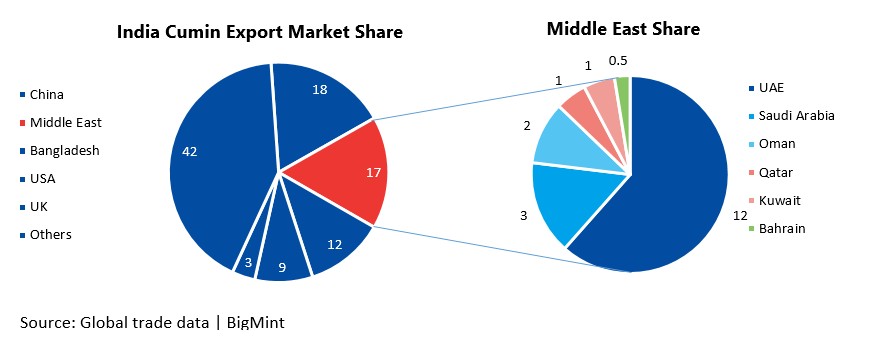
- 25% of India’s cumin output exported, large chunk goes to Middle East
- Supply remains comfortable amid substantial carry-forward stocks
India’s cumin seed (jeera) market is entering the new harvest season amid rising geopolitical uncertainty following the Iran conflict, a development that could influence export demand, freight flows, and pricing dynamics for one of the country’s most important spice exports.
The fresh crop has just begun arriving in domestic mandis, with harvesting typically running from March through the end of April. Production in the current crop year is expected to touch 530,000-540,000 tonnes (t), as per data from the International Spice Conference (ISC), slightly down from around 550,000 t in crop year 2024-25.
However, the supply situation remains comfortable due to carry-forward stocks of roughly 137,000-165,000 t, accumulated because of slower exports in the previous year. These inventories are likely to offset the marginal drop in production and ensure adequate availability in the domestic market.
However, the emerging geopolitical tensions in the Middle East, particularly the US-Israel conflict with Iran, could influence export flows at a sensitive time when Indian suppliers typically begin contracting new-season shipments.
Middle East demand under scrutiny
The Middle East represents a key market for Indian cumin seeds. Countries such as Iran, Iraq, Qatar, Saudi Arabia, the UAE, Bahrain, and Oman collectively account for 15-18% share of India’s total jeera exports — around 25% of production. Cumin exports from India typically peak in February-April after the new crop arrives from key producer states such as Gujarat and Rajasthan.
With the region facing geopolitical disruptions, trade participants are concerned about potential challenges in logistics, payments, and demand patterns. Shipping routes, freight costs, and insurance premiums could rise if tensions escalate in the Persian Gulf region, affecting the smooth movement of cargo.
Iran itself is both a consumer and a trade gateway in the region. Any disruption to its trade channels could indirectly affect shipments routed through neighbouring markets. Importers may delay purchases or adopt a wait-and-watch approach, particularly during the early phase of the new harvest when prices typically establish their seasonal direction. Moreover, if freight or insurance costs rise sharply due to geopolitical tensions, exporters could also face margin pressures, especially in price-sensitive markets.
Leave a Reply