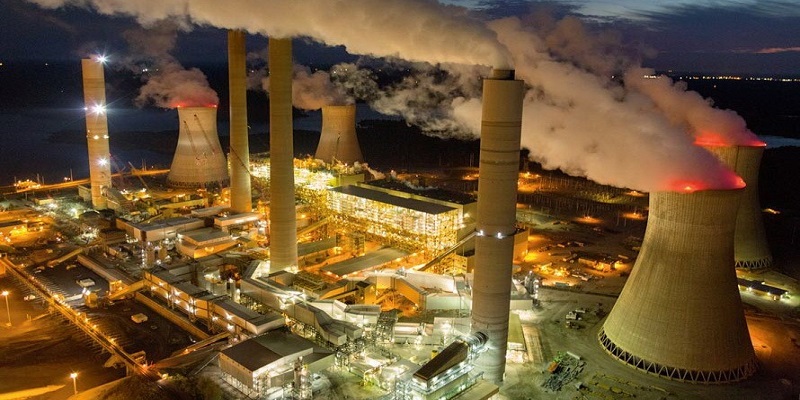
- Drop in thermal generation reflects flexibility needs, not reduced relevance
- Renewables and hydro capture incremental power demand
India’s coal-fired power generation registered a y-o-y decline of around 2.5% in 2025, even as total electricity generation rose to a new record. This shift reflects a changing utilisation pattern for coal plants, rather than a weakening of electricity demand or a structural retreat from coal.
The trend aligns with analysis by the Centre for Research on Energy and Clean Air (CREA), an independent research organisation that tracks power generation, emissions, and utilisation trends across India’s energy sector. CREA has noted that coal generation is increasingly being shaped by renewable penetration and system flexibility requirements, rather than by demand growth alone.
Coal output eases but remains central to grid
Generation data shows that coal-based electricity output declined from 1,315 billion units (BU) in 2024 to 1,283 BU in 2025, a drop of about 2.5% y-o-y. This moderation occurred despite total power generation increasing from 1,815 BU to 1,843 BU, confirming that overall electricity demand continued to expand.
Coal remained the single largest source of power, accounting for roughly 70% of total generation in 2025. The y-o-y decline, therefore, reflects how coal was dispatched, not a reduction in coal’s strategic importance to the power system.
Renewables, hydro absorb incremental energy demand
Renewable energy sources, wind, solar, biomass and others, accounted for most of the incremental generation in 2025. Renewable output rose sharply from 219 BU in 2024 to 269 BU in 2025, an increase of nearly 23% y-o-y, supported by capacity additions and improved utilisation.
Hydropower generation also increased meaningfully, rising from 157 BU to 181 BU, aided by favourable water availability. Together, renewables and hydro absorbed the bulk of incremental energy demand, reducing the need for coal-fired generation during daytime and non-peak hours.
Coal’s role shifts from energy growth to system balancing
CREA’s analysis suggests that the decline in coal generation is driven primarily by lower average plant load factors (PLFs), not by plant retirements or fuel shortages. As renewable output rises, coal plants are increasingly being pushed into a load-following and balancing role, backing down during periods of high renewable generation and ramping up during evening peaks and system stress.
This is consistent with broader trends observed in recent months, where coal generation has remained essential for:
- Meeting evening and night-time demand peaks
- Providing grid stability and inertia
- Acting as a backstop during periods of renewable variability
In this context, coal’s declining share of total generation does not imply declining relevance. Instead, it reflects a functional transition in how coal assets are utilised.
Other sources show mixed trends
Generation from gas, naphtha and diesel declined from 34 BU in 2024 to 26 BU in 2025, reflecting high fuel costs and their continued use primarily as emergency or last-mile peaking resources. Nuclear generation remained broadly stable at around 54 BU, while lignite-based generation eased slightly to 31 BU.

Consistent with broader coal narrative
Importantly, the moderation in coal generation in 2025 is consistent with other recent trends:
- Coal continues to be prioritised for power security
- Domestic coal allocation remains heavily skewed toward utilities
- Peak demand continues to rise faster than average energy demand
- Coal plants are increasingly dispatched for flexibility rather than volume growth
CREA has highlighted that such trends can deliver emissions benefits without undermining grid reliability, but they also place new operational and financial pressures on coal assets operating at lower PLFs.
Outlook
Coal is likely to remain indispensable to India’s power system in the near term, particularly as renewable penetration rises and peak demand becomes steeper. While annual coal generation may fluctuate depending on hydro conditions and renewable output, coal’s role as a system stabiliser and peak provider is expected to persist.
The 2025 data, therefore, signals not a retreat from coal, but a rebalancing of its role within a rapidly evolving power mix—fully aligned with India’s broader energy transition and grid-reliability objectives.
Leave a Reply