- Import flows may slow due to exchange rate fluctuations
- Japanese vessels help fill supply gap, demand remains slow
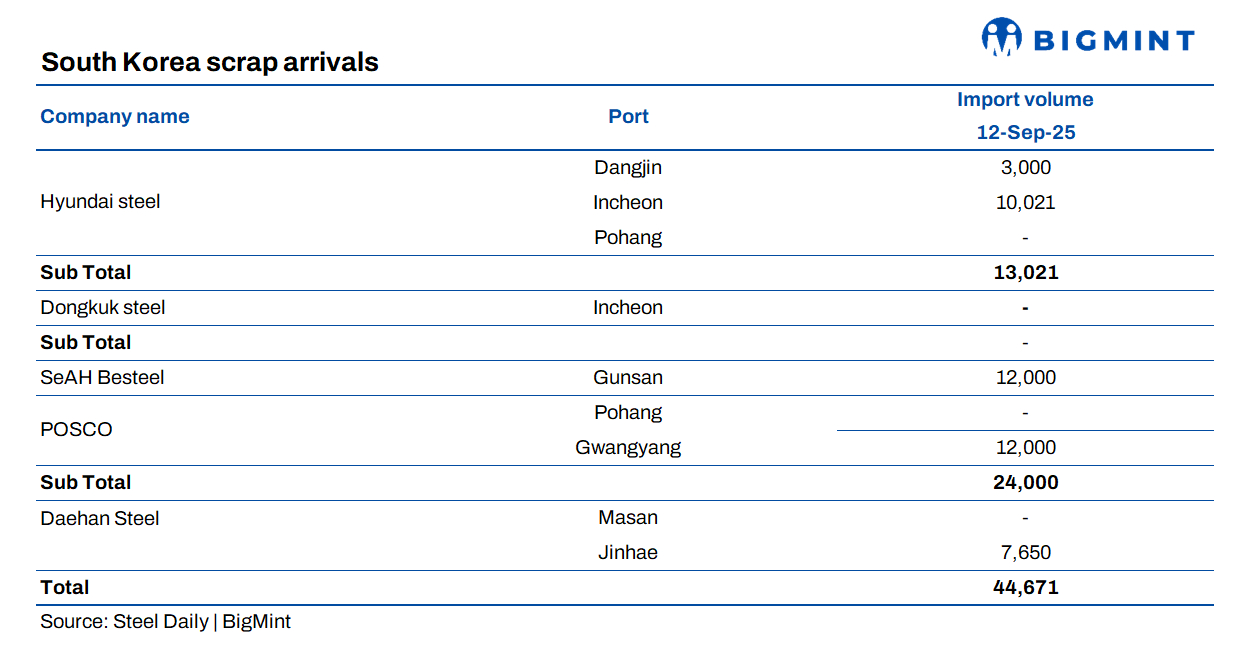
SteelDaily: South Korea’s major ports recorded a total of around 44,671 tonnes (t) of imported scrap in the second week of September. Inflows remained active nationwide, including Incheon, Dangjin, Gunsan, Jinhae, and Gwangyang.
While domestic demand was sluggish, scrap supply was tight, due to declining generation. Incoming vessels from Japan were helping to fill the supply gap and maintain steady scrap availability at major South Korean ports.
Port-wise arrivals
- Incheon: Arrivals of 10,000 t were recorded at Incheon, of mixed light and medium scrap, with four vessels docked. Most unloading operations are scheduled for 16-17 September.
- Jinhae: The port recorded imports of 7,650 t, with smaller vessels arriving sequentially, mainly supplying Daehan Steel and Taewoong.
- Dangjin: 3,000 t of SHRD were recorded and awaiting discharge.
- Gunsan, Gwangyang: Both recorded the highest arrivals, each handling around 12,000 t. At Gunsan, five vessels are berthing sequentially, bringing a balanced mix of shredded and heavy scrap. Gwangyang Port is likewise handling five vessels, with unloading operations scheduled to continue through 17 September, ensuring a steady flow of incoming scrap material.
A market participant noted, “With domestic scrap production declining, imports are temporarily filling the gap. However, inflows may slow if exchange rates or Japanese price fluctuations turn unfavourable.”
Note: This article has been published in accordance with a content exchange agreement between SteelDaily and BigMint.
Leave a Reply