Mysteel Global: Japan’s second-largest integrated steelmaker, JFE Steel, together with Japanese steel trader Marubeni-Itochu Steel and Thai hot-rolled coil producer Sahaviriya Steel Industries (SSI) have decided to integrate their cold rolling and coated steel ventures in Thailand around October 1 this year, the Tokyo-based steelmaker announced on May 27.
The two ventures to be integrated are Thai Coated Steel Sheet (TCS) and Thai Cold Rolled Steel Sheet (TCR), both of which are majority owned by JFE Steel Group.
As is usual in such announcements, in a statement JFE emphasized that merging the two Thai businesses would create “synergy effects” through the integration of sales and marketing activities. “Additionally, through the unified operation of TCS and TCR, we aim to further improve our manufacturing capabilities, boost quality, and strengthen our delivery response,” it said.
The statement is significant for what it doesn’t say: specifically, why now?
TCS and TCR were both established in 1990 in Bang Saphan in Prachuap Khiri Khan province, about 500 kms south of Bangkok, with the principal shareholders initially being SSI, Japanese integrated mill NKK Corp and Japanese trader Marubeni Corp. NKK merged with Kawasaki Steel to form JFE Steel in 2003, while around the same time Marubeni and counterpart trader Itochu Corp spun off their steel divisions to form Marubeni-Itochu Steel.
TCS, Thailand’s only maker of electro-galvanized steel sheets, has a capacity of 180,000 tonnes/year. It began commercial production in 1994 and primarily manufactures and sells EG sheets not only for customers in the Japanese OA equipment, home appliance, and automotive parts sectors but also to meet local Thai demand, JFE notes.
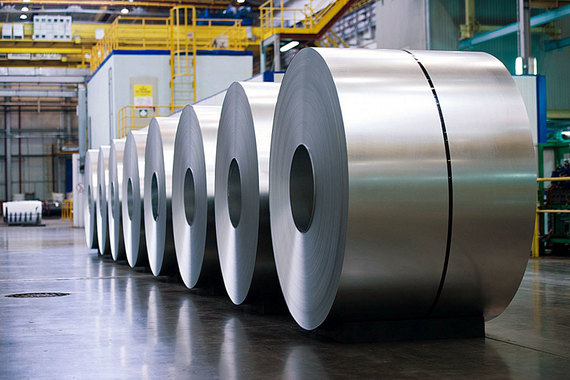
TCR, located just a few minutes’ drive to the north of the coated sheet venture, hosts 1.2 million t/y of cold-rolling capacity supplying customers in the Japanese automotive, automotive parts, and home appliance sectors and also local Thai demand. TCR commenced commercial production in 1997. The company supplies cold-rolled coils (CRC) to the coated steel venture nearby, as well as to JFE Steel’s 400,000 t/y plant making hot dipped galvanized and galvannealed sheets and coils established in 2014 in the Thai automotive hub of Rayong, southeast of Bangkok.
Although SSI is the primary supplier of the hot coils that TCR needs for its cold rolling operation, some also sail from JFE Steel’s works in Japan, Mysteel Global understands.
Originally, SSI had held a 49% stake in TCS (with NKK and Marubeni the majority) but today JFE Steel holds 81.4%, Marubeni-Itochu 14.9% and SSI just 3.7%.
Conversely, SSI had held 23.75% of TCR – with NKK, Marubeni and several other Japanese companies holding the remainder. Today, SSI holds 35.19%, JFE Steel 34.47%, Marubeni-Itochu 25.1% and several other Japanese and Thai companies the balance. Among these is JFE Steel’s trading arm, JFE Shoji with 1.57% (giving JFE Group the majority holding) and Toyota Motor’s trading arm, Toyota Tsusho, also with 1.57%.
SSI, which in the 1990s had nursed plans for building a blast furnace at Bang Saphan (today it rolls hot coils from slabs) was among the worst hit during the Thai financial crisis in 1997 and as part of its insolvency work-out program, had sold some of its equity in the ventures to its Japanese partners.
In its statement Tuesday, JFE said that the surviving company in the integration would be TCR and that there would be no change in the cold-roller’s shareholder structure after the business transfer.
TCS and TCR have been near neighbours for some three decades; they have common shareholders, have feed supply arrangements and doubtless cooperate closely in other areas. So why is JFE choosing to merge them now?
TCR’s latest annual report holds a clue. In it, company chairman Hisanori Enoki, formerly with JFE Steel, noted that TCR faced a “severe situation” in 2024 where the number of vehicles produced in Thailand that year plunged by 20% to 1.47 million units, while the local steel market was sluggish, impacted by steel imports, especially from China.
Under such circumstances, the company’s steel sales last year fell by 14% to 434,000 tonnes, compared with 502,000 tonnes in 2023 and lower by a huge 95,000 tonnes from its 2022 sales of 529,000 tonnes. Nevertheless, Enoki was pleased to say that by cost-cutting and other measures, TCR had been able to make a profit of THB 295 million ($9 million) last year – the company’s first profit in three years, he admitted.
Absorbing TCS would help trim TCR’s costs further and give it greater control over the coating operations at a time when markets are rapidly changing under the impact of the Trump Administration’s assault on global trade.
JFE would also have noted the announcement from Japanese rival Nippon Steel last August of a huge investment of THB 1.5 billion into the two consolidated subsidiaries it operates in Thailand, G Steel and G J Steel – collectively G/GJ Steel and both producers of hot coils – which Nippon Steel had acquired in March 2022. They have a combined 3 million t/y of HRC capacity and are located in Rayong and in Chonburi, east of Bangkok, respectively.
Nippon Steel’s cash injection will be used for upgrading skin pass mill facilities at G Steel and streamlining the scrap management operations at GJ Steel, an electric furnace maker, Nippon Steel said.
Note: This article has been written in accordance with a content exchange agreement between MySteel Global and BigMint.
Leave a Reply