- Domestic copper demand to reach 5 mnt by 2047
- ncreasing copper imports key challenge
- Aluminium demand to double by FY’33
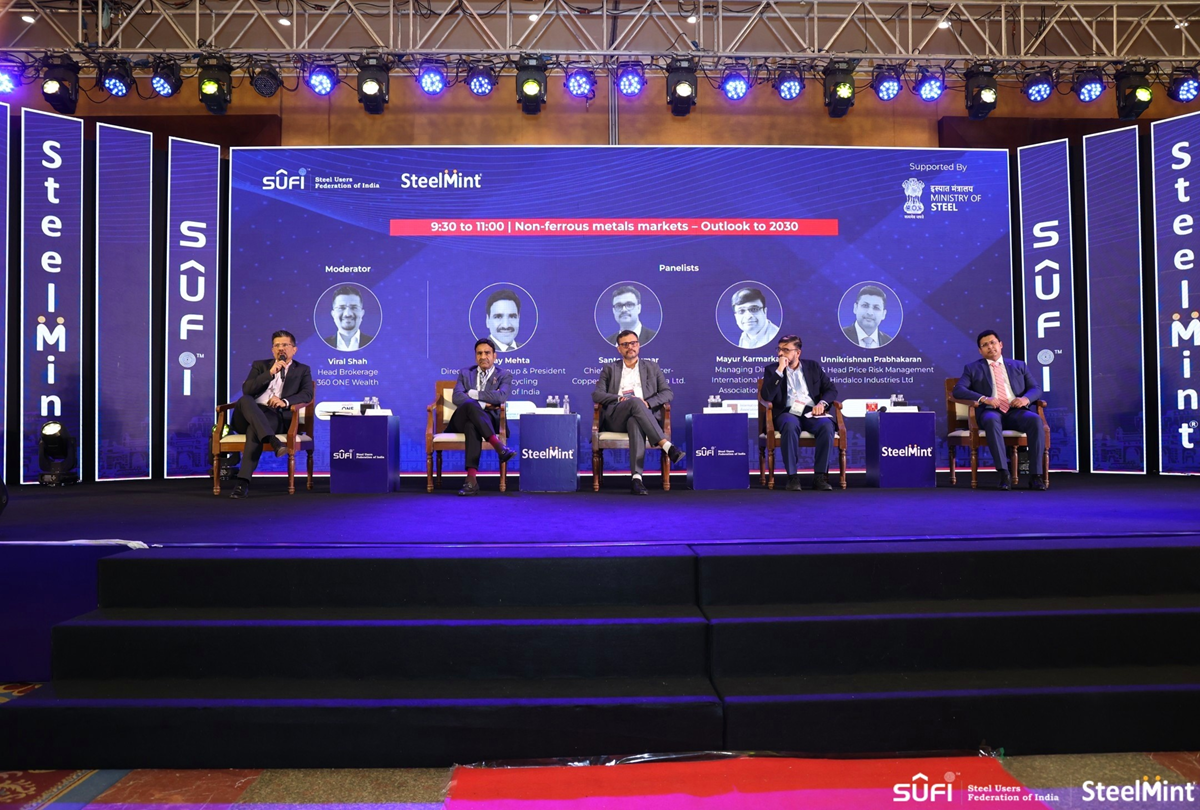
The 2nd India Steel & Metal Conference-Supply Chain & Sourcing Strategies, organised by BigMint and the Steel Users Federation of India (SUFI), saw critical issues discussed threadbare in the context of India’s surging demand and global market volatility. The session dedicated to dissecting trends in the domestic non-ferrous metals sector highlighted key challenges and opportunities, while providing valuable insights into the future of copper and aluminium demand and supply in India.
Copper demand growth, rising imports
Santosh Kumar, CMO, Vedanta Sterlite Copper, discussed the potential for India to become a significant player in the copper industry. China’s share of global refined copper consumption is expected to decline, while India’s share is projected to rise significantly.
India’s demand for refined copper is predicted to grow from 0.7 million tonnes (mnt) in 2023 to over 5 mnt by 2047. To meet this demand, India needs to invest in raw material security and increasing its smelting and refining capacity.
The Indian government has launched initiatives to revive the copper industry, including financial assistance to miners, simplified mining license processes, and infrastructure development in copper-producing regions. The goal is to make India self-sufficient in copper by 2047, requiring substantial investments that could lead to job creation and economic growth, said Kumar.
Mayur Karmakar, India Lead, International Copper Association, stated while the Bureau of Indian Standards (BIS) is making efforts to enhance standards in the non-ferrous industry, especially in copper, the current approach may not be as effective as China’s model. In China, industry players actively participate in determining material standards, including process and quality standards. Mayur believes that there is a gap in the Indian system, as BIS standards might take time to be embraced by industrialists. He suggests that there is still a need to bridge this gap and foster more direct involvement of industrialists in shaping and adopting standards for the industry.
Aluminium market dynamics
The aluminium market outlook was also discussed, with steady growth anticipated in the coming years, driven by demand from construction, automotive, and aerospace industries.
China, the US, and the Eurozone are major consumers of aluminium. Challenges such as rising supply chain, price volatility, and geopolitical fissures are challenges; however, the aluminium market is poised for steady growth.
In terms of supply, China leads in aluminium production, with an expected increase in production by 1 mnt by 2025, said Unnikrishnan Prabhakaran, VP and Head, Price Risk Management, Hindalco. Demand dynamics in China show growth in sectors like solar, electric vehicles, and utilities, contributing to a 5% consumption growth. However, uncertainties surround the sustainability of this trend.
India’s domestic aluminium consumption is projected to double by FY’33, reaching around 9 mnt. India aims to be the world’s third-largest market for aluminium by 2030, driven by factors such as light weighting of vehicles and expanding market share in various industries.
The conference highlighted the ongoing developments in India’s electric vehicle (EV) sector, with the introduction of aluminium battery enclosures for cars and two-wheelers. A dedicated 4-wheeler battery enclosure plant, which started operations in December 2023, further emphasises the commitment to sustainable solutions in the EV sector.