- Fresh kharif arrivals begin at Lasalgaon APMC, but stored summer stocks dominate
- Delayed planting, reduced acreage in Nashik push new-season arrivals towards Nov
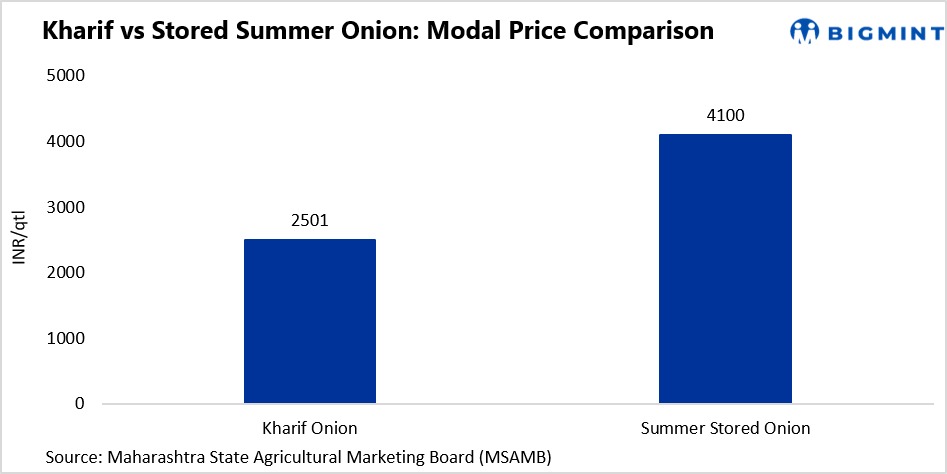
Fresh kharif onion arrivals have begun at Lasalgaon Agricultural Produce Market Committee (APMC) in Nashik, Maharashtra, but volumes remain limited as harvesting gathers pace. According to the Maharashtra State Agricultural Marketing Board (MSAMB) data for 22 October, Lasalgaon recorded 38 quintals of red onions, with a modal price of INR 2,501/quintal. In comparison, stored summer onions recorded arrivals of 4,402 quintals and a modal price of INR 4,100/quintal. The price difference reflects differences in storage life and the timing of market arrivals.
Kharif onion prices remain below stored summer crop
According to MSAMB data for 22 October, red kharif onions at Lasalgaon APMC traded between INR 2,401/quintal and INR 3,400/quintal, with a modal rate of INR 2,501/quintal. Stored summer onions traded between INR 900/quintal and INR 4,571/quintal, with a modal rate of INR 4,100/quintal.
The modal price of fresh kharif onions was therefore around 39% lower than that of stored summer onions. However, kharif arrivals were only 38 quintals, compared with 4,402 quintals of stored onions, meaning the fresh-crop price reflects a relatively small volume of early-season trade. Traders expect kharif arrivals to increase as harvesting expands across Nashik and neighbouring growing regions.
Delayed planting, lower acreage shape supply prospects
According to the market participants, kharif onion arrivals have started nearly a month later than usual because delayed monsoon rains postponed planting and harvesting. Arrivals are expected to gather pace in the first or second week of November, with fresh supplies also anticipated from Dhule and Malegaon.
Nashik district’s kharif onion cultivation area is estimated at 21,242 hectares, around 34.6% below the normal average of 32,450 hectares, according to The Times of India. This reduction could constrain the volume of new-season supplies, although the eventual impact will depend on crop yields and harvesting progress.
The shorter storage life of kharif onions, generally around 25-30 days, also encourages farmers to sell soon after harvest. Summer onions can be stored for more than six months, allowing sales to be spread over a longer period.
Outlook
Kharif onion arrivals at Lasalgaon are expected to increase as harvesting gains momentum in November. Greater fresh-crop availability could keep kharif prices under pressure because of limited storage flexibility. However, reduced acreage in Nashik may restrict the scale of the supply increase. The price gap between kharif and stored summer onions will depend on arrival volumes, quality, storage capacity and buyer demand.
Leave a Reply