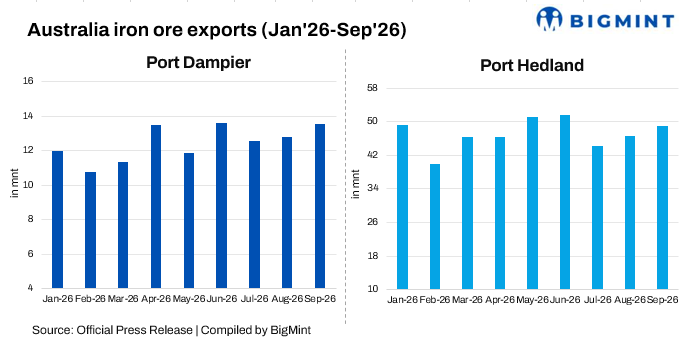
- Port Hedland accounts for most of monthly increase, with shipments rising 5%
- Approaching cyclone season may disrupt port operations, delay iron ore loadings
Australian iron ore shipments from Port Hedland and Dampier increased to 62.4 million tonnes (mnt) in September 2026, up 5.1% m-o-m from 59.4 mnt in August. Higher exports from both ports supported overall shipment volumes and potentially improved cargo availability for Capesize vessels on Australia-China routes.
Port-wise iron ore shipments
- Port Hedland: Shipments increased by 4.9% m-o-m to 48.9 mnt in September from 46.6 mnt in August, accounting for the bulk of the overall increase. Exports to China rose, reinforcing the port’s role as a key supplier to the world’s largest iron ore consumer.
- Port Dampier: Shipments rose by 5.8% m-o-m to 13.5 mnt from 12.8 mnt, contributing to the broader recovery in Pilbara exports. Higher volumes from both ports indicate stronger monthly export flows, although port operations remain sensitive to weather, maintenance and customer requirements.
Freight market sentiment
The increase in Pilbara shipments provided additional cargo support for the Pacific Capesize market, potentially improving vessel employment opportunities on Australia-China routes. However, the freight impact will depend on whether higher export volumes translate into sustained vessel demand.
China’s iron ore demand remains uncertain amid mixed steelmaking trends and elevated port inventories, which may limit fresh buying. While stable steel production could support imports, cautious procurement and ample stockpiles may cap demand growth and restrain upside in Pacific Capesize freight rates.
Outlook
Higher Australian shipments could support Pacific Capesize freight rates if export momentum continues and vessel availability tightens. However, the approaching cyclone season in Western Australia’s Pilbara region could disrupt port operations and delay iron ore loadings, tightening vessel availability temporarily. Ample seaborne supply, elevated Chinese port inventories and weak steelmaking margins may limit sustained freight-rate gains.
Leave a Reply