- Delayed southern arrivals may tighten near-term supplies
- Higher Madhya Pradesh acreage could improve availability
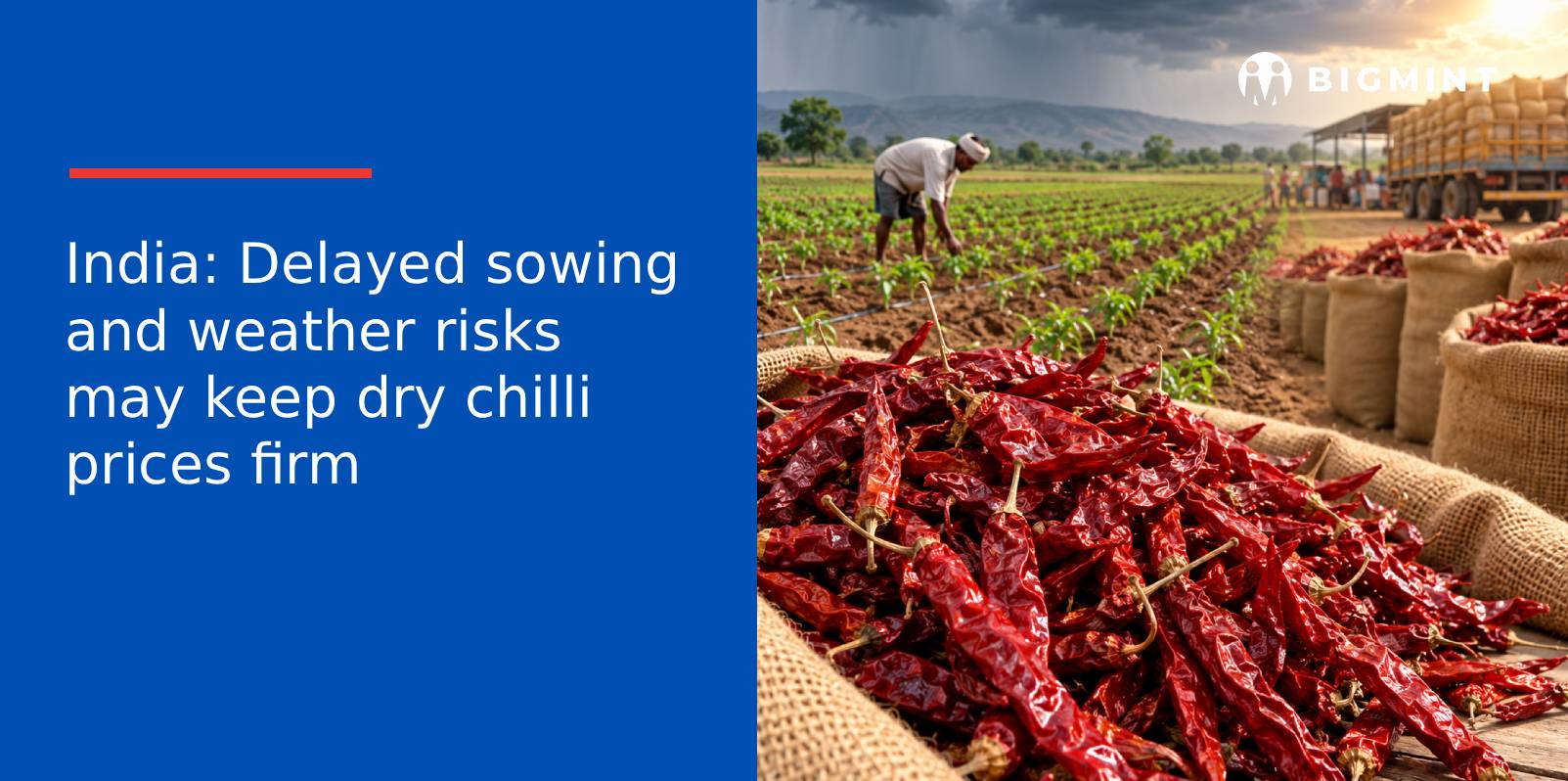
India’s dry red chilli market is entering the 2026-27 season with a firm near-term outlook, as delayed sowing, weather uncertainty and lower carryover stocks tighten supply prospects. However, increased acreage in Madhya Pradesh could improve availability later in the season, while subdued export demand may limit further price gains.
Delayed sowing raises supply concerns
In Andhra Pradesh and Telangana, sowing has reportedly been delayed by nearly a month due to inadequate rainfall, potentially postponing harvesting and fresh-crop arrivals. Although national chilli acreage is estimated to have increased by 20-30%, rainfall deficits and high temperatures could affect yields in key growing regions, including Karnataka.
Madhya Pradesh could partly offset these risks. Acreage in the state has reportedly nearly doubled, with production potentially reaching 2.5 lakh tonnes against around 1.2 lakh tonnes last season, subject to favourable crop conditions. Early arrivals in Bediya will be an important indicator of the state’s supply contribution.
Weather and export demand shape outlook
Concerns over El Niño and uneven rainfall add uncertainty to crop development. Meanwhile, carry-over stocks in Guntur, Khammam and Warangal are reportedly below year-ago levels, leaving limited buffers against delayed arrivals.
Export demand remains a potential constraint on prices. According to market participants, Indian red chilli export volumes declined around 32% y-o-y during April-July 2026, while export value increased 8.3%. Higher realisations have partly offset lower shipment volumes, but weaker Chinese demand could restrict export-led price support.
Dry chilli prices are likely to remain supported in the near term as traders monitor southern crop conditions and fresh arrivals. However, improved supplies from Madhya Pradesh could moderate prices later in the season. The market direction will depend on rainfall, realised yields, mandi arrivals and the recovery of export demand.
Leave a Reply