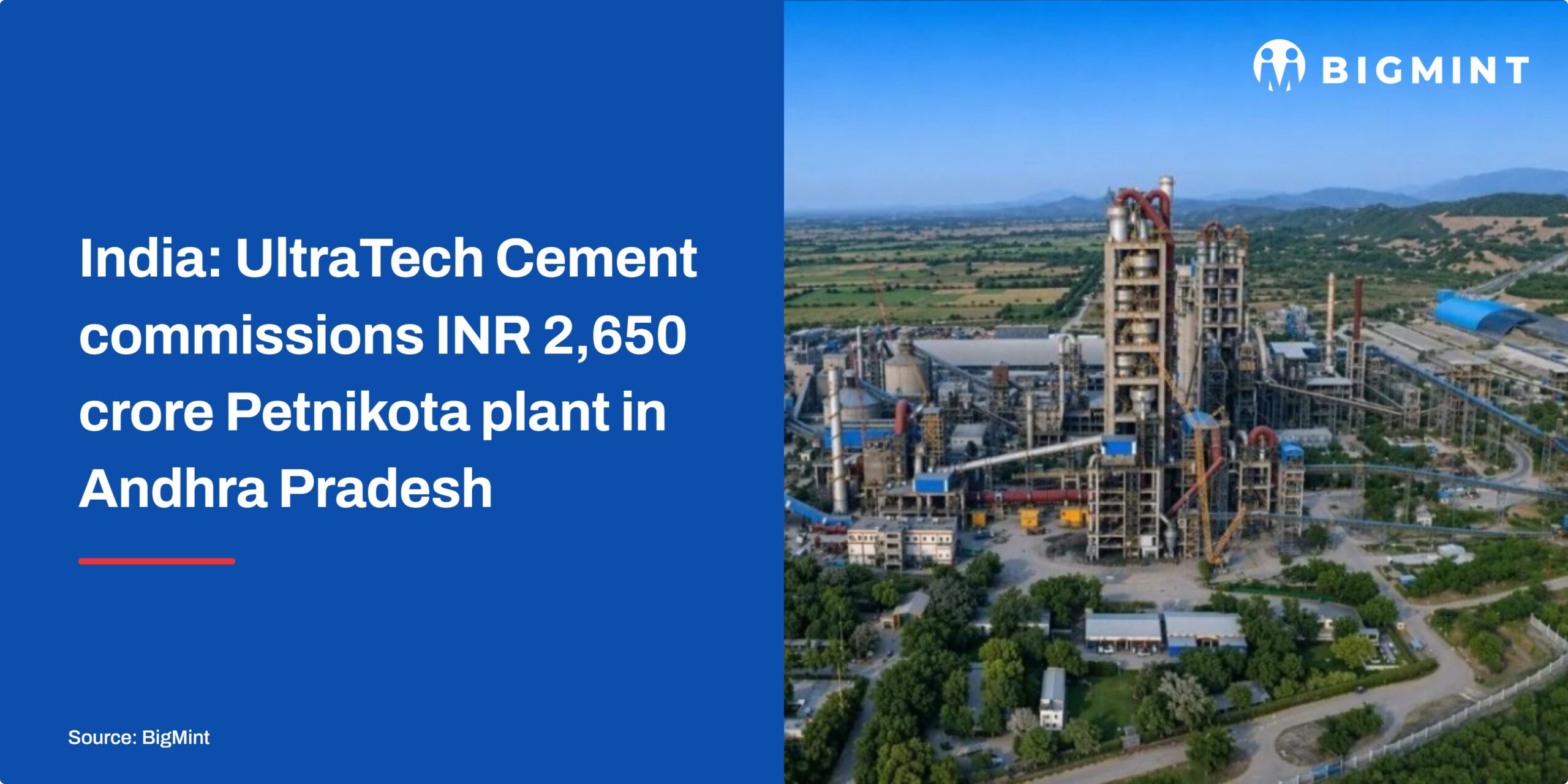
- New facility adds 3.6 mnt/year dispatch capacity in Rayalaseema
- Project includes 35 MW hybrid renewable power, 20 MW waste heat recovery
UltraTech Cement has commissioned its INR 2,650 crore Petnikota Cement Works in Andhra Pradesh’s Nandyal district, completing construction in 14 months. It was commissioned in October 2026 after construction began in May 2025. The integrated facility has an annual clinkerisation capacity of 3.3 million tonnes (mnt) and cement dispatch capacity of 3.6 mnt. The project strengthens the company’s manufacturing footprint in Rayalaseema and adds capacity to serve regional construction and infrastructure demand.
Capacity expansion and employment
It is located in Petnikota village in Kolimigundla mandal. The plant is expected to generate 650 direct jobs and 2,000 indirect employment opportunities. The project is set to support associated activities across transport, material handling, maintenance and other services.
The commissioning forms part of company’s wider capacity expansion programme. The company reported domestic grey cement capacity of 204.7 mnt/year as of September 2026, while its global capacity, including overseas operations, stood at 210.1 mnt/year.
Additional production capacity in Andhra Pradesh could strengthen local supply availability and support distribution into nearby markets. However, the actual effect on regional cement prices will depend on plant utilisation, dispatch volumes and demand absorption.
Renewable energy and resource efficiency
The Petnikota facility incorporates a 35 MW hybrid wind and solar power system supported by battery storage, alongside a 20 MW waste heat recovery system. The plant will not have a captive thermal power facility.
Water conservation is another feature of the project, with the plant planned to operate without groundwater use and instead rely on conservation and recycling systems. It also includes provisions to use plastic and municipal waste as alternative fuels, while electric vehicles are planned for mining and clinker transportation.
The plant will manufacture composite cement using slag and fly ash. Their use can reduce clinker intensity, depending on product formulations and the proportion of supplementary cementitious materials incorporated.
Automation and operational efficiency
The facility includes a robotic laboratory, real-time material analysis and process-monitoring systems. Radio-frequency identification-based vehicle tracking and unmanned weighbridges are intended to improve logistics management and operational control.
Covered raw material storage and a green belt also form part of its environmental measures.
Outlook
The commissioning increases company’s production and dispatch capability in Andhra Pradesh, but its market impact will depend on the ramp-up of operations and regional demand. Capacity utilisation, dispatch trends and the company’s ability to absorb output through housing, infrastructure and industrial projects will be key indicators of the plant’s commercial contribution. Renewable power and waste heat recovery could support energy efficiency, although actual cost benefits will depend on operating performance and energy consumption.
Leave a Reply