- 89% of urban consumers have bought a sachet; 36% use them regularly
- Only 10% would accept a 50% premium for greener sachets
Plastic sachets are almost universal in Indian homes. A CII India Plastics Pact study conducted by NIQ found that 89% of urban consumers have bought a sachet and 36% use them regularly. Reliance is highest among middle- and lower-income households in Mumbai and Bengaluru, where sachets are valued for affordability, trial and travel.
Consumers see sachets through a contradictory lens. 57% consider them environmentally friendly, yet those who see them as a problem cite littering, difficult collection and lack of proper disposal.
Willing in principle, price-sensitive in practice

74% say they would prefer sachets made from recycled plastic and 55% say they are willing to pay more. But the premium they will accept is small: only 23% would pay 10% more, and just 10% would accept a 50% premium.
Design, not price, has to close the gap
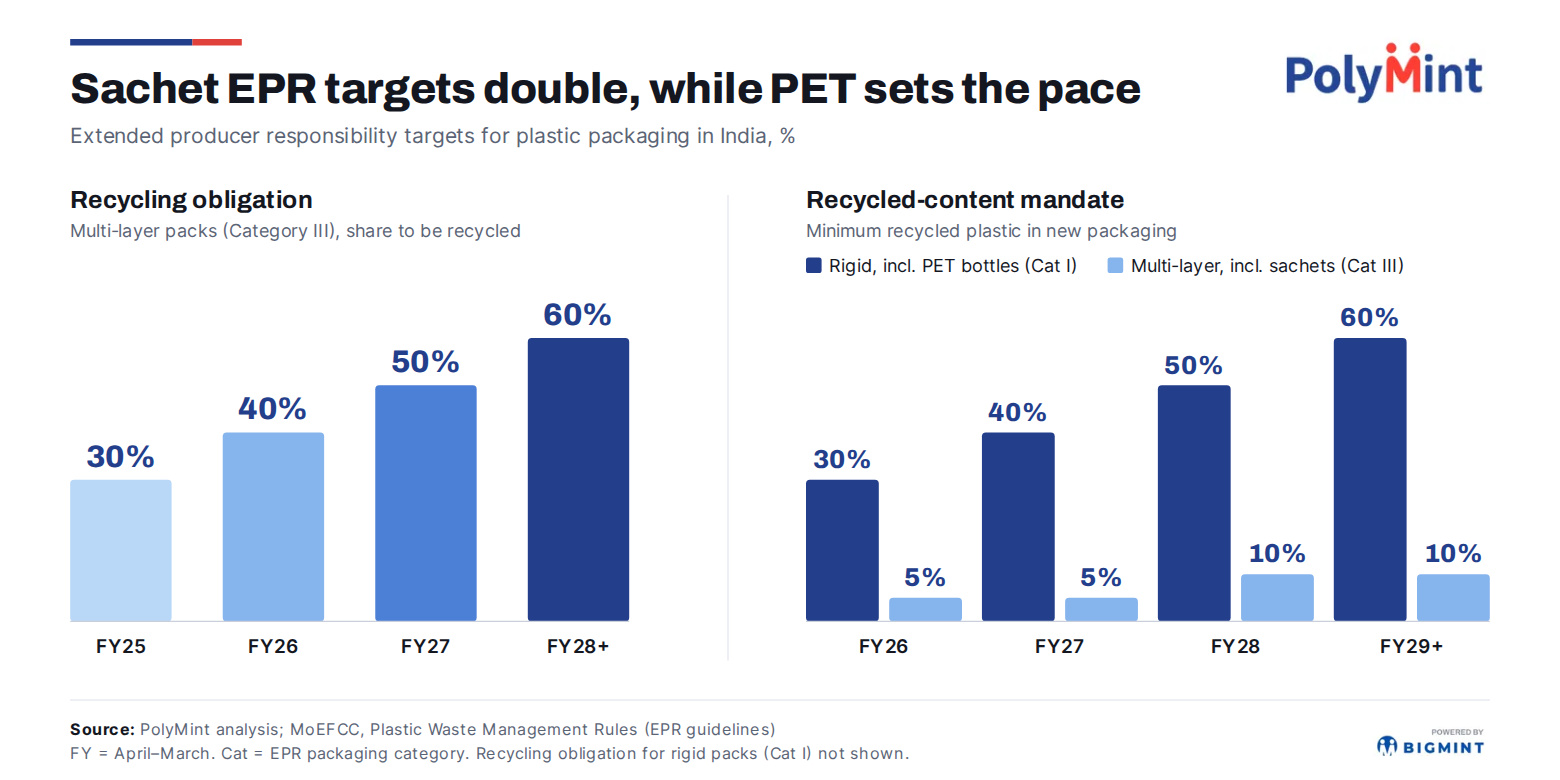
Multi-layer sachets are among the hardest packs to collect and recycle. Their EPR recycling obligation rises from 30% in FY25 to 60% from FY28, and recycled-content requirements for multi-layered packaging rise from 5% to 10%. With little room to pass on costs, brands will need mono-material and recycle-ready designs, lower-cost recyclate and better collection rather than premium pricing.
Refill and return models offer another route. The study found strong conceptual support for refills of pantry staples, cleaning products and edible oils, provided hygiene, trust and convenience are assured.
What it means for brands and converters
The stakes are high because sachets underpin affordability in categories such as shampoo, detergents, food and personal care. Any redesign that raises unit cost risks pushing consumers to smaller, cheaper or unbranded alternatives. Converters and material suppliers who can deliver recyclable sachet structures at close to today’s cost will be best placed as obligations tighten.
Fireside chat: Who pays for circular packaging?
Rajiv Kumar, Vice President, PET Business, Reliance Industries, in conversation with Jayprakash Sahu, General Manager, BigMint.
India’s PET bottle has already shown that recycling can work at scale when the material holds value. The conversation will explore what sachets and flexible packaging can learn from PET, how recycled content is priced, and whether the green premium sits with consumers, brands or the value chain. With BigMint, India’s price reporting agency for steel and raw materials and the parent company of PolyMint, in the moderator’s chair, expect a market-led discussion on prices, spreads and the signals that drive investment.
Questions on the table:
- Can recycled content reach sachets at close to today’s cost?
- Will food-grade rPET supply keep pace with rising EPR targets?
- Who should pay the green premium, the consumer, the brand or the value chain?
Join us on 22 October 2026 at Le Meridien, Ahmedabad, and be part of the conversation shaping India’s plastics value chain.

Leave a Reply