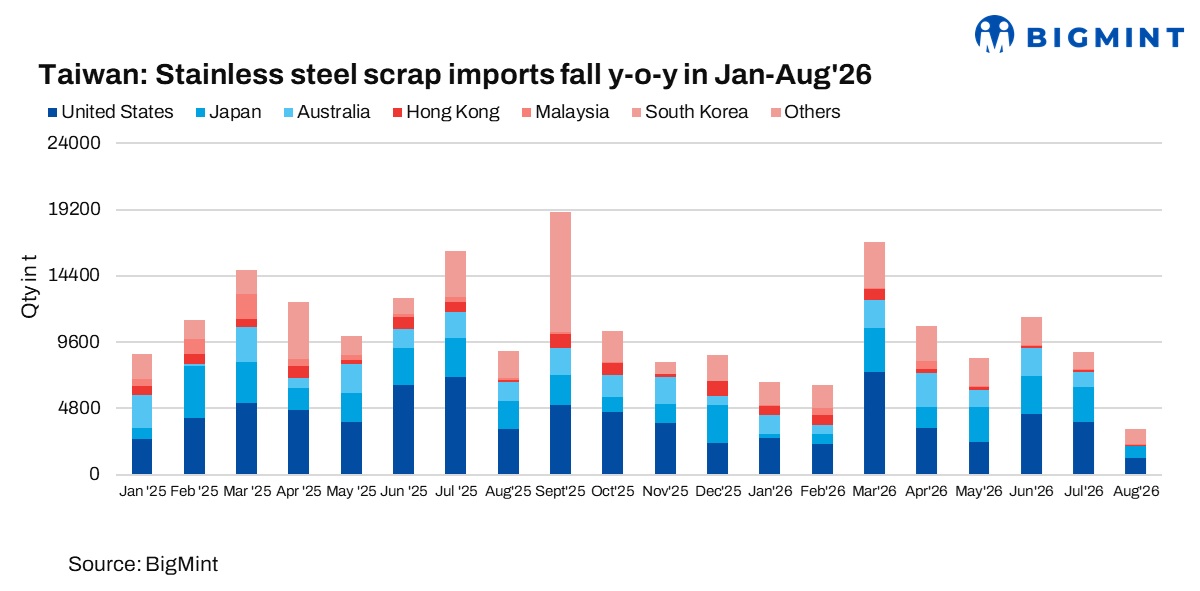
- The US, Japan and Australia remained key import suppliers
- South Korea continued to dominate Taiwan’s stainless steel scrap exports
Taiwan’s stainless steel scrap imports declined 23% y-o-y during January-August 2026, according to BigMint data, amid a significant recovery in import prices. Import volumes stood at 95,000 t, compared with 73,000 t in the corresponding period last year.
The depreciation of the New Taiwan dollar against the US dollar may have increased the cost of imported raw materials, potentially discouraging purchases. In addition, trade measures concerning Vietnamese stainless steel products may have influenced domestic market sentiment and purchasing decisions. However, the extent to which these factors contributed to the decline in scrap imports remains uncertain.
Despite the fall in imports, Taiwan’s stainless steel scrap exports increased 33% y-o-y to 47,000 t during the eight-month period, compared with 35,000 t last year. The rise in outbound shipments indicates stronger export flows, although it does not necessarily signal a recovery in overall stainless steel demand. Domestic consumption and procurement activity remain important factors to watch.
Country-wise imports
The US remained Taiwan’s largest supplier of stainless steel scrap during January-August 2026, although shipments declined 27% y-o-y to 27,000 t from 37,000 t in the corresponding period last year.
Japan supplied 14,000 t, down 22% y-o-y from 18,000 t, while shipments from Australia fell 12% to 11,000 t from 13,000 t.
The decline in shipments from all three major suppliers points to softer import activity across Taiwan’s key sourcing markets. Higher landed costs, currency movements and changes in domestic procurement requirements may influence buying decisions in the coming months.
Country-wise exports
South Korea remained the leading destination for Taiwan’s stainless steel scrap exports, with shipments rising 34% y-o-y to 35,000 t from 26,000 t in the corresponding period last year.
Japan, Thailand and India also remained key export destinations. The increase in shipments to South Korea contributed to the overall growth in Taiwan’s scrap exports, although further data would be required to determine whether the rise reflects stronger end-user demand, changes in regional trade flows or greater availability of exportable material.
Outlook
Taiwan’s stainless steel market is expected to remain focused on upcoming price announcements from major domestic producers for November. Market participants anticipate that upstream mills may announce higher prices, supported by increased raw material import costs arising from the depreciation of the New Taiwan dollar against the US dollar.
Trade developments are also influencing market sentiment. Taiwan’s Ministry of Finance has affirmed that dumped cold-rolled stainless steel imports from Vietnam caused injury to the domestic industry, providing support for local producers in the trade-remedy process.
However, the impact of these measures on stainless steel scrap demand will depend on subsequent market developments and purchasing activity. In the short term, domestic stainless steel prices are expected to remain broadly stable as buyers await official price declarations from major mills.
The direction of the New Taiwan dollar, movements in international scrap prices, and the pace of domestic demand recovery will remain key factors influencing Taiwan’s stainless steel scrap trade and pricing outlook.
Leave a Reply