- Clinker and foodgrains lead growth across major commodities
- September loading growth outpaces the first-half average
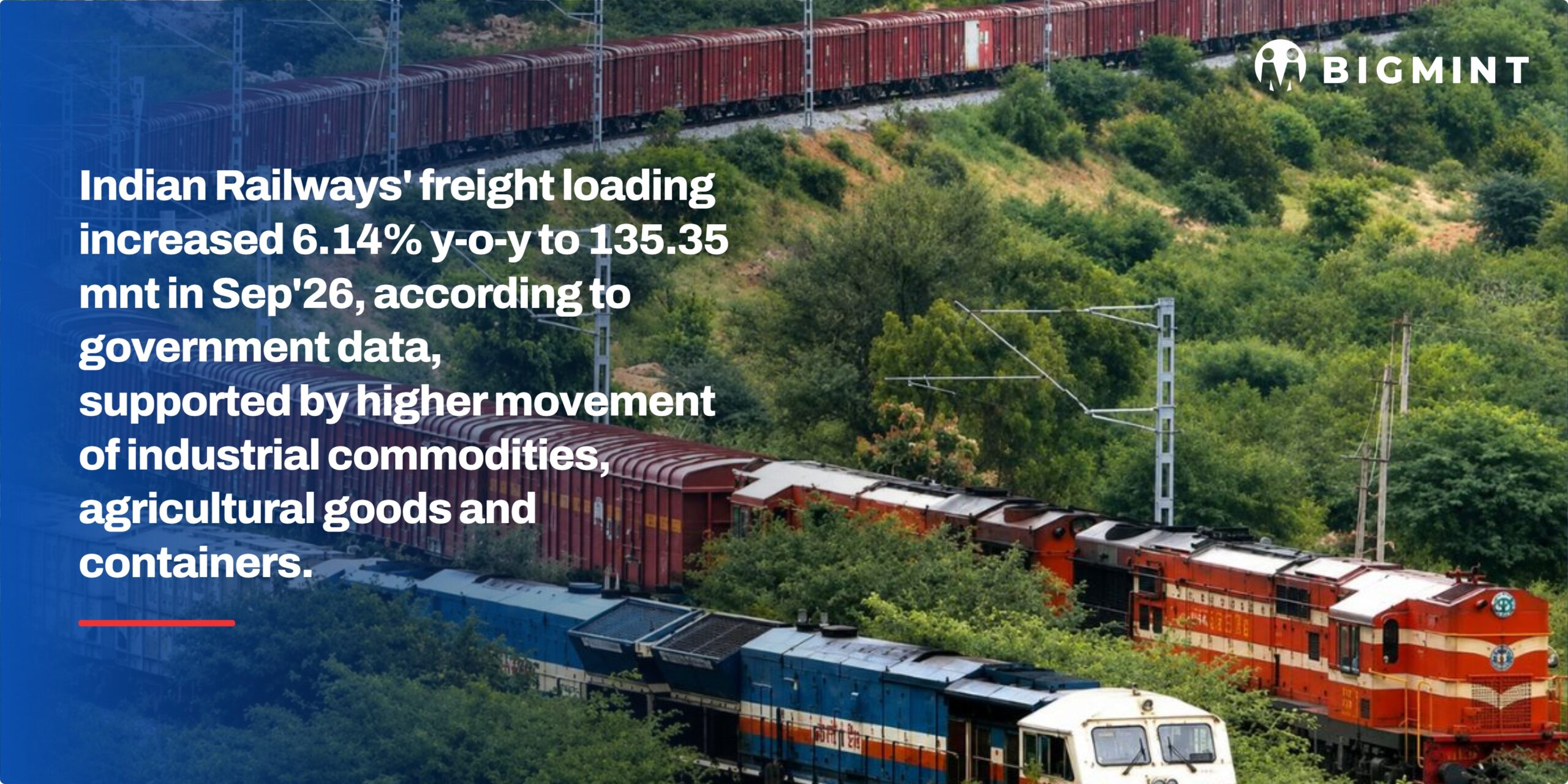
Indian Railways’ freight loading increased 6.14% year-on-year to 135.35 mnt in September 2026, according to government data, supported by higher movement of industrial commodities, agricultural goods and containers.
The broad-based growth indicates stronger transport requirements across several supply chains. Foodgrains and clinker recorded the fastest increases among the categories disclosed, while coal, finished steel, iron ore and mineral oil also registered gains.
For commodity markets, the figures provide a useful measure of physical activity. Railway loading, however, reflects production, inventory transfers, sourcing patterns and transport choices, alongside underlying consumption.
September growth strengthens
Freight loading increased by 7.83 mnt from September 2025’s 127.52 mnt. April-September loading reached 833.7 mnt, up 4.1% year-on-year. September’s faster expansion indicates stronger freight growth than the cumulative first-half average.
Freight revenue increased 9.3% in September, compared with 3.7% during April-September.

Revenue grew faster than tonnage during September, but this does not establish a general increase in freight rates. Commodity composition, haulage distances and other charging factors influence revenue per tonne.
Clinker movement signals stronger cement supply-chain activity
Clinker loading increased 20% year-on-year, making it one of September’s strongest freight categories.
Clinker moves between production units and grinding facilities. Higher loading therefore indicates greater movement within the cement supply chain, potentially reflecting stronger production, inventory transfers or changes in sourcing.
The increase is consistent with BigMint’s provisional September cement production estimate of 40.23 mnt, approximately 12.7% above 35.7 mnt a year earlier.
Clinker rail loading and cement production measure different stages of the industry, so their growth rates need not match. Nevertheless, both point towards stronger activity in a sector that generates transport demand for raw materials, fuels and finished products.
Steel and iron ore add to industrial momentum
Finished steel loading increased 5.5%, while iron ore loading rose 5.2%, indicating higher railway movement at both the raw-material and finished-product stages of the steel supply chain.
BigMint’s September figures show crude steel production at 14.1 mnt, up 2.9% year-on-year, and sponge iron output at approximately 5 mnt, up 6.2%.
Differences between production and freight growth are expected. Stock movements, dispatch schedules, sourcing distances and the balance between road and rail transport influence monthly loading.
For market participants, the combined figures suggest that industrial transport requirements remained firm, although railway growth alone cannot establish the strength of final steel consumption.
Coal movement improves, but supply pressure remains
Coal loading increased 9%. Average coal rakes supplied to power houses rose to 443/day from 397/day in September 2025, an increase of 11.6%.
The stronger movement supported higher coal-fired generation. However, monitored power plants consumed approximately 78.64 mnt during September against receipts of 70.79 mnt across transport modes.
The resulting inventory drawdown illustrates a wider logistics challenge: increased national throughput does not necessarily mean that deliveries are sufficient at every destination.
Reliability becomes the next test
Higher freight volumes increase the importance of efficient loading, route availability, wagon turnaround and unloading.
The disclosed figures demonstrate that the railway network carried more material. They do not establish whether congestion increased on individual routes or whether transit times improved.
For consumers, dependable arrival schedules determine how much inventory must be held. For producers, reliable evacuation affects stock accumulation and the ability to sustain output.
Outloook
September’s railway performance points to broad-based growth in physical commodity movement, with cement-related cargoes, steelmaking materials, energy products and agricultural shipments all contributing.
The stronger monthly performance is encouraging. Sustaining it will require higher throughput to be matched by reliable delivery.
For commodity producers and buyers, the commercial benefit will depend on whether the network can move additional volumes consistently while keeping transit times and inventory requirements manageable.
Leave a Reply