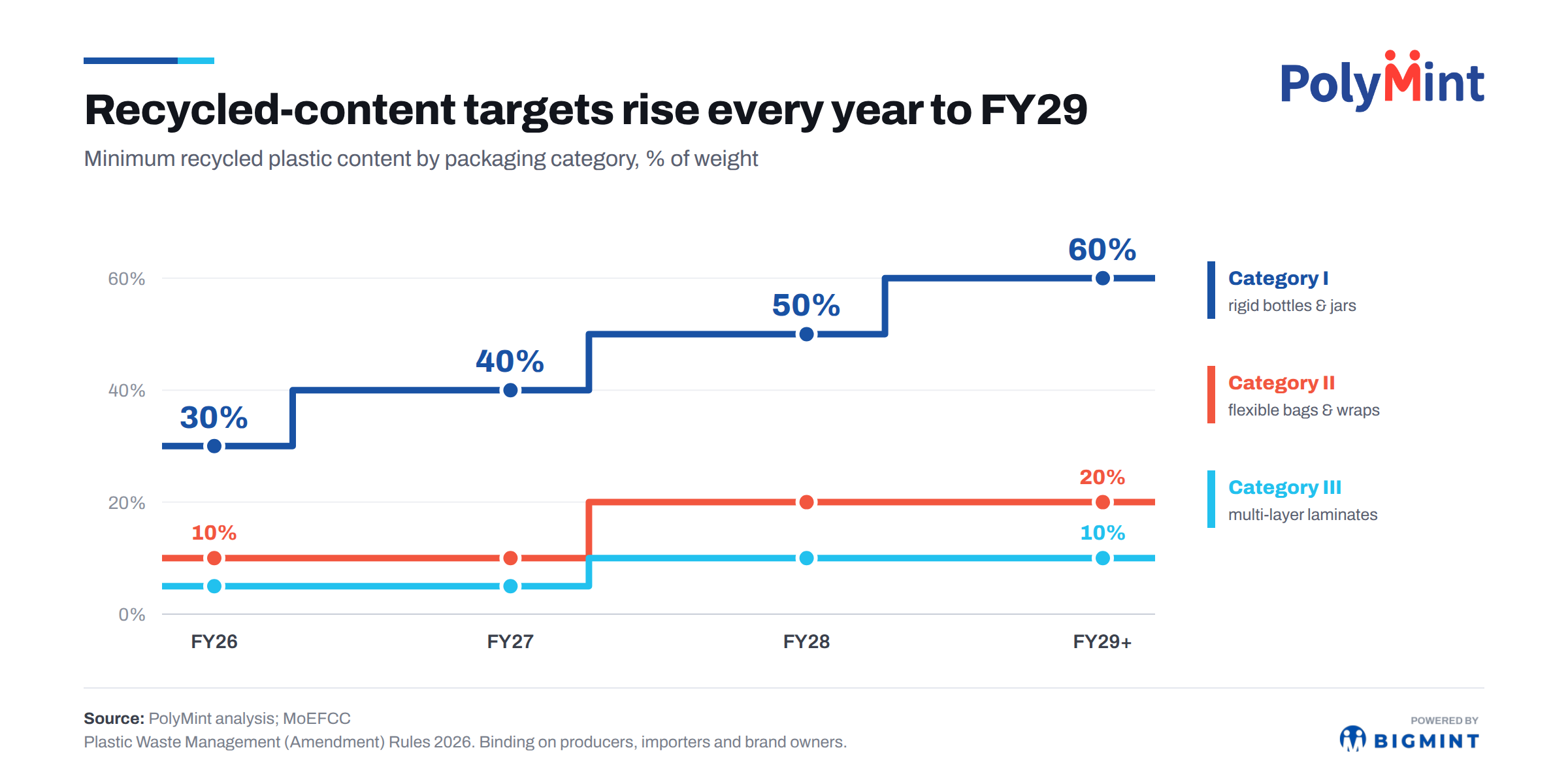
- Flexible packaging target doubles to 20%, multi-layer to 10%
- Gujarat adds new rPET and multi-layer recycling capacity
India’s recycled-content rules are now legally binding and rise every year. Under the Plastic Waste Management (Amendment) Rules 2026, producers, importers and brand owners must use at least 30% recycled plastic in rigid packaging such as PET and HDPE bottles and jars in FY26, rising by ten points a year to 60% by FY29. Flexible packaging moves from 10% to 20%, and multi-layered packaging from 5% to 10%.
The 2026 amendment eased timing, not targets: shortfalls can be carried forward over three years, provided at least a third is cleared each year. Put simply, a tonne of rigid packaging that needed 300 kg of recycled resin in FY26 will need 600 kg by FY29. From that point, recycled material outweighs virgin in every compliant pack. India consumed 1.56 mt of PET chips in FY25, 97% of it made at home, so a growing share of that demand now has to come from recyclers rather than resin plants.

Why West India will feel it first
Gujarat accounts for a major part of India’s plastics sector, according to the state government, and its converters in Rajkot, Halol and Vapi supply brand owners across the country. Recyclers are already moving: JB rPET’s Surat plant is rated at 58,000 t/yr, Chemco opened a PET recycling plant in Gujarat in January 2026, and Deluxe Recycling doubled its multi-layer recycling capacity to 27,400 t/yr with a new plant at Sarigam.
At PLAST.CONNECT 2026 — Ahmedabad, PolyMint will bring together brand owners, converters, recyclers, compliance specialists and policymakers to discuss rising recycled-content targets, EPR compliance, recyclate quality and the pricing gap between recycled and virgin resin.
The “PCR, Mono-materials & Sustainability” panel will examine how brands and converters can scale PCR use, shift to mono-material packaging and design for recycling as the rigid packaging mandate climbs to 60%, with a focus on West India’s recycling and converting hubs.
The “Circular Economy, EPR & Recycling Roadmap” panel will take the discussion further, looking at EPR implementation, the collection and sorting infrastructure the targets depend on, and what policy and industry collaboration is needed to close the loop.
Join us on 22 October in Ahmedabad and be part of the conversation shaping India’s journey from resin to recyclate.

Leave a Reply