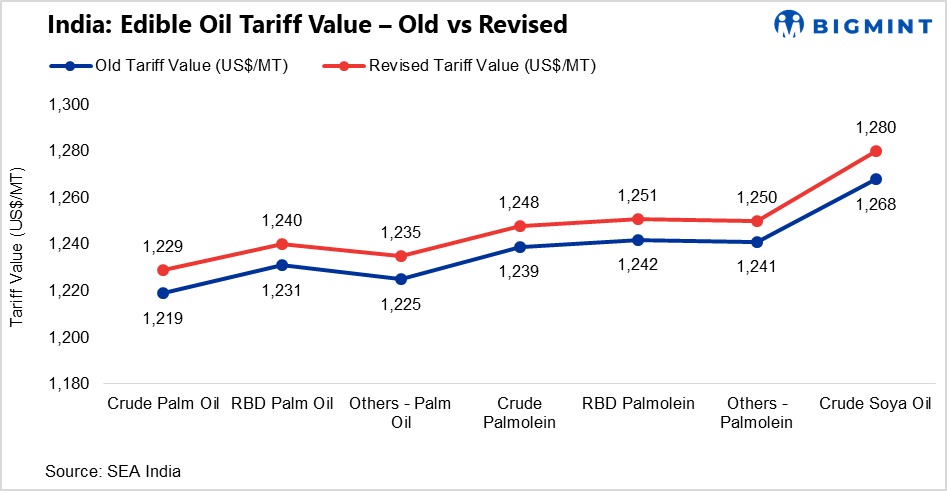
- Crude palm, soybean oil tariff values rise by $ 10-12/t, but effective duty falls to 11%
- Rupee import duty declines by INR 5,495-6,277/t across major palm, soybean oils
India’s edible oil import economics improved from 1 October after the government revised tariff values and effective import duty rates for major palm, palm olein and soybean oil products. While tariff values increased by $ 9-12/tonne (t), lower effective duty rates resulted in a significant reduction in the rupee-denominated import duty burden.
The tariff value for crude palm oil increased to $ 1,229/t from $ 1,219/t, while its effective import duty was reduced to 11% from 16.5%. For crude soybean oil, the tariff value increased to USD 1,280/t from $ 1,268/t, while the effective duty also fell to 11%.
Palm oil duty burden declines
For crude palm oil, the rupee import duty fell to INR 13,107/t from INR 19,158/t, a reduction of INR 6,051/t, despite the higher tariff value.
The tariff value for RBD palm oil increased by $ 9/t to $ 1,240/t, while the effective duty declined to 30.25% from 35.75%. Its rupee import duty fell by INR 5,552/t to INR 36,366/t from INR 41,918/t.
For other palm oil, the tariff value rose by $ 10/t to $ 1,235/t, while the effective duty fell to 30.25%. The corresponding rupee duty declined by INR 5,495/t to INR 36,219/t from INR 41,714/t.
Palm olein, soybean oil see similar reductions
The tariff value for crude palm olein increased by $ 9/t to $ 1,248/t, while the effective duty fell to 11%. Its rupee import duty declined by INR 6,163/t to INR 13,309/t from INR 19,472/t.
For RBD palm olein, the tariff value rose by $ 9/t to $ 1,251/t, while the effective duty declined to 30.25%. The rupee duty fell by INR 5,603/t to INR 36,689/t from INR 42,292/t.
The tariff value for other palm olein increased by $ 9/t to USD 1,250/t, while its rupee duty declined by INR 5,599/t to INR 36,659/t from INR 42,258/t.
For crude soybean oil, the tariff value increased by $ 12/t to $ 1,280/t, while the effective duty fell to 11%. The rupee import duty declined by INR 6,277/t to INR 13,651/t from INR 19,928/t, the largest reduction among the covered products.
Lower duty offsets higher tariff values
The revised tariff values were calculated using an exchange rate of INR 96.95/$, compared with INR 95.25/$ previously. Despite the higher exchange rate and tariff values, the lower effective duty rates more than offset the increase in the tariff base.
The change reduces the duty component of imported edible oils across both crude and refined categories. The impact is particularly significant for crude oils, where the effective duty has declined by 5.5 percentage points.
Outlook
The revised structure is expected to improve import economics for edible oil importers in the near term, particularly for crude palm, crude palm olein and crude soybean oil. Lower duties could improve the competitiveness of imports and increase buying interest if international vegetable-oil prices remain subdued.
The lower import cost could also exert pressure on domestic edible-oil prices. However, the extent of the impact will depend on global palm and soybean oil prices, the rupee-dollar exchange rate, domestic demand and import volumes. A weaker rupee or firmer international prices could partly offset the benefit from lower duties.
Leave a Reply