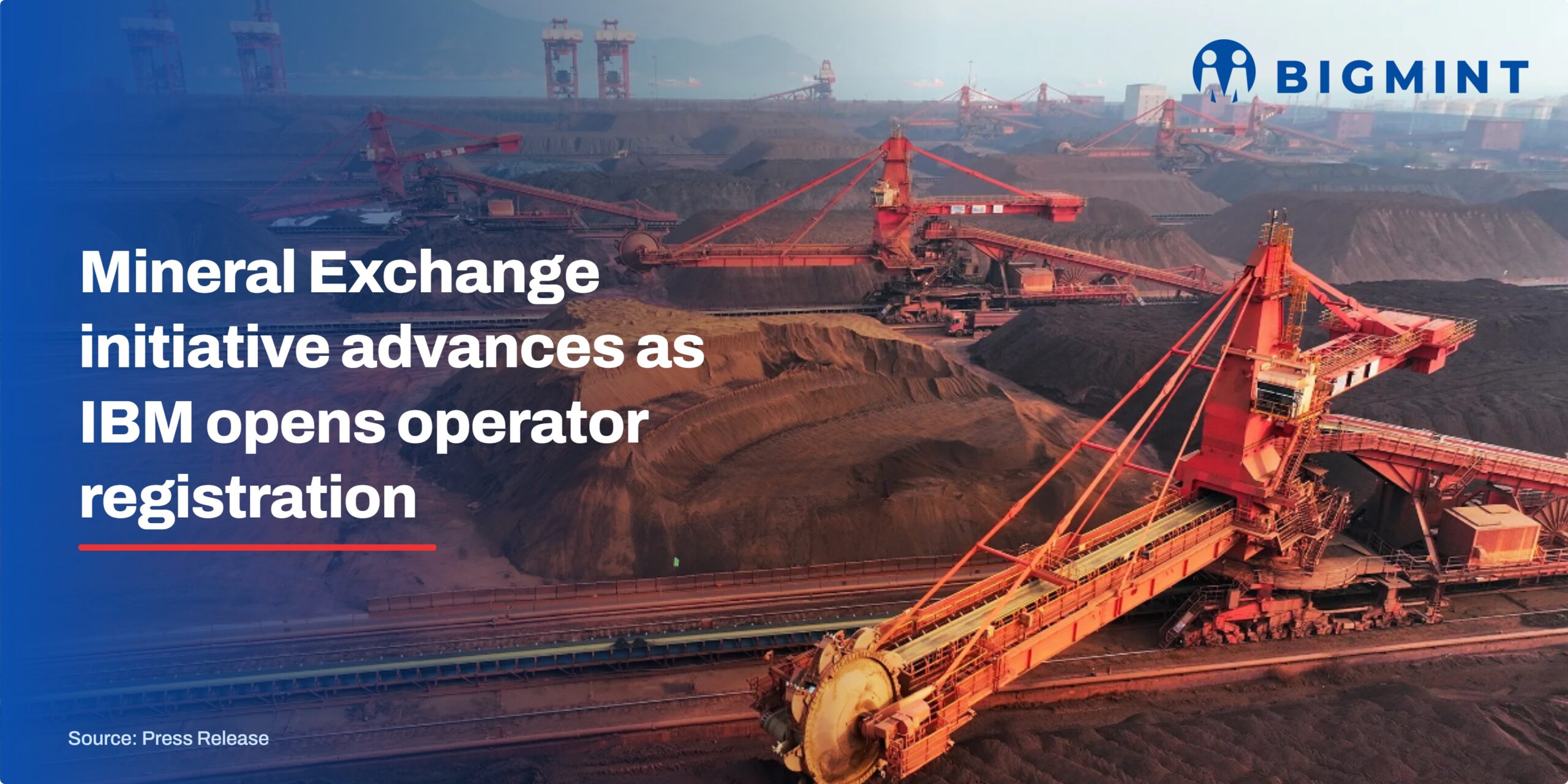
- IBM opens registration for mineral exchange
- Platform may bring greater transparency to price discovery
The Indian Bureau of Mines (IBM) has invited applications from eligible companies for registration as a Mineral Exchange in India, marking a key step towards establishing a regulated electronic platform for minerals trading.
The notice, issued on 1 October 2026 under the Mineral Exchange Rules, 2026, invites applications for establishing and operating the exchange. The NIA document became available from 3 October, while the last date for submission is 2 November 2026 at 15:00 hrs. Applicants are required to pay a non-refundable application fee of INR 300,000.
Iron ore among key minerals under framework
The proposed Mineral Exchange will facilitate delivery-based contracts for minerals, with the initial framework covering iron, chromite, bauxite, limestone and manganese. The exchange is intended to promote fair, transparent and efficient trading and price discovery.
For iron ore, the development could eventually provide a more structured mechanism for physical transactions, particularly through standardised contracts, quality specifications, bidding and price discovery. The guidelines require the exchange to establish mechanisms covering bidding, matching, clearing, settlement, delivery and quality assurance. Individual contracts will require approval from the authority before the exchange can become operational.
Significant entry and compliance requirements
IBM has prescribed a minimum net worth of INR 50 crore for applicants. The proposed exchange will also have to meet requirements related to governance, ownership, IT infrastructure, cybersecurity, risk management and market surveillance.
The financial requirements include a one-time registration fee of INR 50 lakh and an annual fee of INR 30 lakh, while the renewal fee is specified at INR 2 crore.
The successful applicant will receive registration for 25 years, subject to compliance with the applicable rules. Existing commodity trading platforms operating before notification of the Mineral Exchange Rules will also have to obtain registration within the prescribed transition period once the first mineral exchange becomes operational.
Framework moves from policy to implementation
The latest notice moves the government’s mineral exchange initiative from the regulatory framework stage towards selection of an exchange operator.
For the iron ore market, the eventual impact will depend on the contracts approved, participating miners and buyers, trading liquidity and the extent to which exchange prices are accepted as a market reference. A liquid delivery-based exchange could improve price transparency and standardisation, but the platform’s influence on existing iron ore benchmarks is likely to emerge only after meaningful market participation.
Leave a Reply