- October US NAPP coal offers reach $190/t; bids trail by $15/t
- Cement buyers favour domestic fuel as petcoke costs climb
India’s imported petcoke and US Northern Appalachian (NAPP) coal markets enter October with firm offers but increasing resistance from industrial consumers. Tight portside availability supports sellers, while cement producers increasingly favour domestic coal, existing inventories and selective replenishment over expensive imported fuel.
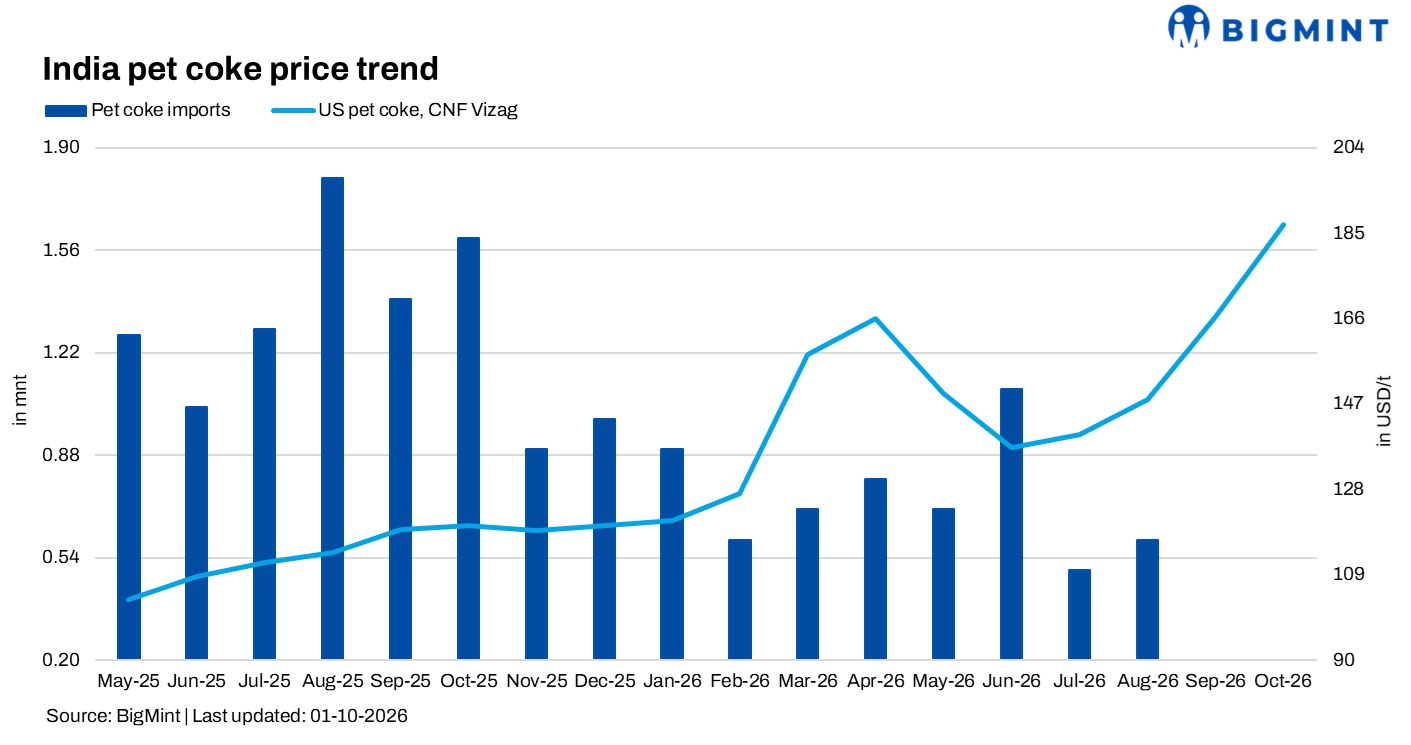
October-arrival US NAPP cargoes are being offered at $190/t CFR west coast India (WCI), against a best bid heard at $175/t. Imported petcoke offers have also reached approximately $185-190/t, prompting cement buyers to reassess procurement and fuel mixes.
The immediate market remains supported by limited saleable stocks. However, substantial October cargo arrivals could ease pressure if discharge schedules are maintained.
Petcoke strengthens at origin
US Gulf petcoke prices increased in the week ended 30 September. The 6.5% sulphur grade rose $9/t to $107/t FOB, while 4.5% sulphur material advanced by the same amount to $114/t. Delivered prices in Turkiye and China also strengthened, indicating broader international support.
Indian import offers have risen sharply through September, from predominantly $153-160/t early in the month to approximately $185-190/t by 1 October.

Indian price ranges vary by specification, cargo and delivery terms.
Cement buyers resist higher replacement costs
Cement-sector buying remains selective as imported petcoke prices increasingly exceed consumers’ acceptable replacement costs.
Some producers continue to draw on inventories purchased near $140/t, supplemented by domestic refinery supplies. Others have retained or increased coal consumption as imported petcoke becomes less competitive.
By 1 October, cement buyers were reporting petcoke offers around $185-190/t but limited bidding interest. One producer indicated that domestic coal accounted for approximately 70% of its fuel mix, with buying interest for imported petcoke at only $131-135/t.
Although this represents an individual buyer’s position, it illustrates the extent of resistance. Producers with adequate inventories can defer purchases, while consumers facing immediate shortages have less flexibility.
Trading activity consequently remains concentrated around urgent replenishment. Elevated import prices are also generating additional enquiries for domestic coal, although high domestic auction premiums and quality requirements can limit the savings available.
NAPP supply commitments extend into 2027
US NAPP sellers retain support from tight producer availability and limited prompt Indian stocks.
Core Natural Resources is reportedly fully sold out for January and February 2027 and is offering subsequent NAPP availability at $125/t FOB Baltimore. Buyers seeking fresh producer allocations therefore face an extended procurement horizon.
In India, traders’ October-arrival offers at $190/t CFR WCI remain $15/t above the best bid heard at $175/t. This gap highlights the difficulty of converting firm offers into transactions at prevailing replacement costs.
Retail offers rise despite subdued buying
Indian portside NAPP offers increased from approximately INR 17,000-18,200/t in mid-September to predominantly INR 19,000-19,300/t by month-end. Some quotations reached INR 19,400/t, although lower offers around INR 18,500/t remained available.
Forward bookings were indicated at INR 17,500-18,000/t, below prompt quotations, suggesting an expected easing in immediate scarcity once additional cargoes arrive.
Spot transactions reported on 23 September were around INR 18,000-18,200/t. Subsequent offer increases have coincided with subdued consumer buying, with market participants describing purchases as largely need-based.
The distinction is important: higher quotations reflect tight availability and sellers’ replacement expectations, while transaction volumes remain constrained by affordability.
Kandla and Tuna stocks remain concentrated
Combined retail inventories at Kandla and Tuna stood at 71,092 tonnes on 28 September. Kandla accounted for 70,520 tonnes, while Tuna held only 572 tonnes. Weekly lifting was 13,757 tonnes.
Approximately 67,000 tonnes were concentrated in a single stockholding, leaving limited availability across other sellers. This concentration helps explain why prompt offers remain elevated despite uneven lifting.
End-September trading estimates generally pointed to continued tightness, although stock assessments varied with discharge timing and the material included.
October pipeline offers replenishment potential
Vessel tracking indicates approximately 0.99 mnt of NAPP heading towards retail and mixed retail–industrial channels, including 0.89 mnt scheduled for October arrival.
A further 0.86 mnt is identified for industrial receivers, of which approximately 0.57 mnt carries October arrival dates. An additional 55,000 tonnes of ILB coal is tracked separately.
Combined NAPP cargo visibility therefore stands at approximately 1.86 mnt, including 1.46 mnt scheduled for October. Retail-channel arrivals are concentrated at Tuna and Kandla, while industrial cargoes are spread across western and eastern ports.
The pipeline is substantial relative to current retail stocks, but industrial allocations will not necessarily become available for open-market sale.
Loading delays at Baltimore have also affected delivery expectations. Trading sources attribute some delays to slower cargo feeding and rail availability, making actual arrival and discharge dates central to the October balance.
BigMint assessment
Petcoke and NAPP markets remain supported by firm overseas prices, committed producer supply and thin prompt inventories. Indian consumers, however, are increasingly resisting higher replacement costs through domestic fuel substitution and deferred buying.
October arrivals will determine whether this resistance translates into softer retail prices. Timely replenishment could reduce scarcity premiums, particularly at Kandla and Tuna. Further delays would sustain sellers’ pricing advantage and leave buyers with immediate requirements exposed.
For cement producers, procurement flexibility remains decisive: the ability to switch fuels or draw on existing inventories provides greater protection than reliance on fresh imported cargoes at current offers.
Leave a Reply