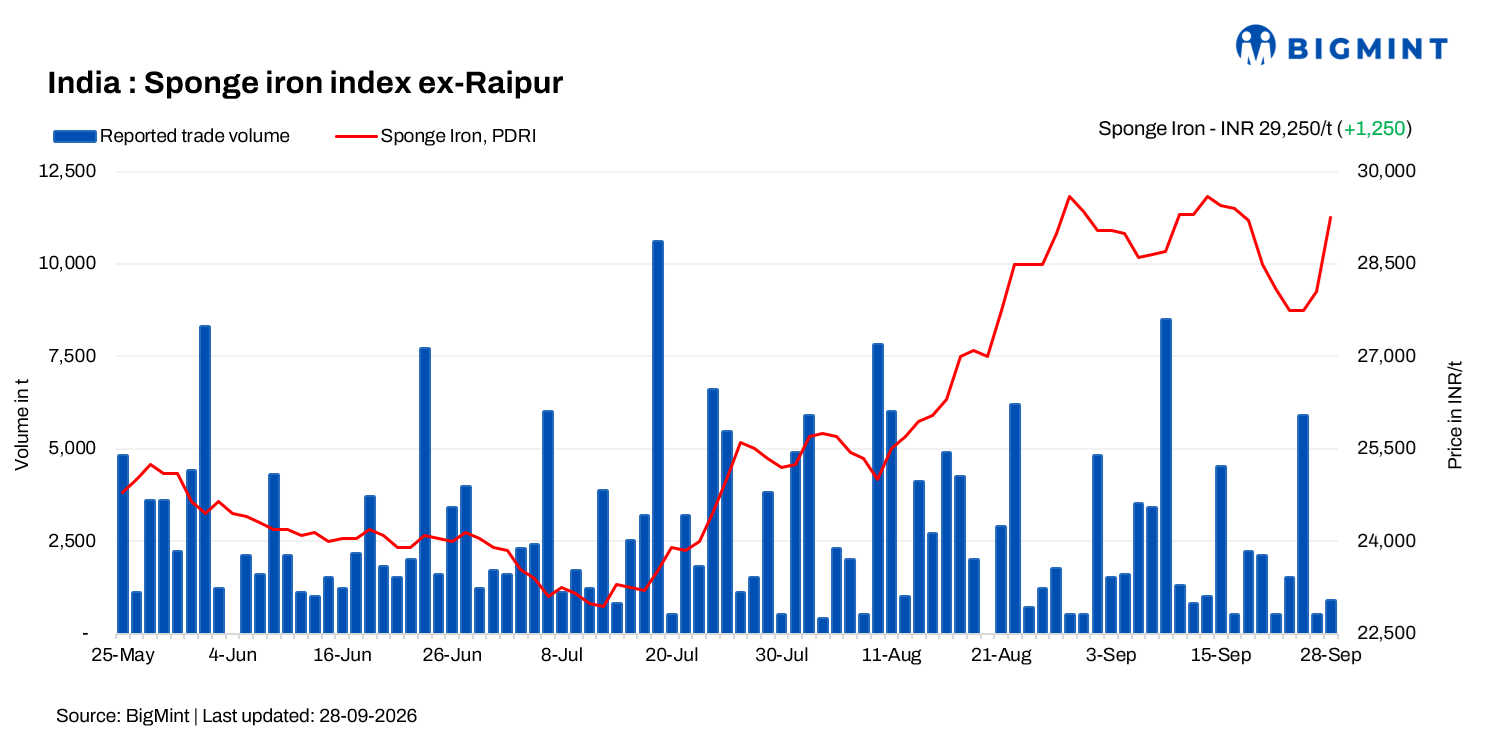
- Raipur, Raigarh see sharp hikes amid large coal-based producer base
- Finished steel prices climb higher by INR 200-1,400/t d-o-d
Domestic sponge iron prices surged by around INR 1,100-1,300/t d-o-d on 28 September 2026, with the sharpest increases recorded in Raipur and Raigarh. The rise was primarily attributed to a significant increase in non-coking coal prices in the SECL auction held on 26 September, raising the near-term cost of sponge iron production. BigMint’s Raipur PDRI prices settled at around INR 29,250/t, up INR 1,250/t d-o-d.
The sharp increase in coal procurement costs triggered an immediate reassessment of sponge iron offers, with producers and suppliers raising spot prices to offset higher input costs. Market participants reported sharply higher prices across Raipur and Raigarh, where coal-based sponge iron production remains particularly sensitive to domestic non-coking coal prices. Improved sentiment in the finished steel segment also supported the sponge iron market, with prices rising by around INR 200-1,400/t.
Buying activity remained moderate across the eastern region, while other regions witnessed a cautious approach. Sellers continued to raise offers, keeping enquiry levels healthy; however, buyers remained hesitant to convert enquiries into actual trades at higher price levels. Consequently, despite firm offers and improved sentiment, overall trade activity remained limited.
Meanwhile, BigMint recorded overall trade volumes of around 13,000 t today, slightly higher than the previous day. The increase indicates healthy market participation despite cautious buying. Overall, the sponge iron market remained firm, supported by higher coal costs and stronger finished steel prices, while buyers continued to assess the sustainability of the sharp price increase.
Rationale
Prices have been derived based on transactions, offers, bids, and indicative price data sets. Transactions are considered as T1 and given aweightage of 50%, whereas other data sets are considered as T2 and given a weightage of the balance 50%.
Click here for detailed methodology


Leave a Reply