- Billet prices rise INR 800/t in Bhavnagar, INR 500/t in Mandi
- Demand outlook uncertain as rebar prices remain largely stable
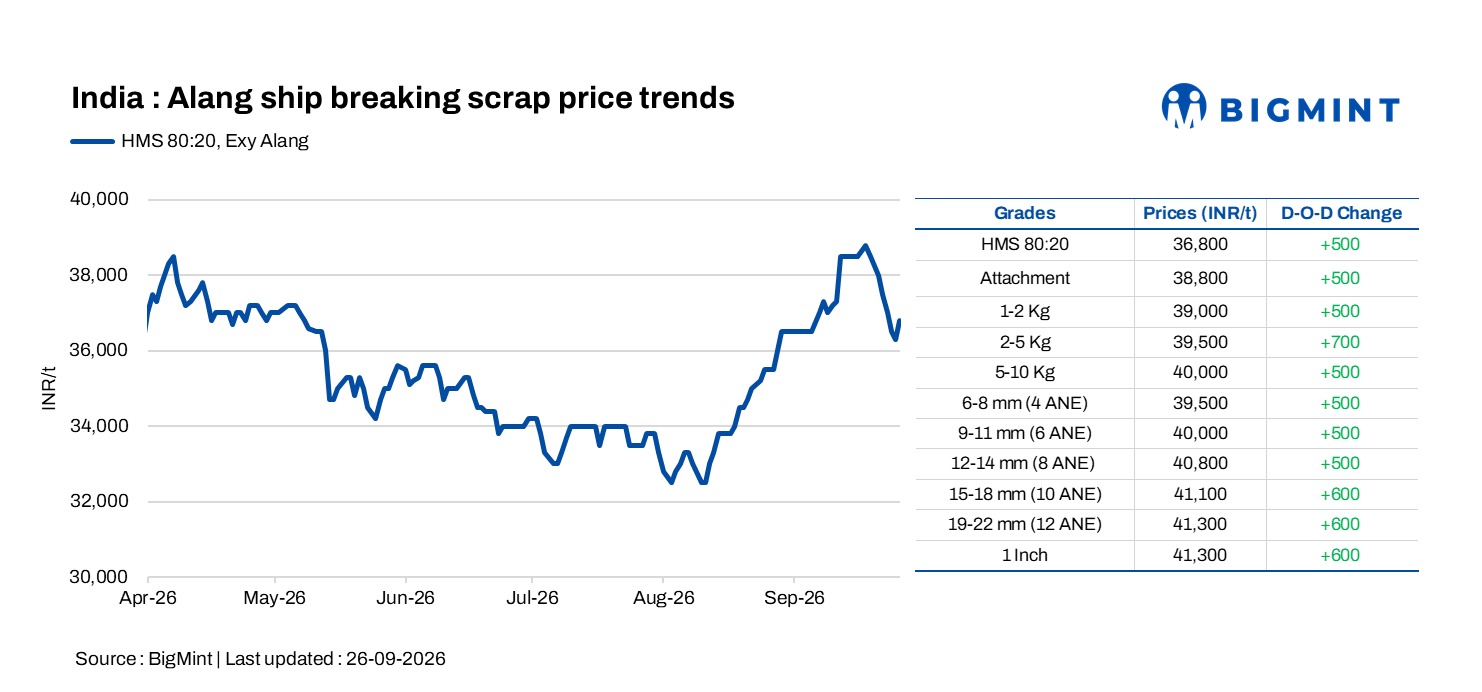
Alang’s ship-breaking melting scrap prices (HMS 80:20) increased by INR 500/t d-o-d to INR 36,800/t ($384/t) ex-yard on 26 September, supported by firmer billet prices in Gujarat and Mandi Gobindgarh.
The rise in Alang came as billet markets strengthened, improving mills’ replacement-cost calculations and providing a firmer floor to scrap values. The broader market, however, remains dependent on the extent to which higher raw material costs can be passed through to finished steel buyers.
Gujarat market update

In Gujarat, Bhavnagar billet prices increased by INR 800/t d-o-d to INR 46,000/t DAP on 26 September. The sharp rise in billet values strengthened the cost-side support for melting scrap and indicated improved price acceptance in the semi-finished steel market.
However, the movement remained uneven across the value chain. Ahmedabad rebar prices were unchanged at INR 51,200/t ex-works, suggesting that higher input costs have not yet translated into a broad-based recovery in finished steel prices.
The divergence between stronger billet and stable rebar prices points to continued caution among downstream buyers. Mills may therefore remain selective in their scrap procurement, particularly if finished steel demand does not improve sufficiently to sustain higher conversion margins.
Mandi market update
Mandi Gobindgarh witnessed a firmer trend across raw materials, semi-finished steel, and finished products. Billet prices increased by INR 500/t d-o-d to INR 47,000/t DAP, while HMS melting scrap prices also rose by INR 500/t to INR 38,000/t DAP.
Rebar prices edged up by INR 100/t to INR 51,900/t ex-works. The simultaneous increase across the scrap-billet chain, along with the marginal rise in rebar prices, indicates a comparatively firmer tone in the market.
The rise in billet prices is particularly significant for scrap sentiment, as stronger semi-finished steel values can improve mills’ ability to accommodate higher scrap costs. At the same time, the limited increase in rebar prices suggests that demand remains measured and that mills may continue to balance procurement against actual order flow.
Outlook
The near-term market direction will depend on whether the recent increase in billet prices is sustained and gains further support from finished steel demand. For scrap sellers, firmer billet values provide room to seek higher prices, while mills are likely to remain sensitive to their conversion margins and downstream sales.
If finished steel prices gain further, mills could face greater pressure to replenish scrap at higher levels. Conversely, if rebar demand remains subdued, resistance to further scrap price increases could emerge despite elevated billet values.

Leave a Reply