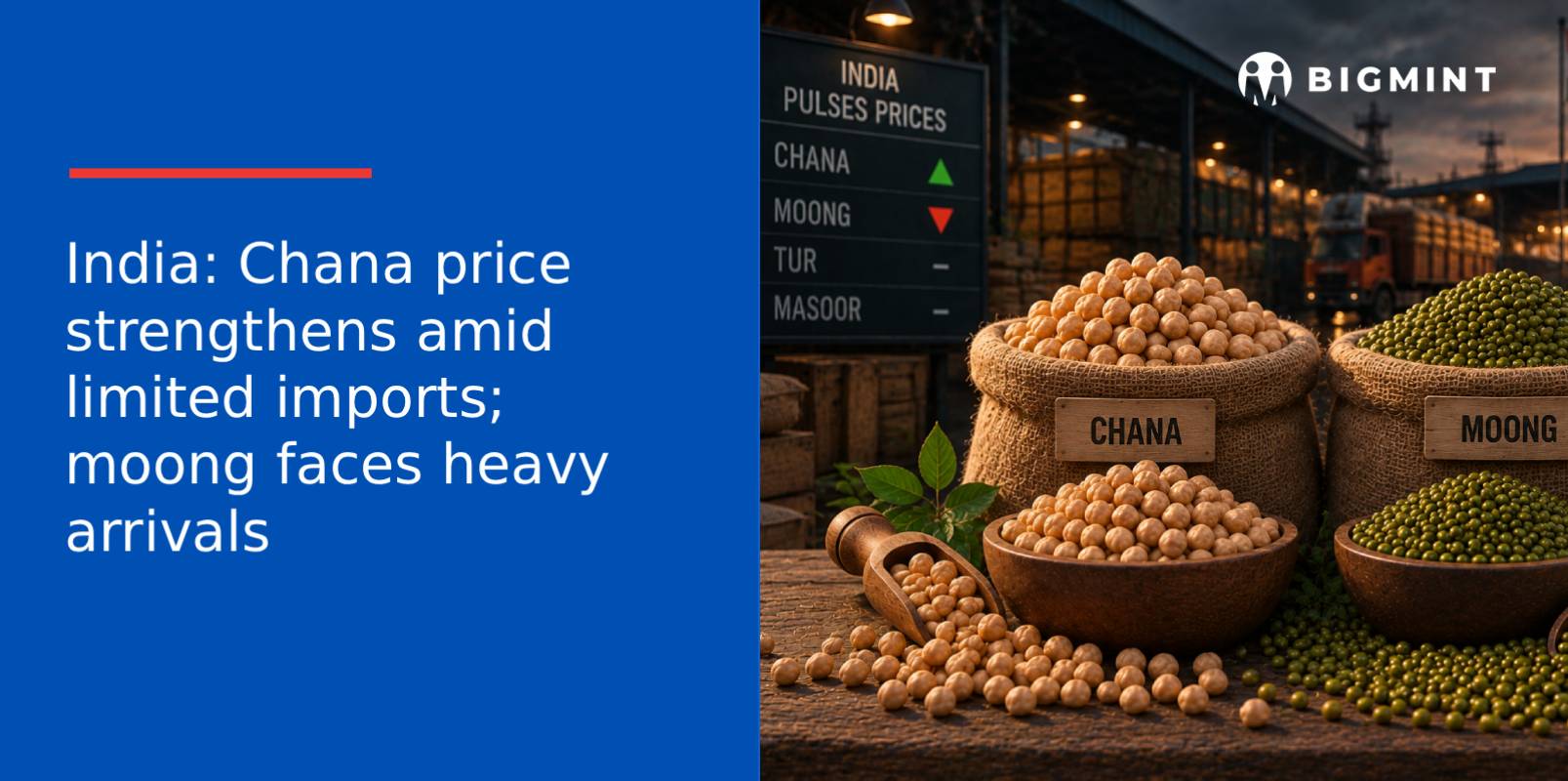
- Delhi chana crosses INR 7,000/qtl amid limited imports
- Moong exports rise over five-fold to 224,000 t in Jan-Jul 2026
India’s pulses market showed mixed trends on Sept 23, with chana prices crossing the INR 7,000/qtl, while moong faced pressure from a sharp rise in new-crop arrivals in Rajasthan. Strong export demand, particularly from China, is providing support to moong, while weather conditions are emerging as a key factor for urad and tur.
Moong faces heavy arrivals
Rajasthan recorded around 63,000 t of new moong arrivals during Sept 1-18, compared with 6,453 t in the same period last year and 7,574 t in 2024. The sharp rise has created near-term supply pressure. However, Rajasthan’s average moong price increased from around INR 7,000/qtl in early September to nearly INR 7,960 by Sept 17, indicating continued demand for good-quality material. Premium moong continued to command higher prices, with select varieties quoted above INR 10,000/qtl.
Export demand supports moong
India’s moong exports rose to 224,000 t during Jan-Jul 2026, compared with 42,548 t a year earlier. China accounted for around 166,000 t, while exports to Bangladesh, Vietnam, the UAE and Indonesia also increased. Despite strong exports, farmers received an average of around INR 7,452/qtl, below the Minimum support price (MSP) of INR 8,780. The price gap could influence planting decisions and potentially reduce acreage next season.
Pulses imports show divergent trends
India’s total pulses imports reached 1.73 Mnt during Apr-Jul 2026, up more than 62% year-on-year. Jan-Jul imports stood at 3.61 million Mnt, compared with 3.47 Mnt last year.
Masoor imports rose 73% to 1.15 Mnt, tur increased 44% to 579,000 t, and yellow pea imports rose 11% to 729,000 t. In contrast, chana imports declined 45% to 642,000 t, while urad imports fell 14% to 395,000 t.
Weather remains key for urad and tur
Above-normal rainfall in parts of Madhya Pradesh and Bundelkhand is posing a risk to the ready-to-harvest urad crop. Further rainfall during Sept 25-27 could affect crop quality and new arrivals. Tur conditions remain mixed, with recent rainfall benefiting some regions but earlier moisture deficits affecting crops in parts of Maharashtra and Karnataka.
Outlook
The pulses market is likely to remain mixed and commodity-specific. Heavy moong arrivals may limit near-term gains, while strong exports and prices below MSP provide medium-term support. Weather risks could influence urad and tur, while limited imports remain supportive for chana. Masoor and peas will remain sensitive to international supply and import costs.
Leave a Reply