- CBAM and global supply shifts to reshape ferro chrome trade
- India’s ferro chrome demand to reach 1.40 mnt by FY’30
The global ferro chrome and stainless steel industry is entering a period of structural change, with the European Union’s Carbon Border Adjustment Mechanism (CBAM), shifting South African supply dynamics and China’s expanding domestic ferro chrome capacity emerging as key factors influencing trade flows, pricing and the competitiveness of Indian producers.
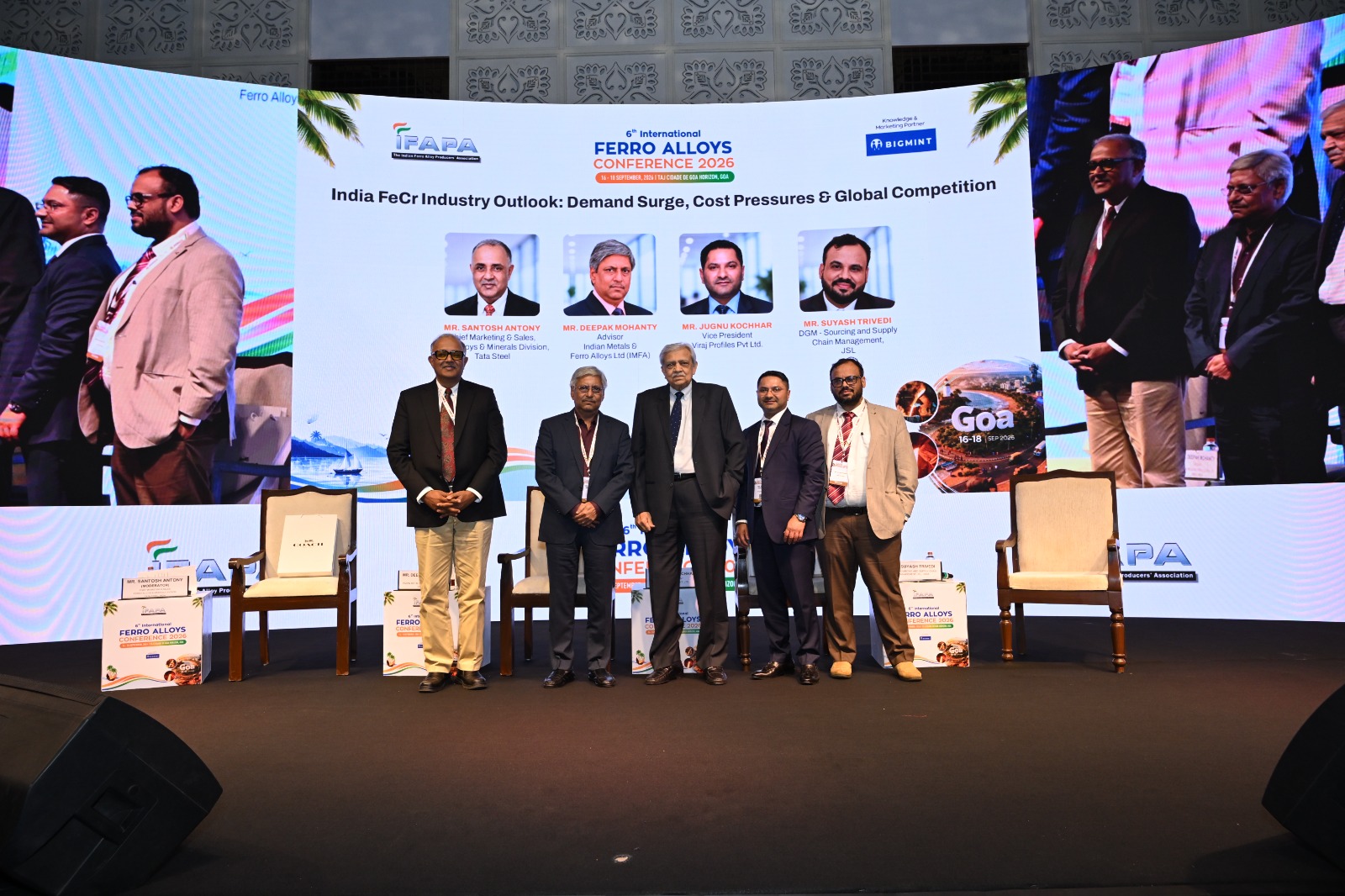
These were among the key takeaways from the ferro chrome and Stainless Steel session at the 6th International Ferro Alloys Conference (IFAC 2026), organised by IFAPA, where BigMint presented its context-setting assessment of India’s ferrochrome industry outlook.
CBAM to test competitiveness of Indian stainless and ferro chrome
The implementation of CBAM is expected to create additional challenges for Indian stainless steel and ferro chrome exporters supplying the European market. Carbon-related compliance and associated costs could influence the landed competitiveness of Indian products, particularly as global buyers increasingly focus on emissions intensity and supply-chain transparency.
For Indian producers, the evolving carbon regime is likely to make energy efficiency, emissions management and carbon-data reporting increasingly important to maintaining access to export markets.
The impact extends beyond ferro chrome alone, as stainless steel producers may face greater pressure to demonstrate the carbon competitiveness of their finished products. The session highlighted the importance of preparing for changing trade requirements while strengthening the domestic market.
South African supply resumption could weigh on global ferro chrome prices
The resumption of South African ferro chrome production and exports could become an important factor for global ferro chrome price formation. Any increase in South African alloy availability would add to seaborne supply and could put pressure on international prices, depending on the pace of production recovery and global stainless steel demand.
South Africa remains a major participant in the global chrome value chain. Changes in its smelting activity can influence the balance between chrome ore and finished ferro chrome trade, with implications for producers and buyers across India, China and other major markets.
However, the timing and scale of any supply recovery will determine its actual impact on prices. The session also highlighted that China’s growing domestic ferro chrome production is reshaping global trade flows, making the relationship between South African ore exports and finished alloy supply increasingly important.
China’s rising ferro chrome capacity reshapes global trade
According to BigMint’s data, global stainless steel production increased from around 39 million tonnes (mnt) in 2015 to 64 mnt in 2025, with China accounting for approximately 75% of the growth over the period.
China’s ferro chrome industry has also expanded its domestic smelting capacity. BigMint data indicates that Chinese monthly ferro chrome output rose from roughly 600,000-700,000 tonnes in early 2025 to around 800,000-850,000 tonnes from mid-2025.
This expansion has altered the movement of chrome units in the global market.
The shift suggests that more chrome ore is being converted into ferro chrome closer to China’s stainless steel production base, reducing the role of finished alloy imports in certain trade flows.
India’s ferro chrome demand to reach 1.4 mnt by FY’30
India’s growing stainless steel industry is expected to remain a key source of ferro chrome demand.
BigMint’s assessment projects domestic ferro chrome demand to rise from 0.94 mnt in FY’26 to 1.40 mnt by FY’30, an increase of approximately 49%. Over the same period, Indian stainless steel production is projected to increase from 4.45 mnt to 6.5 mnt.
The growth in stainless steel output is expected to support higher consumption of ferro chrome, although the pace of demand expansion is projected to moderate from the high growth rates seen in earlier years.
India’s ferro chrome production is projected to reach 1.80 mnt by FY’30, compared with 1.51 mnt in FY’26. Meanwhile, exports are projected to decline from 0.49 mnt to 0.40 mnt over the same period.
This would increase the share of domestic consumption in Indian ferro chrome output, pointing towards a more domestically oriented market.
Price outlook: Supply recovery and demand to remain key drivers
Global ferro chrome prices have established a higher price plateau, according to BigMint’s price assessment presented at the conference. Indian high-carbon ferro chrome 60% prices increased from around INR 99,000/t to INR 123,000/t before holding near INR 119,000/t, while China’s ferro chrome benchmark rose from approximately 77 cents/lb to 99 cents/lb before easing to around 93 cents/lb.
The outlook for prices will depend on the balance between stainless steel demand, chrome ore availability, production costs and international trade flows.
A sustained recovery in South African ferro chrome supply could increase competition in the seaborne market, while stronger Indian stainless steel demand may provide support to domestic ferro chrome consumption.
Domestic market emerges as a strategic opportunity
The session underlined a structural shift in India’s ferro chrome industry: domestic stainless steel demand is expected to become increasingly important as export markets face competition from China’s expanding smelting capacity and changing trade conditions.
With domestic ferro chrome demand projected to reach 1.40 mnt by FY’30, the industry’s ability to expand production, secure chrome ore supplies and maintain cost competitiveness will remain critical.

Leave a Reply