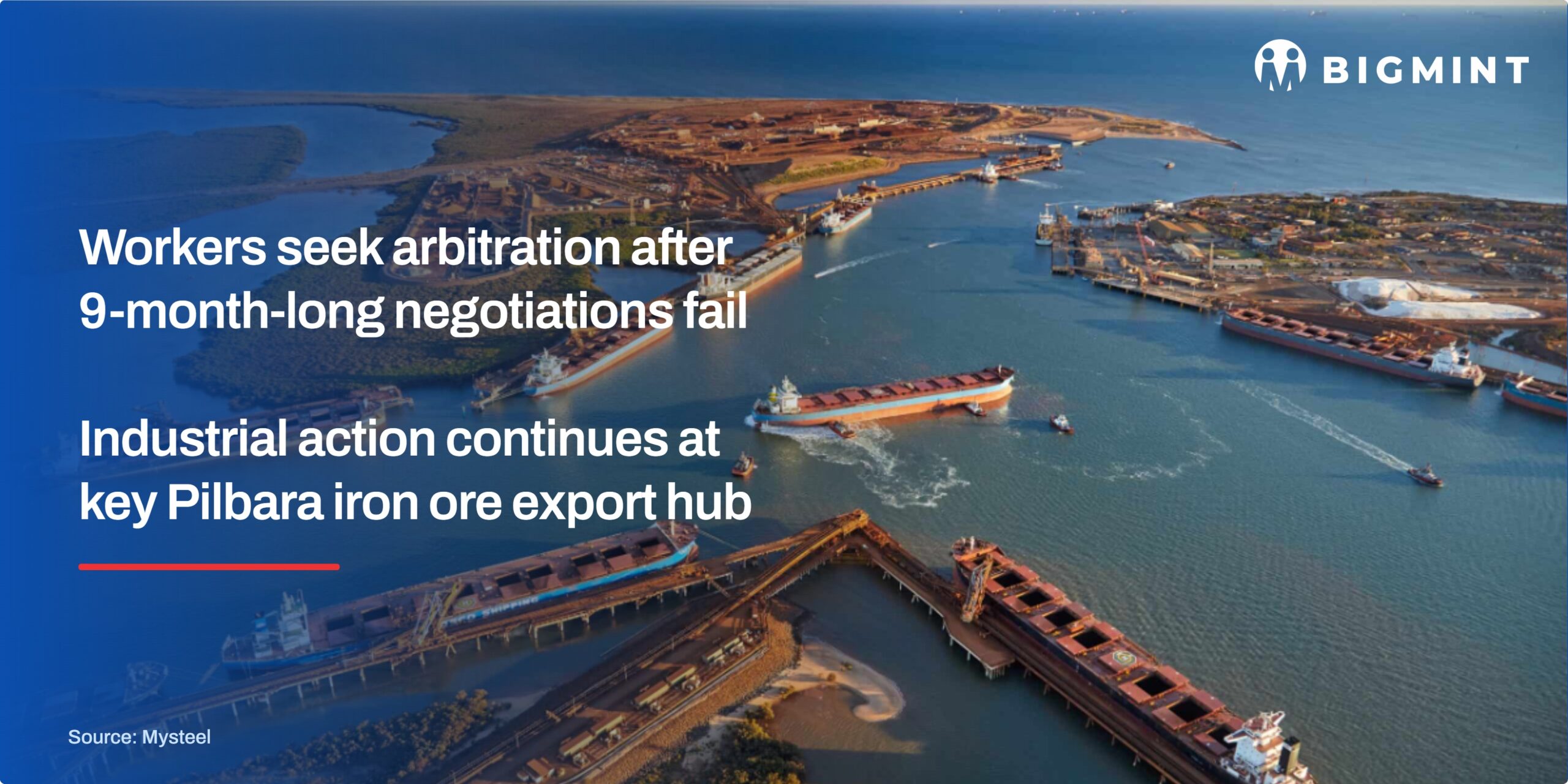
- Workers seek arbitration after 9-month-long negotiations fail
- Industrial action continues at key Pilbara iron ore export hub
Workers at global mining giant BHP’s Port Hedland facilities in Western Australia are seeking arbitration after more than nine months of negotiations failed to produce a new four-year wage agreement, according to Combined BHP Ports Unions. The union, representing approximately 450 operators and maintenance workers at BHP’s Hedland operations, plans to apply for an intractable bargaining declaration — a mechanism permitting Australia’s Fair Work Commission to set binding employment terms when negotiations reach an impasse.
The prolonged dispute has escalated into industrial actions at Port Hedland, the world’s largest iron ore export hub and also BHP’s primary maritime gateway for its Pilbara operations, in the past two months. Workers staged an eight-hour strike on 16 July, the first at the facility since 2000, followed by a two-day stoppage in August, as reported. While BHP maintains these actions have not affected iron ore shipments, official data shows that Port Hedland’s total iron ore exports in July fell 14.5% m-o-m to 44.2 million tonnes, with shipments to China down 16.1%. In recent months, the two sides have met almost weekly for negotiations facilitated by the Fair Work Commission.
BHP put forward its latest offer last week, which includes a 17% pay increase over four years, higher roster allowances, and an AUD 25,000 ($17,818) transition payment spread across two years. However, the union argues that approximately 40% of the workforce would be worse off due to legacy pay differences under the proposal. “BHP is unwilling to negotiate an agreement that reflects the specialized skills, extreme conditions and significant personal sacrifices of the people who generated the company more than $13 billion in profit this year,” the union said in a statement.
In response to the arbitration bid, BHP plans to contest the request, arguing that bargaining remains the fastest path to resolution.
Note: This article has been written in accordance with a content exchange agreement between Mysteel Global and BigMint.
Leave a Reply