- Around 10 lakh tonnes of rice remains undelivered, worsening the storage crunch.
- Weak demand from other states has slowed rice movement from Punjab.
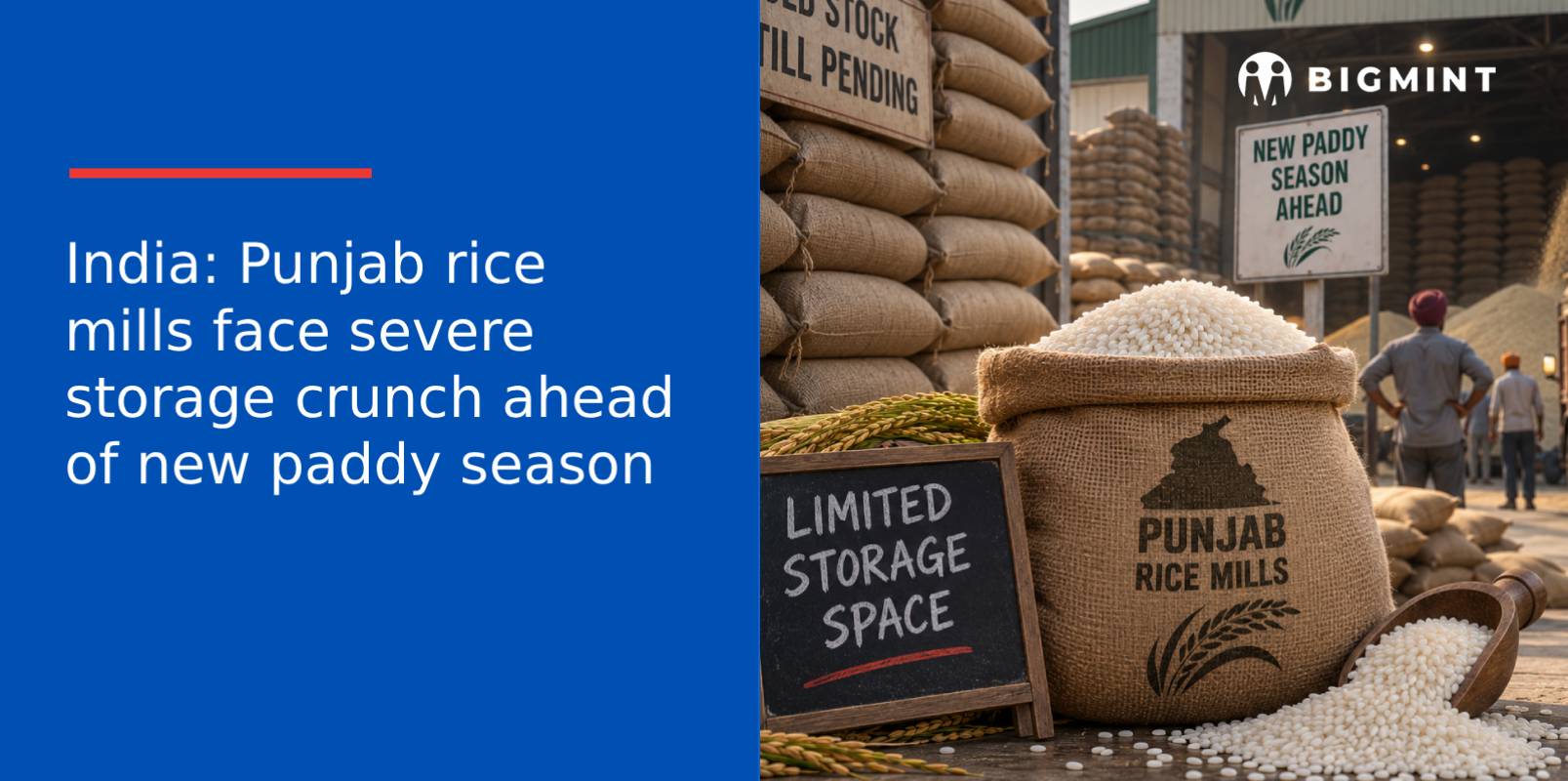
Punjab’s rice milling sector is facing a severe storage crisis as large quantities of old paddy and rice remain uncleared ahead of the upcoming procurement season. The accumulation of stocks is raising concerns over whether mills and government warehouses will have sufficient space to accommodate fresh paddy arrivals.
80% of Rice mills still hold old paddy
Nearly 80% of Punjab’s 5,200 rice mills reportedly continue to hold paddy from previous seasons. In addition, around 10 lakh tonnes of rice remains undelivered, further tightening available storage capacity across the state. The situation has become increasingly concerning as the new paddy procurement season approaches. With a bumper paddy crop expected this year, mills could face another major inflow of stocks before existing inventories are fully cleared.
CMR deadline extended, but concerns remain
The Centre has extended the deadline for delivering Custom Milled Rice (CMR) till November 30, 2026, providing rice millers with additional time to complete pending deliveries. However, millers believe that the deadline extension may offer only temporary relief. Unless existing rice and paddy stocks are moved out quickly, storage constraints could continue to disrupt milling and procurement operations. Limited capacity at both rice mills and government warehouses could create bottlenecks when fresh paddy begins arriving in large volumes. This may also increase handling, storage and operational costs for millers.
Declining demand slows stock movement
A decline in demand from other states has further contributed to the problem. Slower movement of rice from Punjab has made it difficult for mills to clear their existing inventories, leaving storage facilities occupied for longer periods. Millers are therefore seeking greater government support to facilitate exports and accelerate the clearance of existing rice stocks. Faster stock evacuation could create much-needed space before the new procurement cycle gathers pace.
The storage crunch could ultimately affect the smooth procurement of fresh paddy if adequate space is not created in time. With another large crop expected, resolving the backlog of old stocks has become an immediate priority for Punjab’s rice milling industry. The situation underscores the importance of faster rice evacuation, stronger export channels and better storage management to prevent logistical bottlenecks during the upcoming paddy season.
Outlook
Punjab’s rice mills are likely to remain under storage pressure in the near term unless existing paddy and rice stocks are cleared ahead of the new procurement season. The extended CMR delivery deadline may provide some time, but continued weak inter-state demand could slow stock evacuation. Faster government-led stock clearance, stronger export demand and improved warehouse availability will be crucial to ease the pressure.
Leave a Reply