- West African bulk freight supported amid active fixtures, port constraints
- Sky-high container costs drive growing shift towards bulk shipments
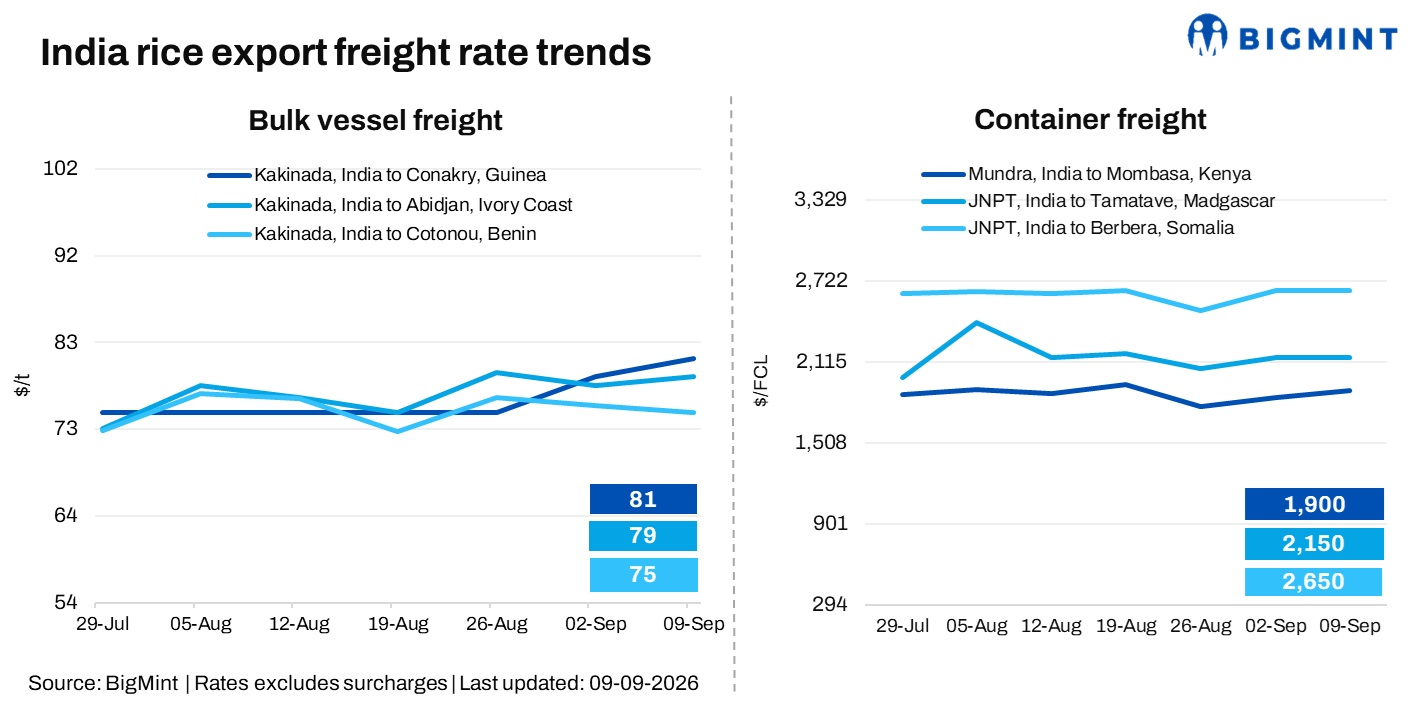
India’s rice freight market remained firm but selective in the week ended 9 September 2026, as congestion, vessel availability and elevated logistics costs shaped shipment decisions. Active West African bulk trade contrasted with persistent container space constraints, prompting some shippers to explore bulk alternatives.
A shipbroker told BigMint, “Freight rates are still holding at elevated levels, supported by firm export demand. Port congestion is also causing delays and extending shipment turnaround times, which is adding further pressure on the market.”

West Africa remains centre of freight activity
The bulk market across West Africa continued to see fresh enquiries and fixtures, with congestion and tight tonnage keeping sentiment firm, particularly at Conakry and Abidjan.
A 12,000 metric tonne (MT) bagged rice shipment from Kakinada to Conakry was fixed on an FOB basis, although the corresponding freight level could not be confirmed. The fixture comes amid persistent congestion and tight vessel availability at Conakry.
At Abidjan, active enquiries met limited firm offers. “Abidjan is difficult to get a firm offer on because of the HRA, which is leading to higher war-risk insurance premiums and making owners more cautious about quoting firmly,” a shipbroker said.
At Cotonou, fresh fixtures were heard despite cautious buying interest. “For Cotonou, we are looking at around 75-76 levels, depending on the terms. Insurance is quite expensive at the moment. Bunkers have come down, but freight levels haven’t really followed,” another shipbroker mentioned.
Container squeeze strengthens bulk economics
The container market remained under pressure from high freight costs and scarce space, affecting shipment execution and prompting some shippers to defer bookings.
“The container market is still quite dull. High rates and lack of space are making shippers cancel or hold back bookings. Out of 10, we are probably getting space for only 2 cargoes at the moment, and this could continue until year-end,” a trader said.
Operational disruption at Mundra has added to equipment-related challenges, particularly around empty-container availability and movements.
The cost differential is also encouraging a shift in shipment modes. “Container rates are sky-high at the moment, so most of the volumes are shifting to bulk shipments,” a rice trader said.
Berbera remained challenging, with limited carrier options and few workable alternatives. A shipbroker said, “Berbera is looking difficult at the moment. There is only one carrier option at workable levels, while the others are coming in much higher. We may have to wait and see if more options open up.”
Rice prices soften as buying remains cautious
BigMint’s assessment for non-basmati parboiled rice (IR-64 5% PB), FOB Kakinada, eased to $376/tonne (t) on 9 September 2026, down $4/t from $380/t in the previous week. Softer buying interest and elevated domestic prices continued to weigh on export parity, keeping exporters cautious.

Outlook
The West African bulk market is likely to remain firm but route-specific, with port conditions, vessel availability and insurance costs shaping fixing decisions. Fresh enquiries and fixtures should lend support, although cautious rice buying could limit momentum on less-constrained routes. For containers, scarce space and elevated freight costs remain key challenges. If these constraints persist, more rice cargoes could move towards bulk, particularly on West Africa-bound trades.
Leave a Reply