- China’s coal imports may ease as domestic supply recovers
- Supply disruptions may continue supporting seaborne coal demand
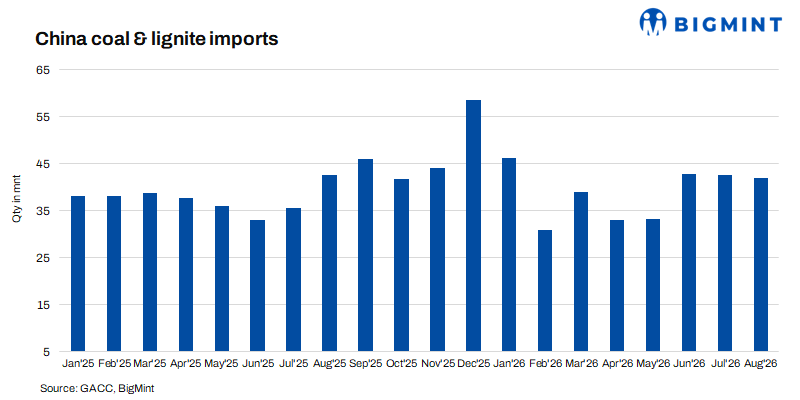
China’s coal and lignite imports declined 1.5% m-o-m to 42.09 mnt in August 2026, following a sharp rise in July. Despite the monthly decline, Jan-Aug imports increased around 3% y-o-y to 310 mnt, indicating that imports continue to play an important role in balancing domestic coal requirements.
The August decline was mainly driven by improving domestic coal availability as production recovered following safety inspections and supply disruptions earlier in the year. July imports had risen sharply amid constrained domestic output, but the easing of these restrictions reduced the immediate need for imported coal. At the same time, the end of the summer peak has moderated power-sector coal demand.
Key market drivers:
- Domestic supply recovery is reducing dependence on seaborne coal.
- Seasonal power demand is easing after the summer peak.
- Rising renewable generation is limiting growth in coal-fired power demand, with coal accounting for less than half of China’s electricity generation.
- Domestic coal remains the primary supply source, while imports provide flexibility for coastal utilities and help cover regional supply gaps.
- Industrial demand remains mixed, with weak domestic consumption and property-sector activity offset by resilient export-oriented manufacturing.
Current market scenario: China’s coal market is moving towards a more balanced supply-demand position, with recovering domestic production and stronger renewable generation likely to keep import growth contained. However, imports are expected to remain substantial as utilities continue to use seaborne coal to optimise costs and manage regional supply requirements. Any renewed mine-safety restrictions, supply disruptions or stronger power demand could quickly revive import buying and provide support to international thermal coal prices.
Leave a Reply