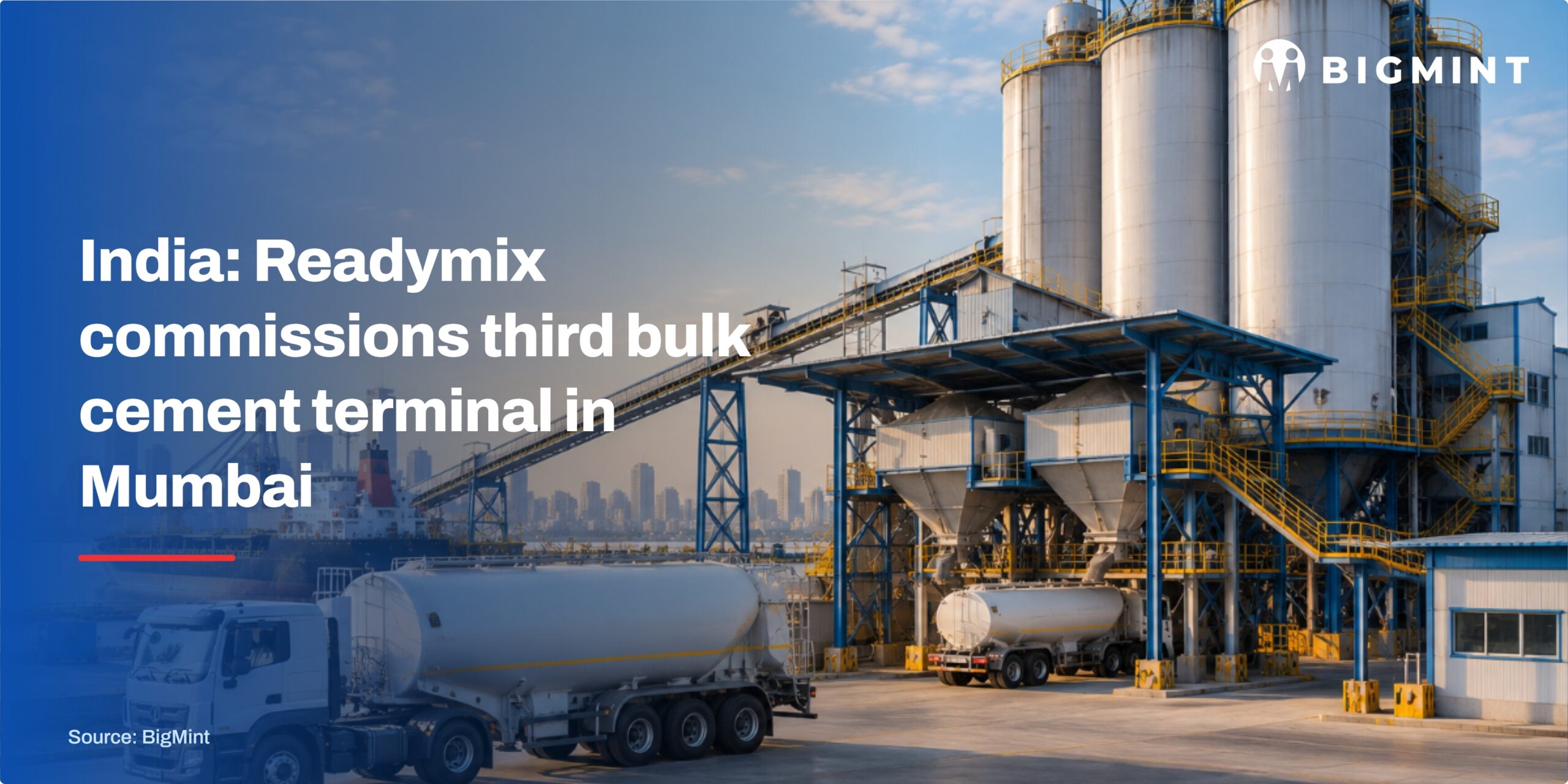
- Terminal adds 4,400 t cement storage capacity
- Monthly handling capacity estimated at 40,000-45,000 t
Ready mix Construction Machinery has commissioned its third consecutive bulk cement terminal in Mumbai, expanding dedicated infrastructure for cement storage, handling and distribution. The facility has a storage capacity of 4,400 t and is capable of handling around 40,000-45,000 t of cement/month.
The terminal is designed to support mechanised handling and improve the movement of bulk cement from production facilities to consumption centers. For cement producers and logistics operators, such infrastructure can help optimize transportation, reduce logistics turnaround time and lower dependence on road-based movement.
Rail connectivity supports logistics efficiency
The commissioning comes amid Indian Railways’ policy push to facilitate bulk cement terminals with direct railway connectivity. The policy aims to improve the handling, storage and distribution of bulk cement through dedicated terminal infrastructure.
A simplified freight structure has also been introduced for bulk cement transported in tank containers, with freight charged at a flat rate of INR 0.90/t/km based on the actual distance traveled. The removal of earlier distance and weight slabs is intended to simplify freight calculations and improve operational efficiency.
Bulk handling could reduce logistics losses
Bulk terminals can improve cement supply-chain efficiency by enabling faster loading and unloading, reducing packaging requirements and limiting material losses from spillage.
Facilities such as hoppers, silos and bagging plants can also provide greater flexibility in handling cement closer to major consumption markets. Mumbai, as a large infrastructure and construction market, could therefore benefit from additional dedicated bulk-handling capacity.
For cement manufacturers, greater availability of rail-linked terminals could support optimization of freight costs, particularly where large volumes need to be moved over longer distances.
Outlook
The commissioning of the Mumbai facility could support greater adoption of rail-based bulk cement logistics as terminal infrastructure expands around key consumption centers. Through FY27, utilization of such facilities is likely to depend on cement volumes, railway connectivity and the ability of producers and logistics operators to integrate bulk movement into their distribution networks.
Leave a Reply