- Jakarta, Surabaya lead monthly shipment gains
- East Kalimantan’s exports hit 7-month high
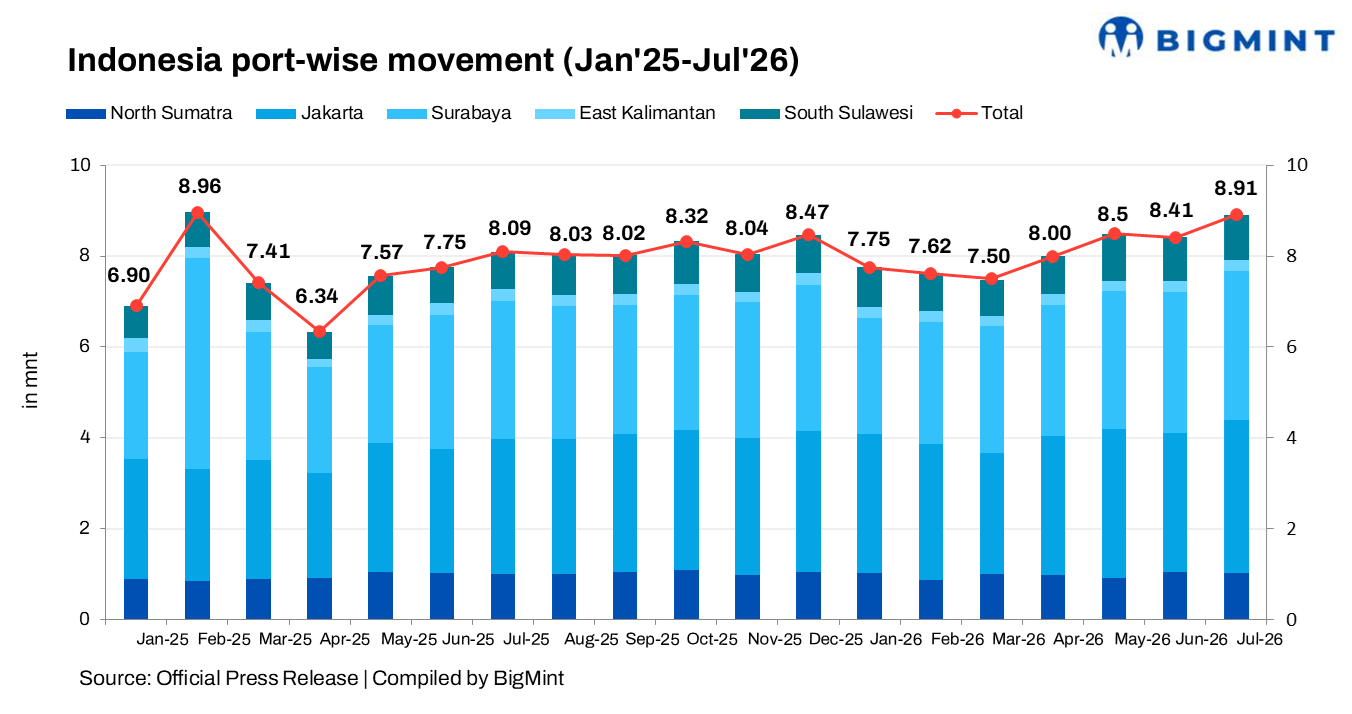
Indonesia’s shipments across five major mining and industrial cargo hubs rose 6% m-o-m to 8.91 million tonnes (mnt) in July 2026, from 8.41 mnt in June, marking a more than one-year high. The increase was led by Jakarta and Surabaya, which more than offset a decline in North Sumatra, amid stronger broader export activity and improved non-oil exports.
The rise in assessed port shipments came despite weaker seaborne coal exports, suggesting diversified mining and industrial cargoes were the main contributors. Meanwhile, regulatory changes and delays to some alumina and nickel shipments could influence mineral cargo flows in the coming months.
Port-wise shipment trends
- Jakarta: Shipments increased 10% m-o-m to 3.36 mnt against 3.06 mnt, recording the strongest absolute gain. The rebound suggests firmer cargo availability and dispatch activity, making Jakarta the key driver of July’s overall growth.
- Surabaya: Shipments rose 6% to 3.28 mnt against 3.10 mnt, maintaining strong cargo flows. The increase aligns with improved international trade activity through East Java, supporting continued momentum at the hub.
- North Sumatra: Shipments declined 3% to 1.02 mnt against 1.05 mnt, making it the only major hub to contract. The dip suggests some moderation in cargo availability, although regional export activity remains supported by resilient commodity demand.
- South Sulawesi: Shipments edged up 2% to 0.99 mnt against 0.97 mnt, pointing to stable mineral and industrial cargo movement. Continued mining activity and export demand should provide a floor to regional volumes.
- East Kalimantan: Shipments increased 9% to 0.26 mnt, a seven-month high, indicating firmer regional cargo flows despite its smaller contribution. Stronger mining activity in Kalimantan remains supportive, although coal export volumes nationally have shown some softness.
Outlook
Shipments are likely to remain firm but uneven in the near term. Stronger industrial and mineral exports could support volumes at major hubs, while softer seaborne coal exports, regulatory adjustments and the rollout of the centralised export system may limit further growth.
Leave a Reply