- Limestone depletion weakens Chaibasa plant economics
- Clinker freight and ageing assets add to cost pressure
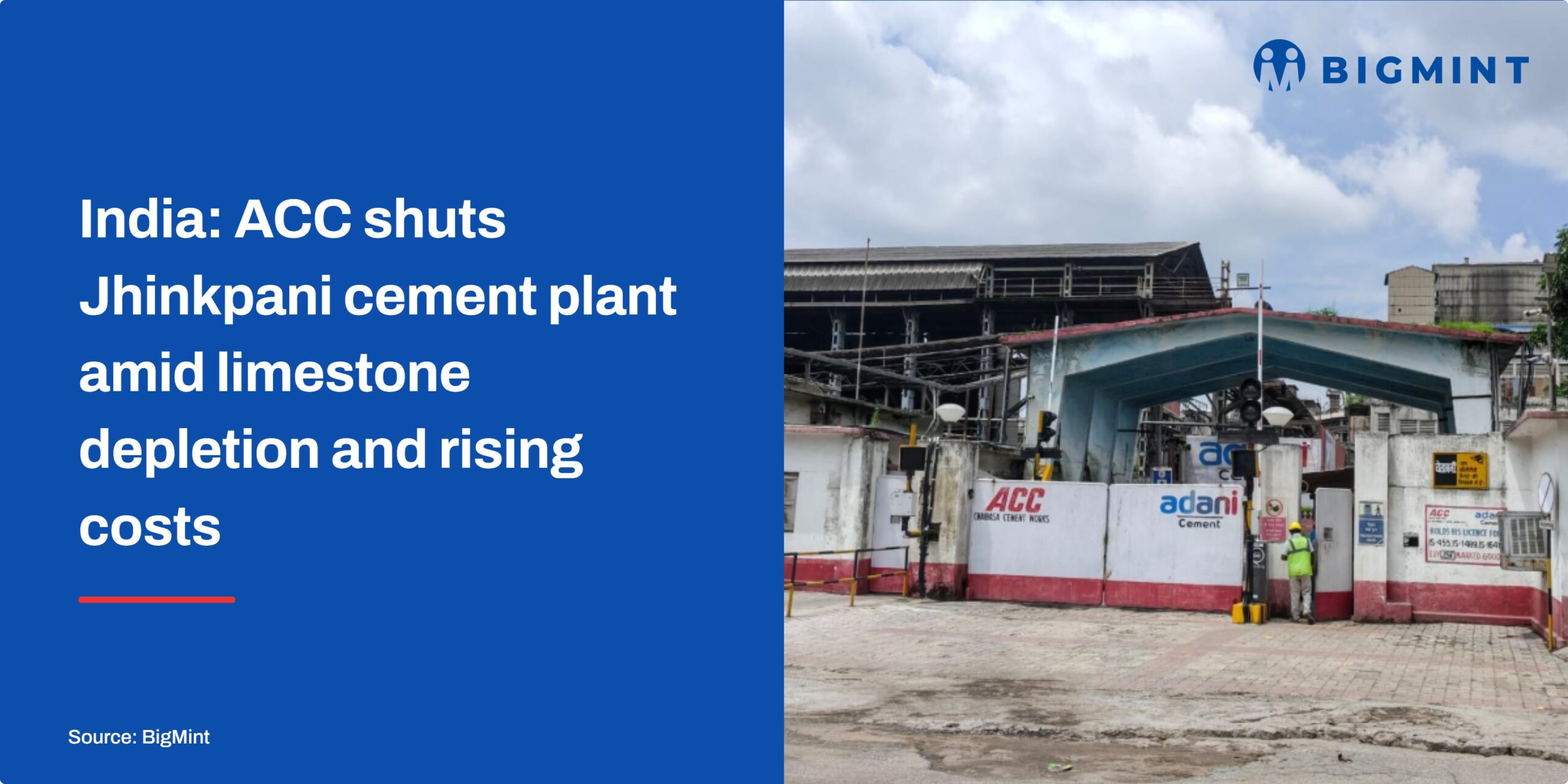
ACC Limited’s Chaibasa Cement Works in Jhinkpani, Jharkhand, has been permanently closed after nearly eight decades of operations. Cement production stopped on 1 April 2026, while the captive power plant shut on 3 May. The final closure on 16 August 2026 followed declining limestone availability, higher clinker logistics costs and ageing production equipment.
Limestone depletion undermines production economics
The plant’s operating model was built around locally available limestone. These reserves have now been depleted, weakening the economic basis for continued integrated cement production.
The loss of captive limestone availability meant the plant increasingly depended on clinker transported from other ACC units. For an older facility, this significantly altered its cost structure and reduced its ability to compete with newer and more efficient plants.
Long-distance clinker movement makes operations uneconomical
Clinker was reportedly sourced from ACC units at Bargarh and Sindri, located around 336 km and 215 km from Chaibasa, respectively. Such distances increase inbound freight and handling costs before clinker is converted into cement.
The plant had a peak cement production capacity of around 2,500 t/day and a 15-MW captive power plant. However, ageing equipment further compounded the cost disadvantage against newer facilities with better energy and operating efficiencies.
The closure therefore reflects a combination of raw-material depletion, logistics costs and asset ageing rather than a single operational constraint.
Shutdown creates wider economic impact around Jhinkpani
The operational impact extends beyond ACC’s manufacturing footprint. The plant employed around 1,600 contractual workers and 74 permanent employees, according to the report, while transporters, contractors, retailers, vendors and other local businesses depended on plant-linked economic activity.
Closure highlights raw material security as a strategic issue
For the cement industry, the Chaibasa closure demonstrates how the depletion of captive limestone can fundamentally change the economics of an established plant. Once local clinker production becomes unviable, dependence on external clinker can expose plants to higher freight costs and reduce competitiveness.
For older assets, producers may therefore need to weigh the economics of mine development, plant modernisation, external clinker sourcing or eventual closure.
Outlook
ACC’s Chaibasa shutdown highlights the importance of securing economical limestone reserves over the operating life of a cement plant. As producers optimize manufacturing networks, older units with depleted resources, high logistics costs and ageing equipment could face greater scrutiny.
For eastern India, the closure also leaves a gap in local industrial activity that could require new, economically viable cement capacity to replace the lost production and employment base.
Leave a Reply