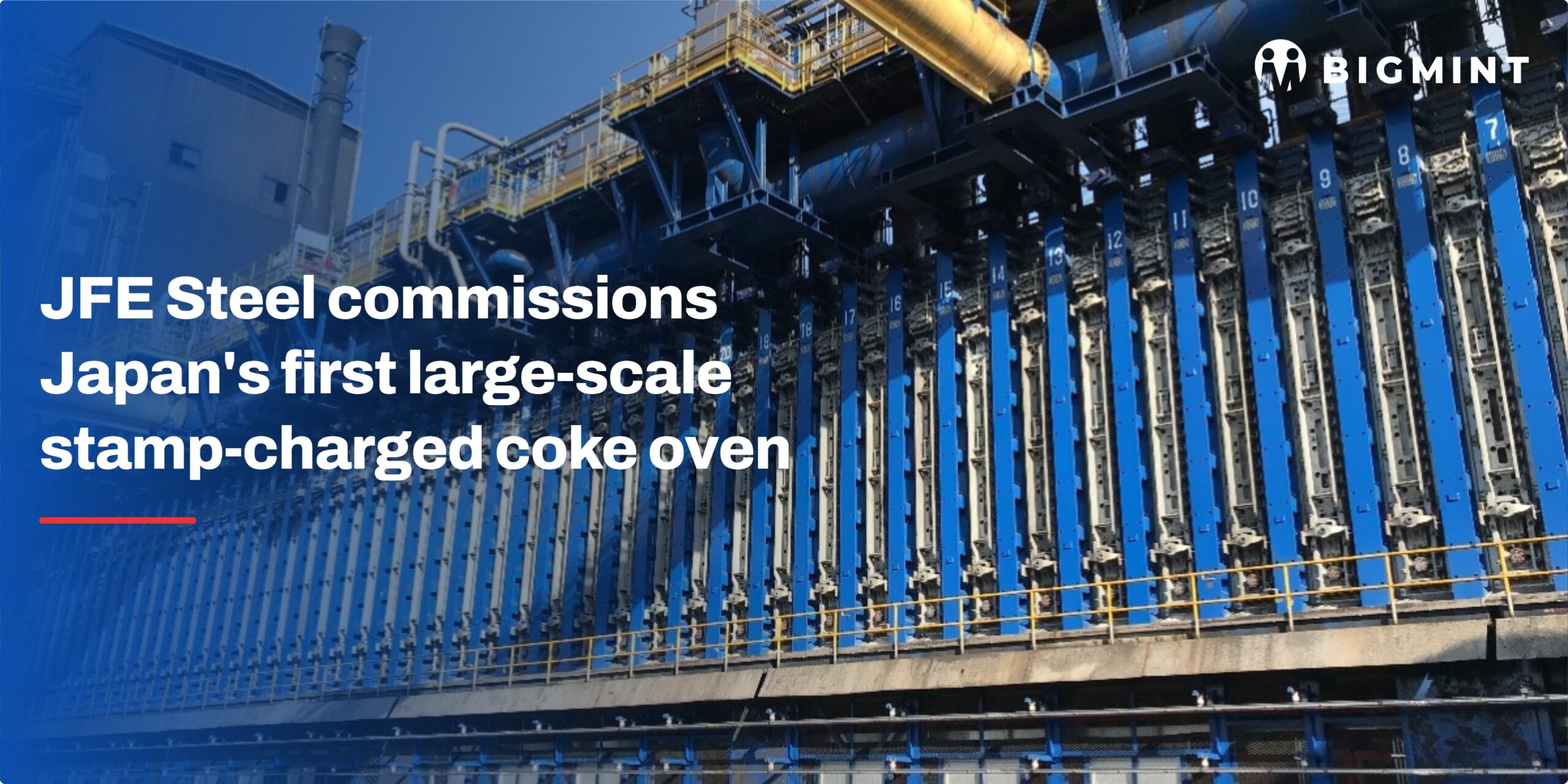
- New coke oven capacity is 420,000 t
- Compacting pulverised coal raises efficiency
Japanese steelmaker JFE Steel has started operations at the newly constructed No. 6-A coke oven battery at its West Japan Works’ Fukuyama facility after completing construction and performance testing. The battery commenced operations on 31 August.
The project represents an investment of approximately JPY 45 billion ($282 million) and has an annual coke production capacity of around 420,000 tonnes. Construction was carried out between May 2023 and August 2026.
The new 52-oven battery is the first large-scale coke oven in Japan to employ stamp-charging technology. Under the process, pulverised coal is compacted before being charged into the oven from the side using a coal extruder, rather than being fed from above through the conventional top-charging method.
According to JFE Steel, compacting the coal increases its bulk density, improving coke quality while raising production efficiency, lowering operating costs and reducing environmental impacts compared with conventional top-charging technology.
The company said the investment forms part of its strategy to strengthen its domestic production base and further enhance its manufacturing capabilities.
The commissioning comes as steelmakers continue investing in upgrades to improve coke-making efficiency and modernise blast furnace operations. Coke remains a key reducing agent in blast furnace ironmaking, making coke oven performance and raw material utilisation important factors in steel production costs and productivity.
With the No. 6-A battery now in operation, JFE Steel has introduced stamp-charging technology into Japan’s large-scale coke oven fleet for the first time while adding 420,000 t/year of coke-making capacity at its Fukuyama works.
The commissioning comes as Japanese integrated steelmakers continue investing in upgrades to existing blast furnace assets while pursuing longer-term decarbonisation initiatives. Although steelmakers are expanding low-carbon technologies, blast furnaces remain the primary production route for crude steel in Japan, making improvements in coke-making efficiency an important part of maintaining plant performance.
Leave a Reply