- Stronger container freights encourage exporters to shift to bulk
- Equipment constraints keep container enquiries supported
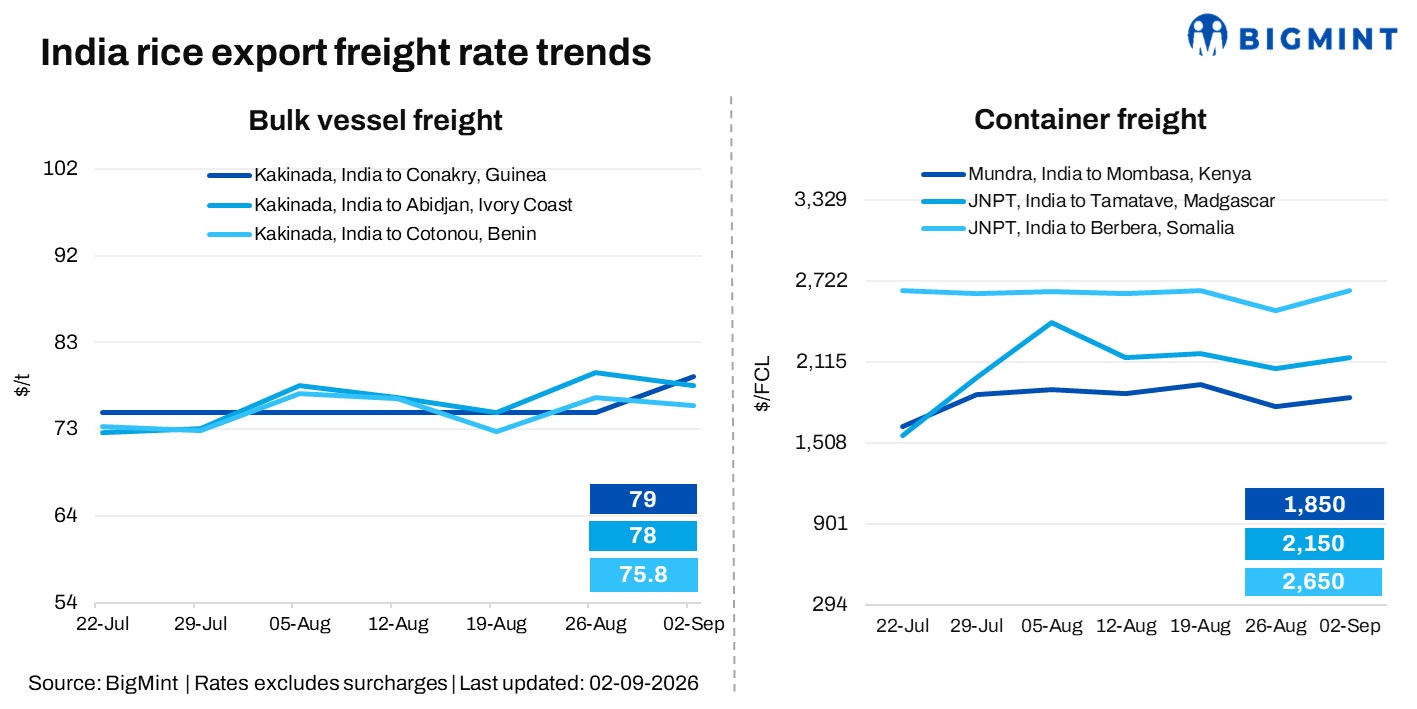
India’s rice freight market remained mixed in the week ended 2 September 2026, with West African bulk routes declining largely, while container freights strengthened across selected East African lanes. Vessel availability and port conditions influenced individual routes, while subdued rice buying kept overall momentum measured.
A shipbroker said, “Freight levels are strong, and we are seeing some containerised cargo moving into bulk vessels as shippers look for alternatives.” The shift indicates that exporters are reassessing shipment economics as container availability and handling constraints affect routing decisions.
West African bulk routes show divergent trends
Freight sentiment across West Africa varied by destination, but rates largely fell. Conakry remained supported by congestion and tight vessel availability, while Abidjan faced road congestion and maintenance-related productivity issues. Cotonou saw regular vessel movement, but limited buying interest kept sentiment subdued.
A shipbroker said, “We are doing Africa, including Mombasa and Madagascar, as well as Iran and Iraq, with vessels also moving towards Abidjan.”
Market participants also indicated that conditions are gradually becoming less constrained at some West African ports. A rice trader said, “It is time to stay quiet and watch the market. We have already exported to Benin, Senegal and the Philippines. Yes, situations are easing slowly.”
Weak rice buying is also influencing exporters’ priorities. “Rice demand is slow at the moment, so the focus is more on wheat exports,” a trader said, highlighting limited urgency among rice buyers.

Container sentiment improves amid logistical constraints
Container freights gained as enquiries remained active and equipment availability tightened across some corridors.
At Mundra, disruptions at the empty-container yard have affected equipment circulation and cargo handling, adding pressure to container logistics. Mombasa continues to contend with vessel congestion, yard pressure, customs delays and road constraints. A new weekly India-Mombasa service is expected to begin in September, which could offer exporters another routing option.
The range of shipment options is also widening. A shipbroker noted that “WAF ports also opened up for container cargo from Mumbai and Vizag,” with a breakbulk vessel reportedly planned from Vizag. This reflects growing flexibility among shippers in response to changing freight economics.
JNPT-Tamatave and JNPT-Berbera also attracted enquiries, with limited vessel availability lending support to freight levels on these routes.
Rice export prices ease marginally
BigMint’s assessment for non-basmati parboiled rice (IR-64 5% PB), FOB Kakinada, declined to $380/tonne (t) on 2 September, 2026 from $381/t in the previous week. Elevated domestic prices continue to weigh on export parity, while slower buying is keeping exporters cautious. The shift in attention towards wheat could further reduce immediate demand for rice cargoes.

Outlook
West African bulk freights are likely to remain uneven, with individual routes driven by vessel availability, port conditions and local buying interest. Easing congestion at some gateways could limit further gains, while constrained routes may continue to command firmer levels.
Container freights are expected to remain supported through September where equipment shortages and operational disruptions persist. The planned India-Mombasa service could improve connectivity, while developments at Mundra will remain an important factor for container availability and routing decisions.
Leave a Reply