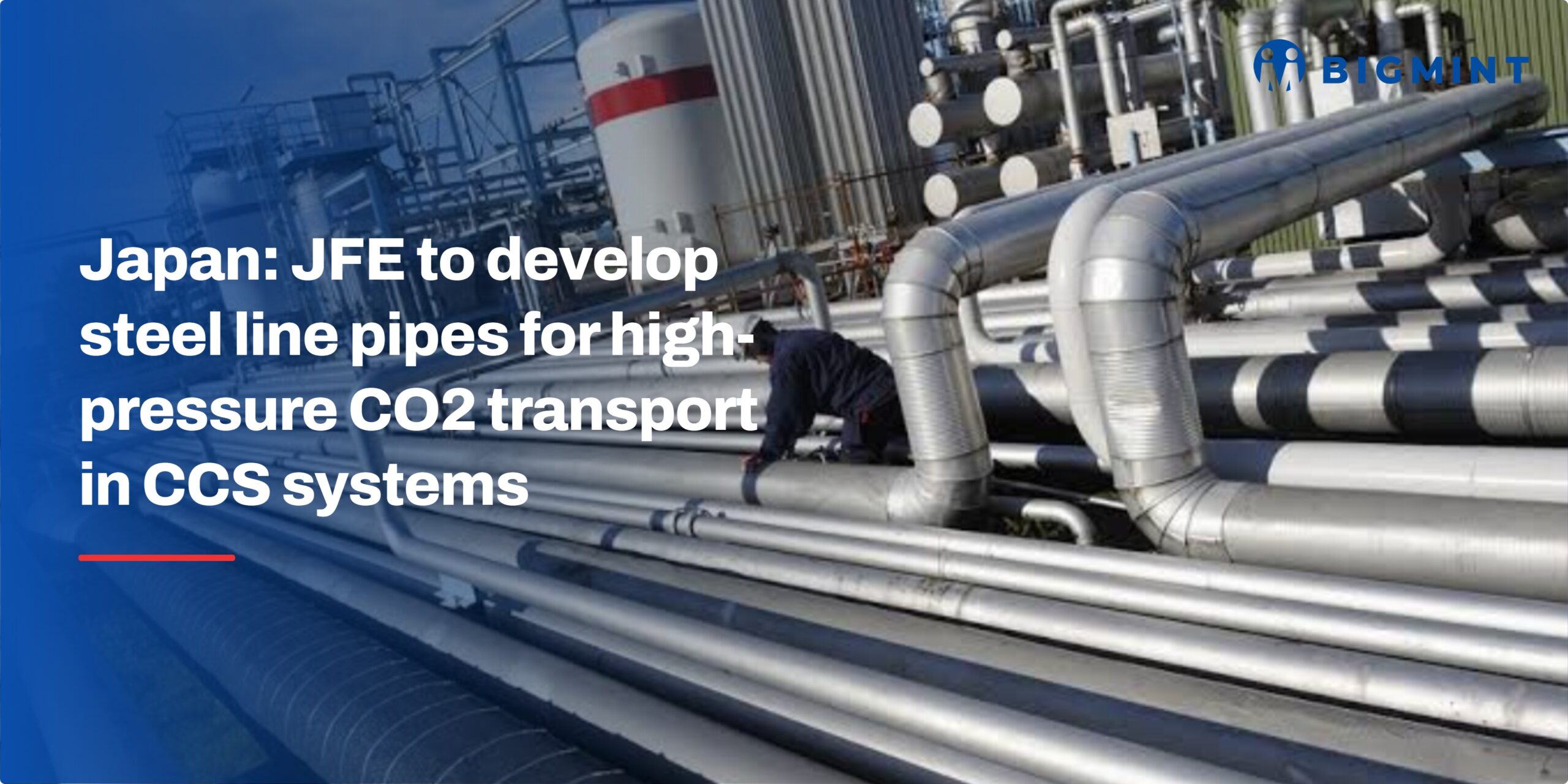
- JFE to modify existing electric-welded pipes for this purpose
- New product will address cracking risks during CO2 transport
JFE Steel, the second-largest steel manufacturer in Japan, will begin developing line pipes for the transport of high-pressure carbon dioxide (CO2) in collaboration with several major resource companies, according to an announcement on 27 August. The company aims to commercialise these pipes for use in carbon capture and storage (CCS) systems – which store CO2 underground – by modifying its existing “Mighty Seam” electric-welded steel pipe product.
This development project was selected for joint funding by “DeepStar” – a consortium of major European and American companies collaborating on offshore technology development – and the Nippon Foundation. The grant period is one year, during which the Foundation will provide 20 million yen ($125,100), equivalent to 80% of the research and development costs.
Research and development began in June at the Steel Research Institute’s Chiba Campus (Chiba City). The project will continue through May 2027 in collaboration with seven DeepStar member companies: ExxonMobil and Occidental Petroleum (US), Shell and BP (UK), TotalEnergies (France), Woodside Energy (Australia), and Petrobras (Brazil).
Many CCS projects, which involve storing CO2 underground, are expected to involve high-pressure transport of CO2-containing gas via pipelines from the source to the storage site. However, impurities in the CO2 gas and the effects of high pressure make the steel pipes prone to cracking.
The development project will explore new material designs for “Mighty Seam” pipes suitable for high-pressure applications. It also aims to establish material property evaluation methods to meet safety standards.
Line pipes for low-pressure CO2 transport, including those used for enhanced oil recovery (EOR) to maintain crude oil production, have already been in practical use in the United States and other countries since the 1970s. CCS is expected to require line pipes capable of withstanding higher pressures, as higher-pressure transport can improve the efficiency of CO2 gas transportation.
Note: This article has been published in accordance with a content exchange agreement between Japan Metal Daily and BigMint.
Leave a Reply