- Limited supply supports prices but need-based buying exerts pressure
- Gujarat, Mandi steel prices rise, supporting stability in scrap market
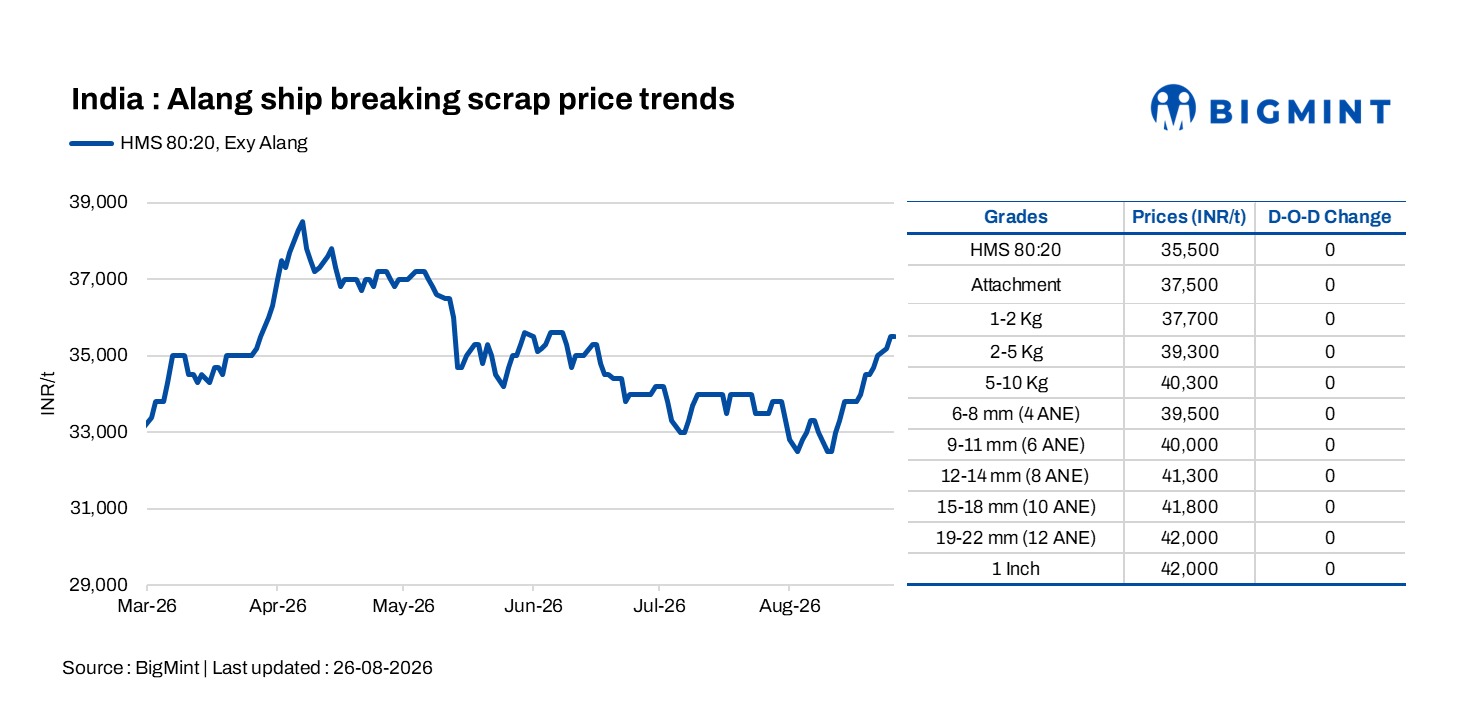
Ship-breaking melting scrap (HMS 80:20) prices in Alang, Gujarat, remained stable d-o-d at INR 35,500/t ($373/t) ex-yard on 26 August, following a strong upward move in recent sessions. Limited scrap availability continued to support seller offers, while higher replacement costs and firm steel prices provided further support.
Fresh scrap availability remained tight due to limited vessel inflows, prompting shipbreakers to maintain firm offers. At the same time, rising billet and rebar prices improved mills’ replacement economics, supporting higher scrap valuations. However, buying remained largely need-based, keeping the market stable in the latest session after the recent sharp gains.
Gujarat market update

The broader Gujarat steel market continued to strengthen on 25 August. Bhavnagar billet prices rose by INR 300/t d-o-d to INR 43,800/t DAP, while Ahmedabad rebar prices increased by INR 300/t to INR 48,800/t ex-works.
The rise in semi-finished and finished steel prices provided a firmer pricing environment for scrap, although downstream buying remained measured. Higher steel realisations supported replacement costs, but limited liquidity and cautious procurement prevented a stronger pass-through to scrap prices.
Mandi market update
In Mandi Gobindgarh, HMS 80:20 prices increased by INR 100/t d-o-d to INR 37,800/t DAP. Billet prices also rose by INR 100/t to INR 44,800/t, while rebar prices gained INR 300/t to INR 49,600/t.
The simultaneous rise in scrap, billet, and rebar indicates continued firmness across the secondary steel value chain. However, the market remains demand-sensitive, with buyers largely following a need-based procurement strategy rather than building inventories ahead of the festive slowdown.
Outlook
Scrap prices are likely to remain supported in the near term by firm steel prices and replacement costs, but the upside could remain limited as Diwali-related liquidity constraints weigh on trading activity. Unless downstream demand strengthens materially or scrap availability tightens further, market participants are expected to maintain cautious buying and prioritise working capital management over aggressive stocking.
Leave a Reply