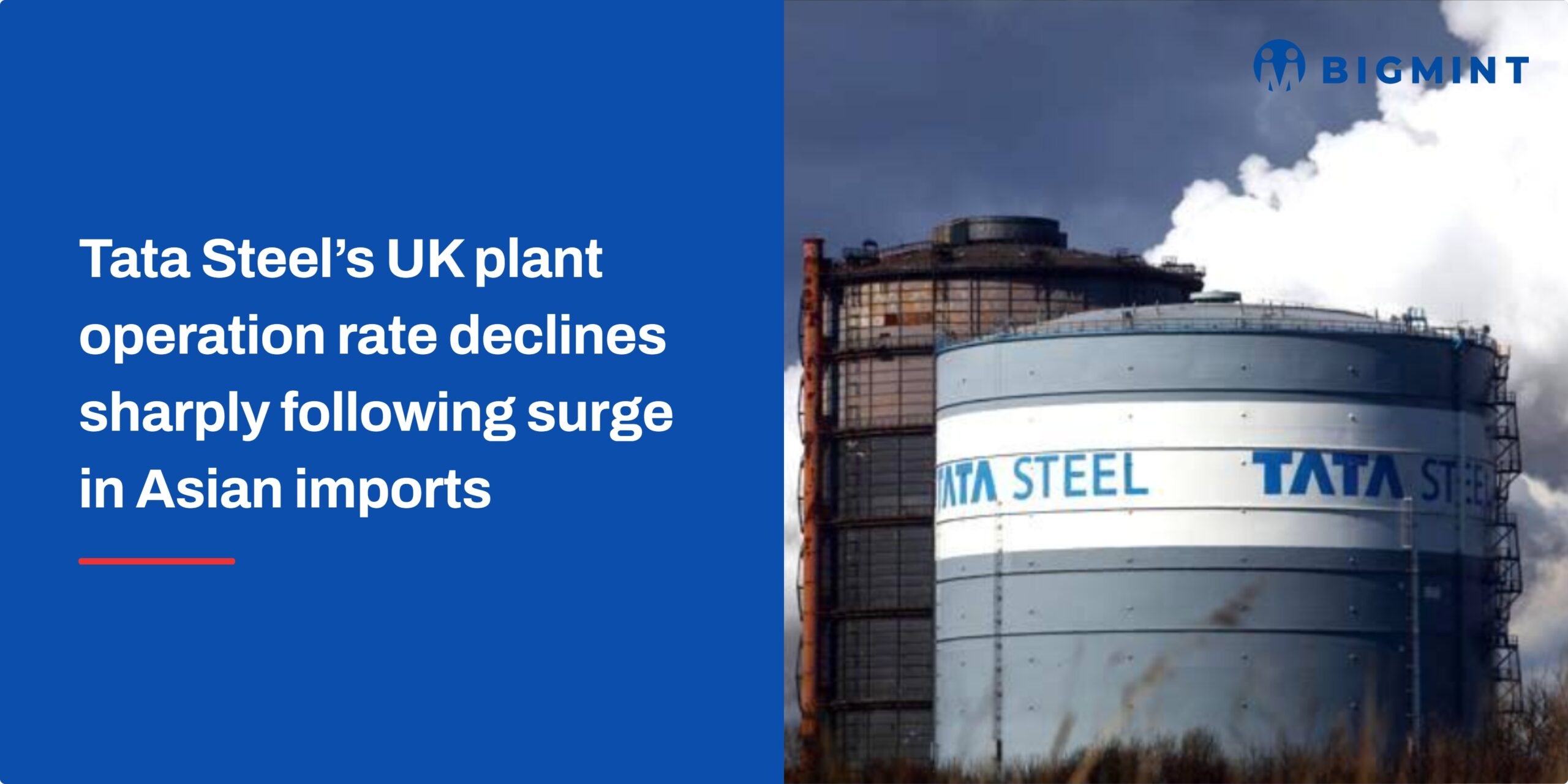
- Tata Steel’s plant operating rate drops to 50% as imports increase
- UK raises duty-free quotas for galvanised steel from India, S. Korea, Vietnam
Tata Steel’s Llanwern plant in Wales is experiencing production disruptions due to increased imports of low-priced Asian steel products. Analysts suggest that the UK’s domestic steel production base is facing additional pressure as the European steel industry struggles with the influx of steel from Asia, including China, and intensifying price competition.
The galvanised steel production line at the UK’s Lanwarton plant is unable to secure sufficient utilisation rates due to factors such as a lack of orders, and is operating at approximately half its production capacity. The influx of steel products from Asia, including China, India, Vietnam, and South Korea, is weakening the competitiveness of domestic manufacturers in the UK.
Galvanised steel production hit
The Lanwarton plant is a production hub playing a crucial role in the UK steel industry. In particular, galvanised steel is a product used in major industries such as automotive and construction, so a contraction in local production could impact the UK’s steel supply chain and manufacturing sector.
The Lanwarton plant produces approximately 600,000 t of galvanised steel annually, accounting for half of the total UK demand for bridges, construction materials, and car bodies. However, having lost price competitiveness following the easing of import quotas, the plant’s current operating rate has dropped to around 50%.
The British government introduced a 50% tariff on steel products last July to protect its domestic steel industry. However, the situation worsened as duty-free quotas granted to major exporting countries were also increased.
In fact, India’s duty-free quota for galvanised steel sheets was expanded from the existing 98,000 t to 125,000 t, and Vietnam’s increased from 51,000 t to 174,000 t. A quota of 100,000 t was also granted to South Korea.
‘Low-priced imports’ from Asia
Tata Steel argues that such quotas could make the competitive environment for steel producers in the UK even more difficult. In particular, they point out that local producers will find it difficult to match prices if low-priced products from Asia enter the market, given that steel prices in Europe and the UK are relatively high.
This situation is also affecting Tata Steel’s transition to eco-friendly facilities. Tata Steel is investing GBP 1.25 billion (including GBP 500 million in government subsidies) to close the Port Talbot blast furnace and is pursuing a transition to an electric furnace with an annual production capacity of 3 mnt. Industry insiders pointed out that the deterioration in profitability of downstream processes could lead to setbacks in the transition to electric furnaces and investments in green steel.
This article is published as part of a content sharing agreement between SteelDaily and BigMint
Leave a Reply