- Coal gasification unit to be paired with CCUS for deep decarbonisation
- Gasification-based DRI, minus CCUS, as emissions intensive as coal-DRI
Leading steelmaker ArcelorMittal Nippon Steel India (AMNS) and PSU mining major Coal India Ltd. (CIL) have signed an MoU to explore a coal gasification plant in Odisha, near AMNS’ existing pellet plant in Paradip. The proposed facility would convert coal into synthesis gas (syngas), which can be used in steelmaking as a fuel and reducing agent.
The project is planned with carbon capture, utilisation and storage (CCUS) technology.
AMNS has a natural gas-based DRI production facility, with capacity of 6.8 mnt/year at its Hazira works in Gujarat. Gas-based Midrex DRI reactors have the flexibility to use a variety of reducing agents — from steel mill waste gases and COG to syngas. The new-age flexi reactors have the ability to use hydrogen in varying percentages with natural gas to facilitate incremental emissions reduction.
CCUS key
The coal gasification project is proposed to be incorporated with a CCUS facility which is key for achieving emissions reductions while making use of domestic coal and energy sources to minimise exposure to imports of natural gas amid geopolitical unrest and extreme energy volatility.
Higher CO₂ concentration in the waste gas stream of a coal gasification plant enables CO₂ capture of approximately 90%, making the process highly viable in contrast with a traditional steel plant.
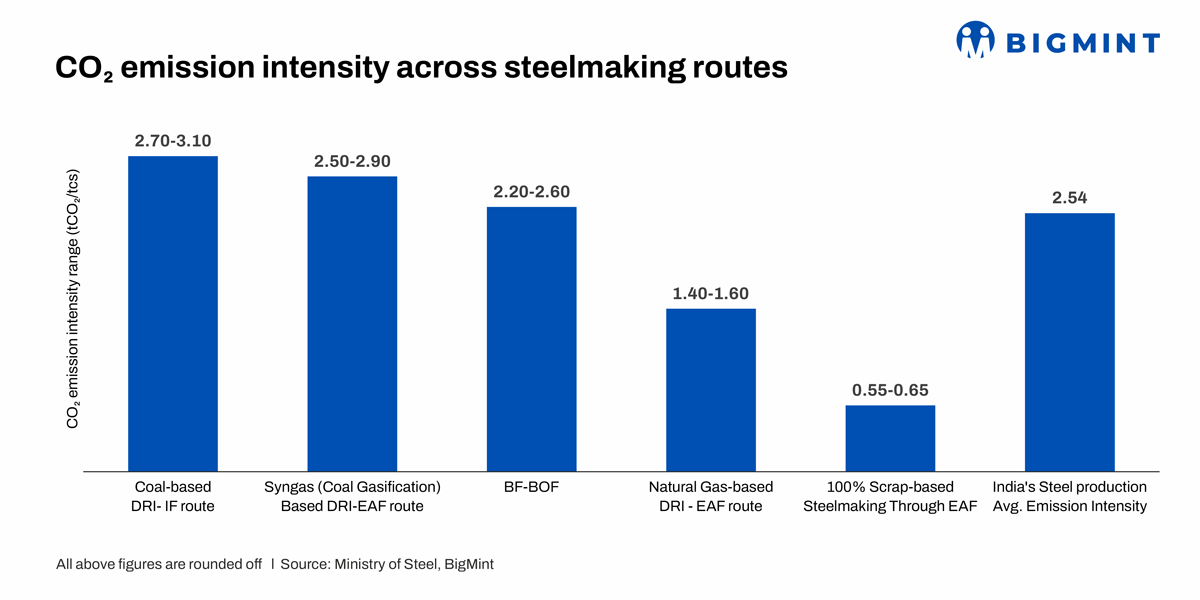
However, without CCUS, the emissions intensity of the coal gasification-DRI route is around 2.7-2.9 tCO₂/tcs, not much lower than the coal-based DRI route paired with EAF/IF, which is around 2.7-3.1 tCO₂/tcs.
Syngas can also be used in the blast furnace to reduce the coke rate and PCI as well as partly reduce emissions.
Currently, only Jindal Steel is engaged in syngas-based DRI production at its 1.8 mnt unit at the company’s Angul facility.
The company has also used syngas in its downstream steelmaking to mitigate the shortage of propane and natural gas.
Gasification: challenges & opportunities
The Union Cabinet approved the scheme for promotion of surface coal/lignite gasification projects with a financial outlay of INR 37,500 crore. The scheme marks a major step towards accelerating the country’s coal gasification programme, advancing the national target of gasifying 100 mnt of coal by 2030, strengthening energy security, and reducing dependence on imports of LNG, urea, ammonia and methanol.
However, Indian coal is characteristically difficult to wash because of high ash content of 35-45%, low ash fusion temperature (AFT) leading to sticky slag and sintering, and variable volatile matter causing inconsistencies in syngas quality.
However, system level integration of coal gasification with metallurgical ecosystems enables faster rate of returns.
Monetisation of gasification by-products such as tar and phenols and utilisation of captured CO₂ in manufacturing of methanol, ethanol, urea, etc. open up new revenue streams, while waste heat from gas cooling and syngas scrubbing can be reused in pellet induration or power generation.
AMNS will look to tap into these synergies in the future, especially with the gasification unit likely to come up adjacent to its existing pellet plant at Paradip. Moreover, the steelmaker will also get to avail of special grants from the Ministry of Power for the proposed CCUS unit over and above financial grants from the government’s coal gasification outlay.
Leave a Reply