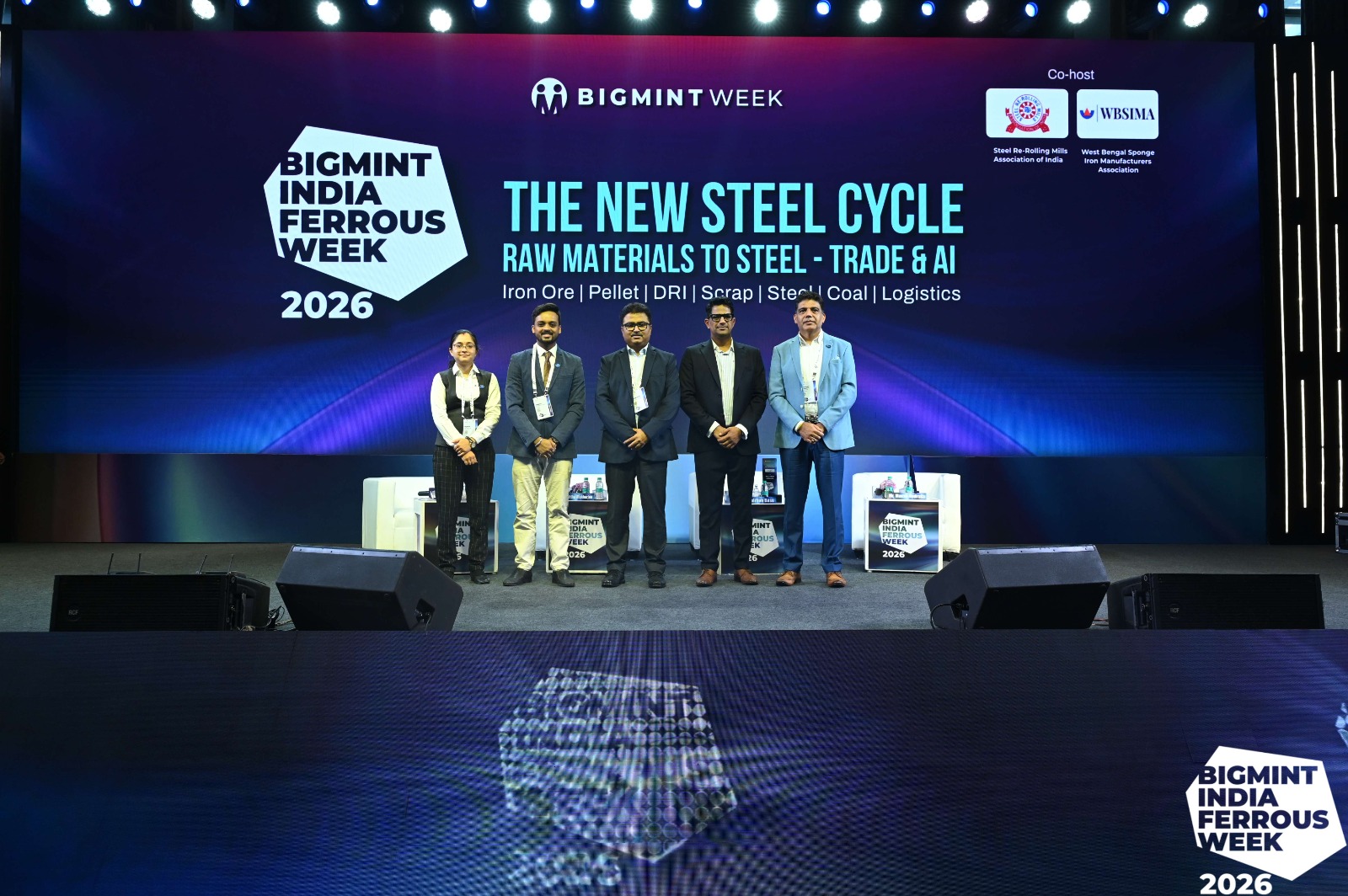
- Freight volatility increasingly driven by geopolitics and shifting trade flows
- Decarbonisation and technology will reshape future shipping costs and decisions
At BigMint India Ferrous Week 2026, industry participants discussed how shipping markets are moving beyond the traditional drivers of cargo demand and vessel availability. Geopolitical disruptions, new trade routes, changing sourcing strategies, energy costs and decarbonisation are increasingly reshaping freight economics.
The discussion highlighted a key shift: disruptions in shipping are no longer just a freight issue. They are influencing procurement strategies, inventory planning and the total landed cost of raw materials.

Freight rates swing across key bulk routes
Iron ore and coal freight markets have witnessed sharp fluctuations since the beginning of FY’26.
On the Paradip-Qingdao route, freight rates climbed to around $16/dmt in mid-May before easing to around $13/dmt amid softer chartering activity and limited fixtures. The Hedland-Qingdao route saw an even sharper movement, rising from around $11.5/dmt in early April to $16.3/dmt by end-May before falling to a two-month low of $10.8/dmt in mid-June. Rates later recovered as chartering activity improved.
Coal freight followed a similar pattern. Hay Point-Paradip rates rose to $26.3/dmt in mid-May amid tighter vessel availability and stronger chartering demand, before declining to around $18.4/dmt by end-June as Pacific basin activity weakened and vessel availability improved.

Geopolitics and new routes reshape shipping
Geopolitical tensions are increasingly changing established sailing patterns and trade routes.
Disruptions can force vessels to take longer routes, increasing voyage times and keeping ships occupied for longer. This reduces effective vessel availability even without any change in the physical size of the fleet, while higher risk premiums add further pressure to shipping costs.
At the same time, changing sourcing strategies and manufacturing locations are reshaping commodity trade flows. Buyers are increasingly evaluating alternative supply origins and routes as freight economics and geopolitical risks alter the attractiveness of traditional trade corridors.
For Indian buyers, the shift is particularly important for key imported raw materials.
Mills build inventories to manage supply risks
The changing freight environment is also influencing procurement and inventory strategies.
Steel mills have increased inventory levels, particularly for coking coal, to create a buffer against supply disruptions and uncertainty around transit times. This can help protect operations when shipping routes are disrupted or deliveries are delayed.
However, higher inventories also increase working capital and carrying costs. The trend reflects a broader shift in procurement priorities, with supply security and route reliability becoming more important alongside the delivered price of raw materials.

Energy prices add to freight volatility
Energy markets have added another layer of uncertainty to freight rates.
Brent crude briefly touched $124-125/bbl amid concerns over prolonged disruptions around the Strait of Hormuz before falling sharply as geopolitical concerns eased and supply expectations improved. Bunker prices broadly followed the movement, although Singapore VLSFO remained relatively resilient due to healthy regional demand and tighter supply fundamentals.
For longer trade routes, changes in bunker costs can significantly alter voyage economics and the overall landed cost of commodities.
IMO regulations bring a longer-term challenge
While geopolitical disruptions are influencing the market in the short term, IMO-led decarbonisation regulations represent a more structural challenge for the shipping industry.
The transition towards greener shipping is expected to influence fleet investment, operating costs and vessel economics. Shipping companies will have to adapt to changing regulatory requirements while assessing investments in new vessels, technologies and cleaner fuels.
As a result, decarbonisation could add another layer of complexity to future freight costs, alongside the immediate pressures created by route disruptions and energy price volatility.
Technology and AI could improve decision-making
Technology and AI are also expected to play a growing role in helping shipping companies and freight buyers navigate increasingly volatile markets.
Better forecasting, route optimisation and improved visibility across cargo and vessel movements could help market participants respond more quickly to disruptions. As trade routes become more dynamic, faster and more informed decision-making will become increasingly important.
Outlook: Shipping enters a more complex phase
The broader message from the session was that shipping has reached a crossroads.
Freight markets will continue to be influenced by cargo demand and vessel availability, but these traditional drivers are now increasingly intertwined with geopolitical risks, new trade routes, changing sourcing patterns, inventory strategies, energy prices and IMO-led decarbonisation.
For commodity buyers, securing the lowest freight rate may no longer be enough. Route reliability, transit time, supply security and total landed cost are becoming equally important in procurement decisions.
As the global shipping landscape continues to evolve, the market is likely to remain exposed to both immediate disruptions and longer-term structural changes.
Leave a Reply