- Vessel turnaround time improves significantly
- Inadequate rail, road connectivity poses challenge
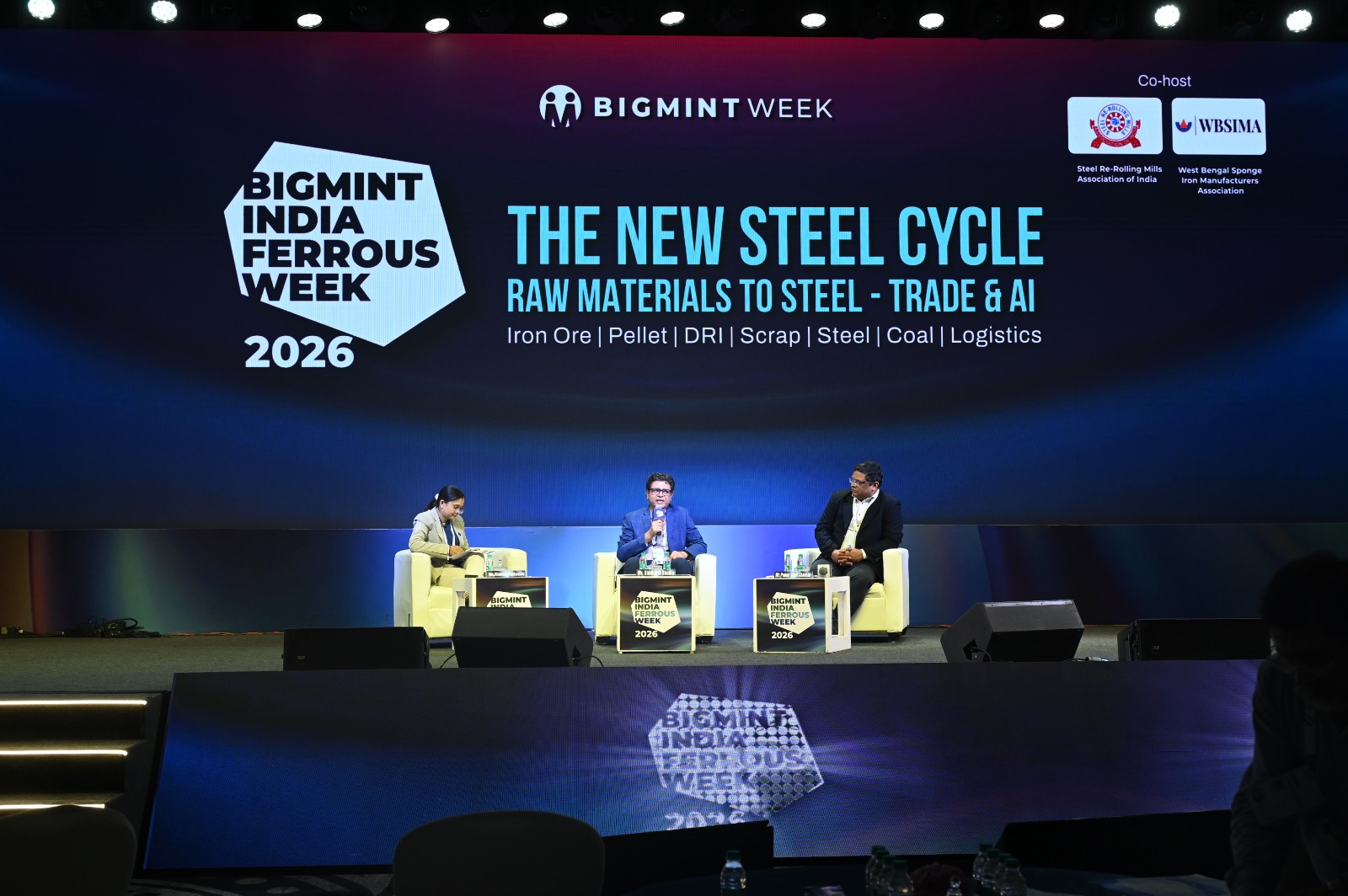
At the BigMint India Ferrous Week 2026, industry leaders highlighted a key shift in India’s port logistics story: while vessel turnaround, port capacity and cargo clearances have improved significantly, inadequate road and rail connectivity is increasingly becoming the next bottleneck.
The discussion focused on cargo evacuation, dwell time, mechanisation, port-led development and the role of private investment in extending efficiency beyond the port gate.
Port-side efficiency improves
The panel identified vessel turnaround time, cargo dwell time, first- and last-mile connectivity and ease of doing business as the key indicators of port efficiency.
Vessel turnaround has improved significantly over the years. Participants noted that average turnaround times have come down from around 96 hours in the past to roughly 48 hours, while some bulk terminals can now turn around large vessels within a day.
Policy reforms have also improved ease of doing business. Faster coordination between customs, immigration and other authorities has reduced delays and allowed cargo operations to begin quickly after vessel arrival.

Capacity growth exposes connectivity gap
However, faster vessel turnaround has also exposed a wider logistics problem.
While ports have expanded capacity rapidly, evacuation infrastructure has not always grown at the same pace. The panel cited Paradip as an example, where capacity increased from around 25 mnt to 60 mnt over five years, while rail movement from the Talcher region remained largely stagnant at around 31-32 rakes per day.
The result is a clear bottleneck: ports can handle more cargo, but the wider logistics network cannot always move that cargo efficiently.
The key takeaway was that port-led development must now be supported by port-connected development.
Dwell time, mechanisation key challenges
Cargo dwell time was identified as another structural challenge. While high-capital port infrastructure and concessions are typically designed around cargo dwell periods of roughly 10-20 days, trade may require storage for much longer, in some cases up to 60 days.
The panel argued that long-term cargo storage should increasingly move outside port premises, supported by dedicated warehousing and logistics infrastructure.
Mechanisation can also help reduce handling costs and improve evacuation efficiency, while covered cargo handling is emerging as an important area for improving both operational and environmental performance.

Sagarmala, pipelines and port-led industrialisation
The discussion highlighted the role of Sagarmala, particularly its focus on port connectivity and port-led infrastructure development.
A key example was the development of large material-intensive facilities near ports, supported by dedicated infrastructure and slurry pipelines connecting mining areas with industrial facilities.
Such pipelines could reduce dependence on congested roads, lower diesel consumption and reduce the cost of transporting bulk materials. The panel also noted the potential for water used in slurry operations to be reused for industrial and port purposes.
The broader advantage is the integration of mines, industrial facilities and ports into a more efficient logistics ecosystem.
PPP must move beyond the port gate
Private participation has played an important role in India’s port development. More balanced concession agreements have helped attract investment, modernise infrastructure and expand capacity.
The panel noted that India’s port infrastructure capacity has increased from around 1,400 mtpa in 2016 to 2,800 mtpa in 2026, supported by infrastructure investment and private participation.
However, the next phase of private participation may need to extend beyond terminals.
Participants called for greater opportunities for private companies to invest in dedicated rail connectivity and freight infrastructure. A dedicated rail connection between major production centres and ports could help unlock capacity that is currently constrained by slow cargo evacuation.
The argument was simple: port efficiency cannot be separated from logistics efficiency.
Outlook: Next phase lies beyond the port
India has made significant progress in improving vessel turnaround, capacity and regulatory processes.
But the next bottleneck lies beyond the terminal gate.
Synchronising investments across ports, roads, railways, industrial clusters and coastal shipping will be critical to reducing logistics costs and improving cargo movement.
The panel’s broader message was that India’s ports can no longer be viewed as standalone infrastructure assets. Their competitiveness will increasingly depend on how efficiently the entire logistics chain connects mines, factories, terminals and markets.
Leave a Reply