- Gujarat steel prices gain on active buying, tighter scrap availability
- Mandi sees stronger billet, rebar prices despite slight drop in scrap
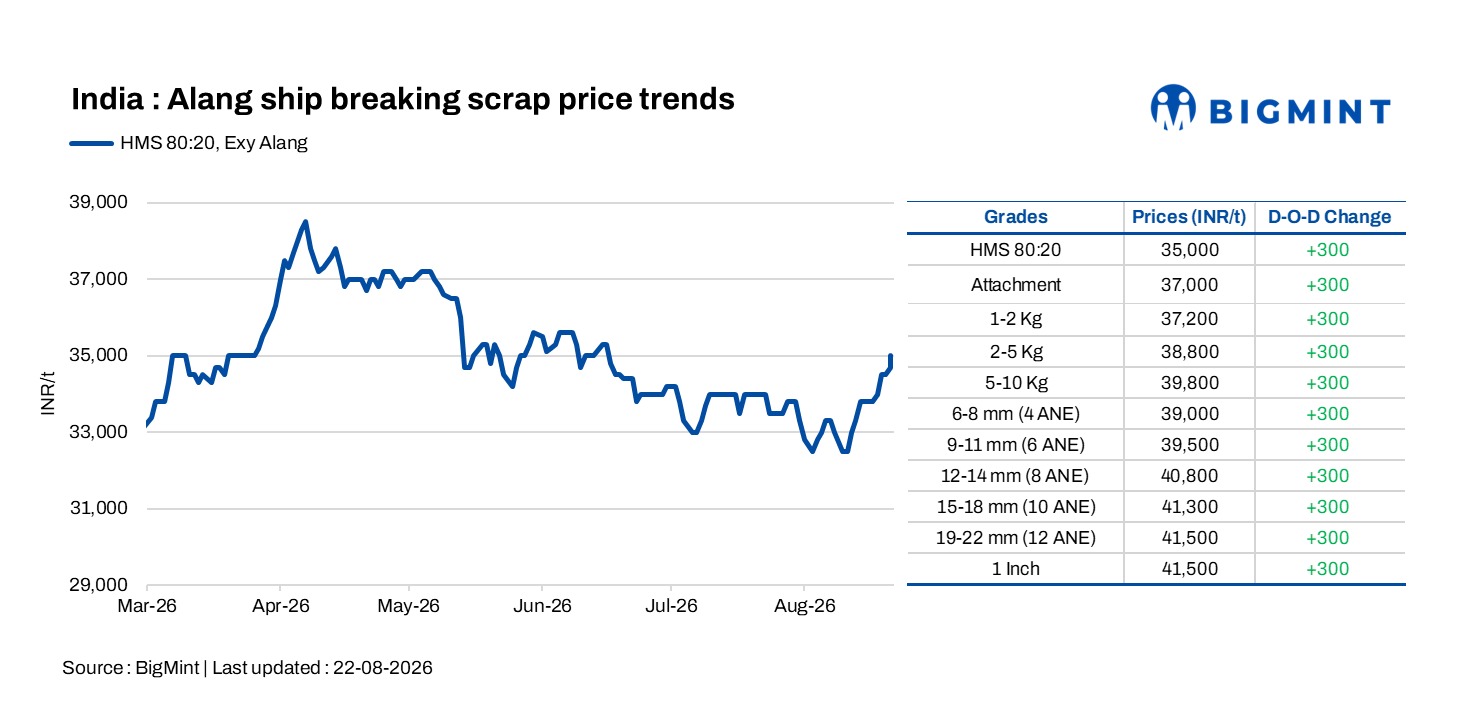
Ship-breaking melting scrap (HMS 80:20) prices in Alang, Gujarat, increased by INR 300/tonne (t) d-o-d to INR 35,000/t ($366/t) ex-yard on 22 August, supported by tighter material availability and firm demand from secondary mills.
Gujarat market update

In the Gujarat finished-steel market, Bhavnagar billet prices rose by INR 800/t d-o-d to INR 43,300/t DAP, while Ahmedabad rebar prices increased by INR 400/t to INR 48,000/t ex-works on 21 August. The gains followed active buying over the past few days and a steady flow of booking orders.
Improved offtake and smooth dispatches of previously booked material eased inventory pressure, particularly for finished steel, giving sellers greater confidence to raise offers. At the same time, limited scrap availability increased procurement costs for secondary mills, adding further support to steel prices.
Mandi market update
In Mandi Gobindgarh, HMS 80:20 scrap prices edged down by INR 100/t d-o-d to INR 36,200/t DAP, despite a sharp rise in finished-steel prices. Billet prices increased by INR 800/t to INR 44,000/t, while rebar prices rose by INR 700/t to INR 48,700/t.
Market participants said sellers have been prioritising supplies to neighbouring markets, tightening local availability. Higher sponge iron prices have also reinforced the upward movement in steelmaking costs.
Ongoing GST inspections have further disrupted scrap inflows into Mandi, with several trucks reportedly intercepted and seized along the Mandi Gobindgarh-Ludhiana belt, according to a local market source. The supply disruption is adding to existing constraints on scrap availability.
Outlook
The market remains firm, supported by tight scrap availability, active steel buying, and higher procurement costs for secondary mills. Continued booking activity and improved dispatches are likely to keep seller offers firm in the near term, although the pace of price gains will depend on sustained downstream demand.
Leave a Reply