- Carbon market coverage to be expanded to include 80% of country’s CO2 emissions
- China to build carbon footprint framework to address emissions-related trade curbs
China is expanding its national carbon emissions trading market from the existing sectors of power generation, steel, cement, and aluminium smelting to high-emission sectors such as petrochemicals and chemicals.
At a press conference held by the State Council Information Office on 13 August, China’s Ministry of Ecology and Environment announced that it would expand the scope of carbon emissions management during the ’15th Five-Year Plan (2026-2030)’ period to effectively manage approximately 80% of the country’s carbon dioxide emissions.
The Chinese government plans to promote the low-carbon transition in key sectors such as energy, industry, transport and construction while simultaneously managing both total carbon emissions and emission intensity. In particular, it will expand the range of sectors covered by the national carbon market and strengthen the role of carbon pricing in driving the development of low-carbon technologies and industries.
Furthermore, it intends to establish a framework for product carbon footprint data and standards, and to refine carbon labelling certification and management systems in order to address carbon-related trade barriers.
As the steel industry is already included in the national carbon emissions trading market, should carbon emissions management be further tightened in the future, steel companies are likely to face increased costs for emission allowances and a greater burden in terms of investment in low-carbon facilities. The Chinese government also plans to continue promoting ultra-low-emission retrofits and the transformation of industrial and energy structures.
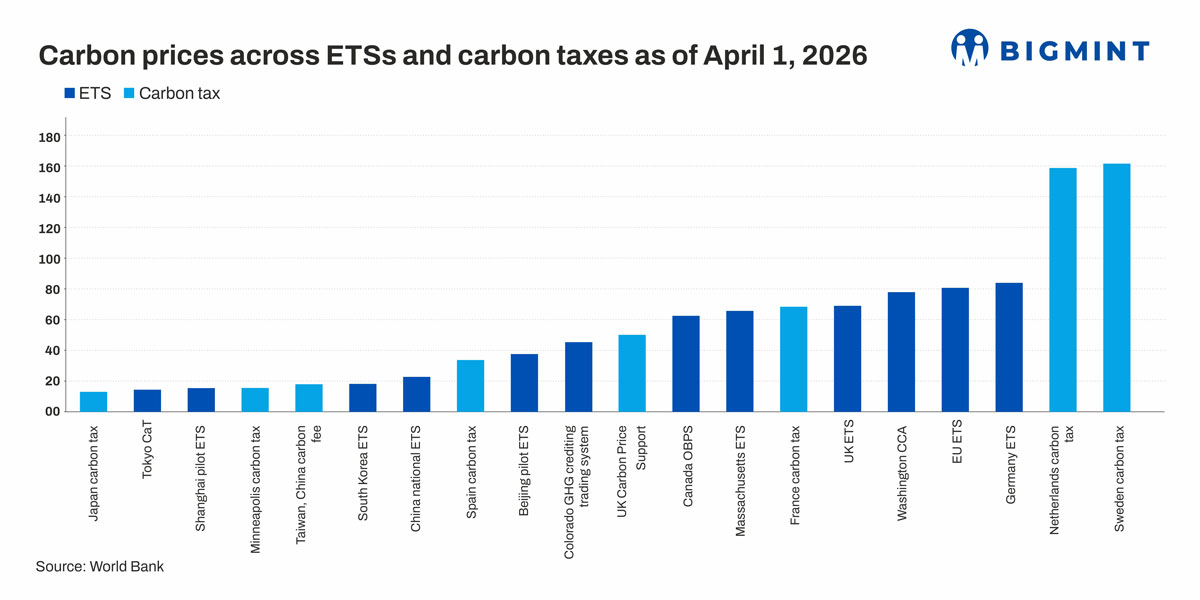
China launched its national carbon emissions trading market in July 2021, and it has since become the world’s largest carbon market by the volume of greenhouse gas emissions traded. As of end-July, cumulative trading volume had exceeded 930 million tonnes (mnt), according to the Ministry of Ecology and Environment, indicating that the market is increasingly being used as a tool to drive lower-cost emissions reductions across covered industries.
The expansion is in line with China’s broader climate policy under the 15th Five-Year Plan. The recently issued Plan for Building a Beautiful China calls for an orderly expansion of the national carbon market, a broader participant base, and a reduction of around 3% in carbon emissions per unit of product covered by the market. The government also plans to strengthen carbon footprint standards and labelling, which could help Chinese exporters respond to growing carbon-related trade requirements in overseas markets.
Note: This article has been published in accordance with a content exchange agreement between SteelDaily and BigMint.
Leave a Reply