- Rice export value declines 5% to $1.91 billion in H1 CY’26
- Middle East conflict continues to disrupt exports to Iraq
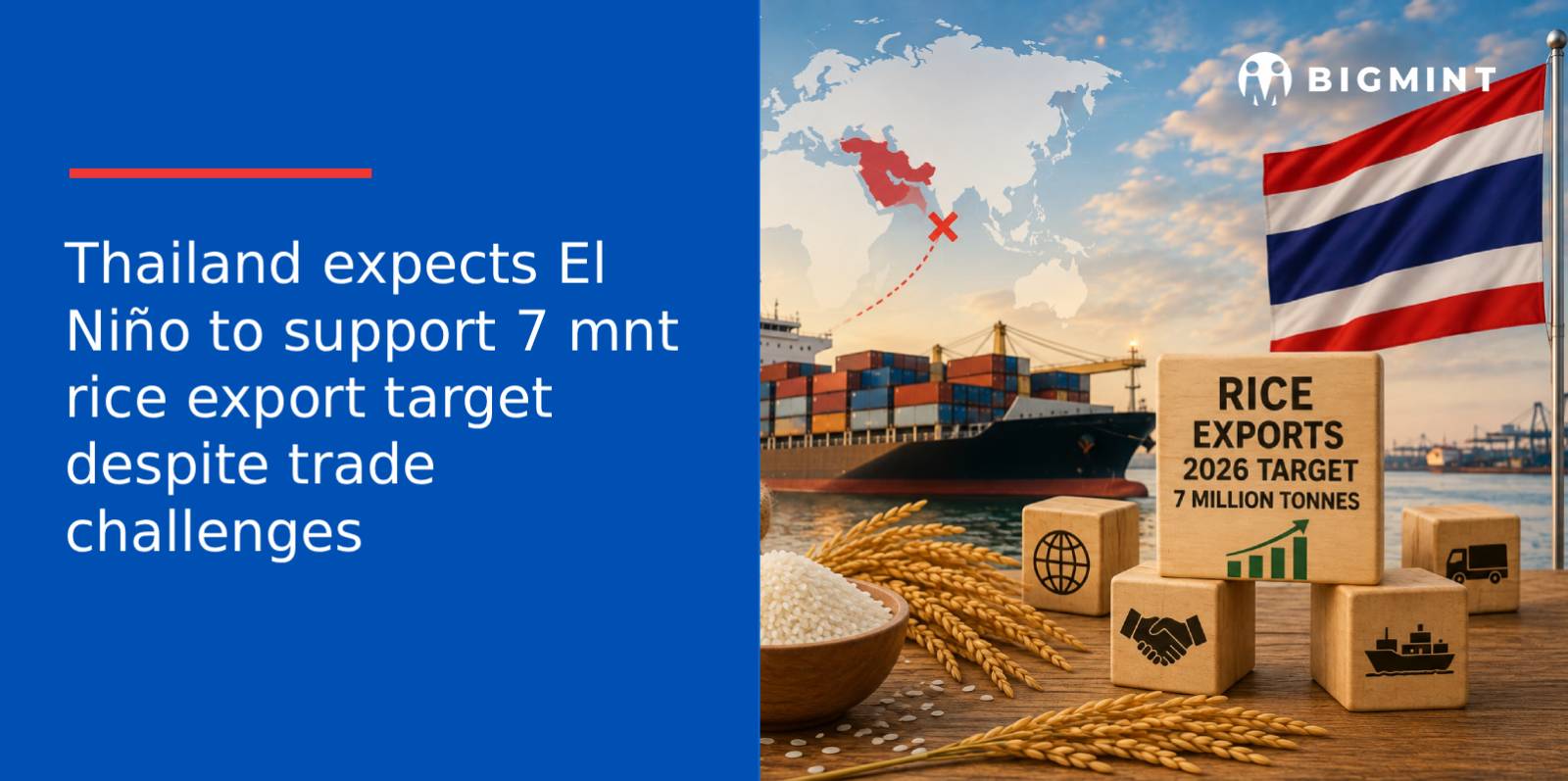
Thailand is expected to achieve its 7 million tonnes (mnt) rice export target in 2026 as the anticipated El Niño weather pattern may reduce rice production in competing exporting countries, according to the Thai Rice Exporters Association.
Chookiat Ophaswongse, honorary president of the association, said El Niño could adversely affect weather conditions in major rice-producing countries over the coming months, lowering yields and increasing demand for Thai rice in international markets.
He added that elevated fertiliser prices, driven by the conflict in the Middle East, could further reduce rice production as farmers cut fertiliser use.
Thailand maintains adequate rice supplies
Despite the possibility of El Niño affecting Thailand, Chookiat said the country has sufficient rice supplies to meet both domestic consumption and export demand. He also noted that export prices are likely to strengthen under tighter global supply conditions.
Thailand produces around 20 million tonnes of rice annually, while domestic consumption stands at approximately 11 million tonnes, leaving adequate volumes available for exports.
Middle East conflict disrupts Thai rice trade
The ongoing conflict in the Middle East has weighed on Thailand’s rice exports, particularly to Iraq. Thailand exported around 1 million tonnes of rice to Iraq in 2025, but shipments to the country have fallen to about 90,000 tonnes this year.
According to Chookiat, Iraq has increasingly sourced rice from suppliers such as Pakistan. While some Thai shipments continue to reach Iraq through Turkey, higher logistics costs have reduced competitiveness.
He warned that prolonged disruptions could lead Thailand to lose further market share in the Middle East, with buyers potentially switching permanently to alternative rice varieties.
Exports decline in H1, key markets show growth
According to Thailand’s Department of Foreign Trade, the country exported 3.28 mt of rice during the first half of 2026, down 18.2% y-o-y, while export value declined 20.5% to $1.91 billion.
White rice remained the largest export category at 1.51 mt, accounting for 46% of shipments and declining 20% from a year earlier. Thai jasmine rice exports reached 0.81 mt, representing 24.7% of total exports and falling 10%, while parboiled rice exports stood at 0.61 mt, down 19.7% y-o-y.
South Africa was Thailand’s largest export destination during the first half of the year with 500,000 t, followed by the United States (360,000 t), Malaysia (330,000 t), the Philippines (300,000 t) and China (160,000 t).
Chookiat attributed the decline in exports to China to buyers opting for lower-priced rice from Vietnam and Cambodia. However, he said export performance in South Africa, Malaysia and the Philippines showed encouraging signs.
Outlook
Thailand’s rice export prospects for the remainder of 2026 will depend on the balance between weather-driven supply risks and ongoing geopolitical challenges. While El Niño could tighten global rice supplies and support demand for Thai rice, disruptions to Middle East trade routes and competition from lower-priced exporters may continue to influence export performance.
Leave a Reply