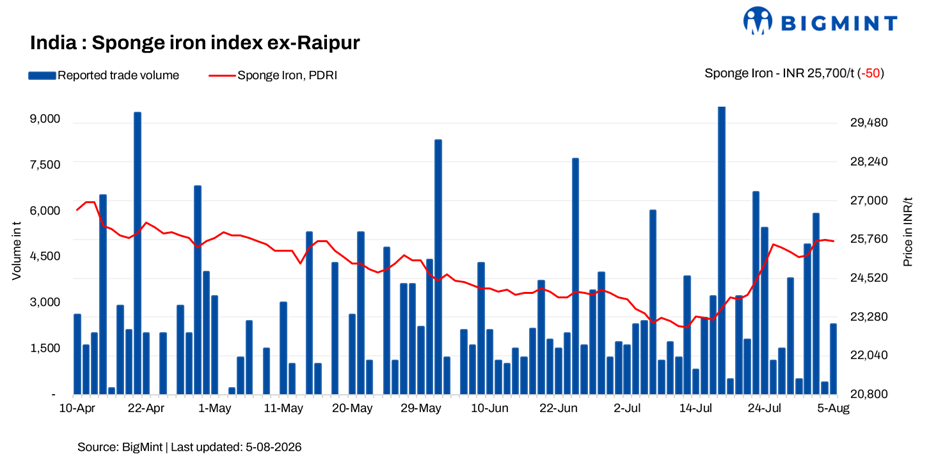
- Sponge iron prices decline INR 50-100/t amid weak buying interest
- Need-based procurement continues as downstream demand remains sluggish
The Indian sponge iron market remained under pressure today, with prices declining by INR 50-100/t across all major regions due to weak buying interest. In Raipur, sponge iron prices were assessed at around INR 23,700/t, down by nearly INR 50/t, as limited enquiries and subdued trading activity weighed on the market. Overall sentiment remained bearish, with buyers restricting purchases to immediate requirements rather than building inventories.
Demand conditions continued to remain weak as sluggish finished steel consumption discouraged bulk procurement of sponge iron. The ongoing monsoon has slowed infrastructure and construction activities across regions resulting in muted steel demand and lower raw material consumption. Market participants noted that enquiries remained limited throughout the day, while trading activity softened further due to cautious buying sentiment.
In the central region, sponge iron demand remained subdued as weak finished steel margins forced several rolling mills in Raipur and Raigarh to curtail or suspend rebar and structural steel production. At the same time, many induction furnace operators preferred selling billets directly in the merchant market instead of converting them into finished steel. The resulting billet oversupply weighed on billet prices and reduced sponge iron consumption, keeping procurement strictly need-based.
On the raw material front, manufacturers continued to face cost pressure as pellet prices remained elevated, while coal prices increased further amid tight availability. Higher input costs are squeezing sponge iron producers’ margins despite the weak selling environment. Trading momentum remained slow throughout the day, with BigMint recording around 10,000 t of PDRI deals, reflecting lower buyer participation and continued market caution.
Rationale
Prices have been derived based on transactions, offers, bids, and indicative price data sets. Transactions are considered as T1 and given a weightage of 50%, whereas other data sets are considered as T2 and given a weightage of the balance 50%.
Click here for detailed methodology


Leave a Reply