- Australian iron ore shipments rose supporting Capesize demand
- Weak Chinese steel demand continued to cap freight gains
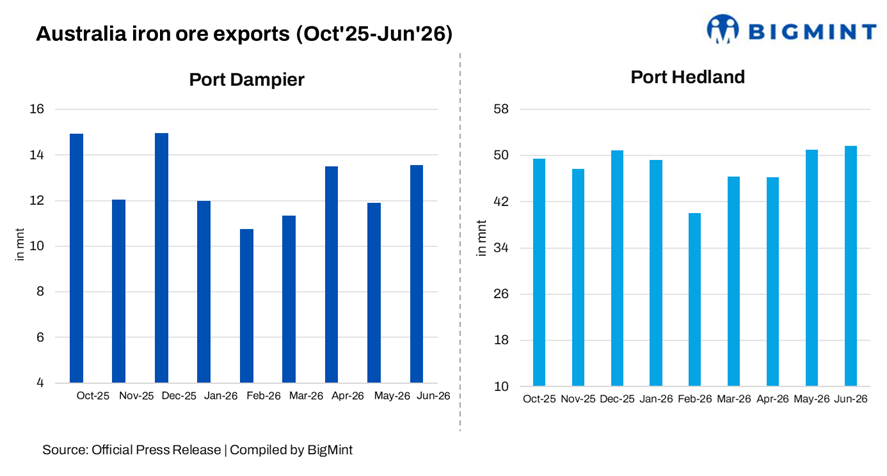
Australian iron ore shipments increased 3.7% m-o-m to 65.3 million tonnes (mnt) in June 2026, up from 62.9 mnt in May, driven by stronger export loadings from both Port Hedland and Port Dampier. The rise reflects stable production across the Pilbara and well-executed shipment programmes by major miners, reinforcing Australia’s position as a key supplier to China.
Higher export volumes supported Capesize vessel demand on the Australia-China trade lane by improving vessel utilisation and tonne-mile demand. The sharp recovery in Dampier cargoes further lifted overall Pilbara loading activity, complementing the already robust performance of Port Hedland.
Despite the improvement in export volumes, freight market sentiment remained measured. Seasonal weakness in Chinese steel demand, compressed mill margins, and elevated port-side iron ore inventories continued to weigh on fresh buying activity, limiting any significant upside in freight rates.
Port-wise iron ore shipments
- Port Hedland: Iron ore shipments from Port Hedland, the world’s largest bulk export hub, rose 1.3% m-o-m to 51.7 mnt in June from 51 mnt in May. Stable loading schedules from major miners, including BHP, Rio Tinto, and Fortescue, ensured consistent cargo availability, sustaining Capesize employment on the Australia–China route despite subdued downstream steel market conditions.
- Port Dampier: Shipments from Port Dampier climbed 13.9% m-o-m to 13.6 mnt in June from 11.9 mnt in May, recovering to a one-month high after softer exports in May. Improved loading schedules and stronger cargo availability from Pilbara producers lifted the port’s contribution to Australia’s overall iron ore exports, providing additional support to Capesize demand on the Australia-China route.
Outlook
Australian iron ore exports are expected to remain robust in the near term, supported by steady Pilbara production, disciplined shipment schedules, and resilient export demand from China. This should continue to provide a solid base for Capesize employment on the Australia-China route.
That said, a sustained recovery in freight rates will depend on stronger steel consumption in China and an improvement in mill profitability. Until these demand-side fundamentals strengthen, ample iron ore inventories at Chinese ports are likely to keep freight market gains in check, even as Australian export volumes remain healthy.

Leave a Reply