- Rs 13,805 crore PTA project cuts import dependence
- 16.35 mnt refinery throughput supports downstream growth
- Textiles, SAF investments expand industrial ecosystem
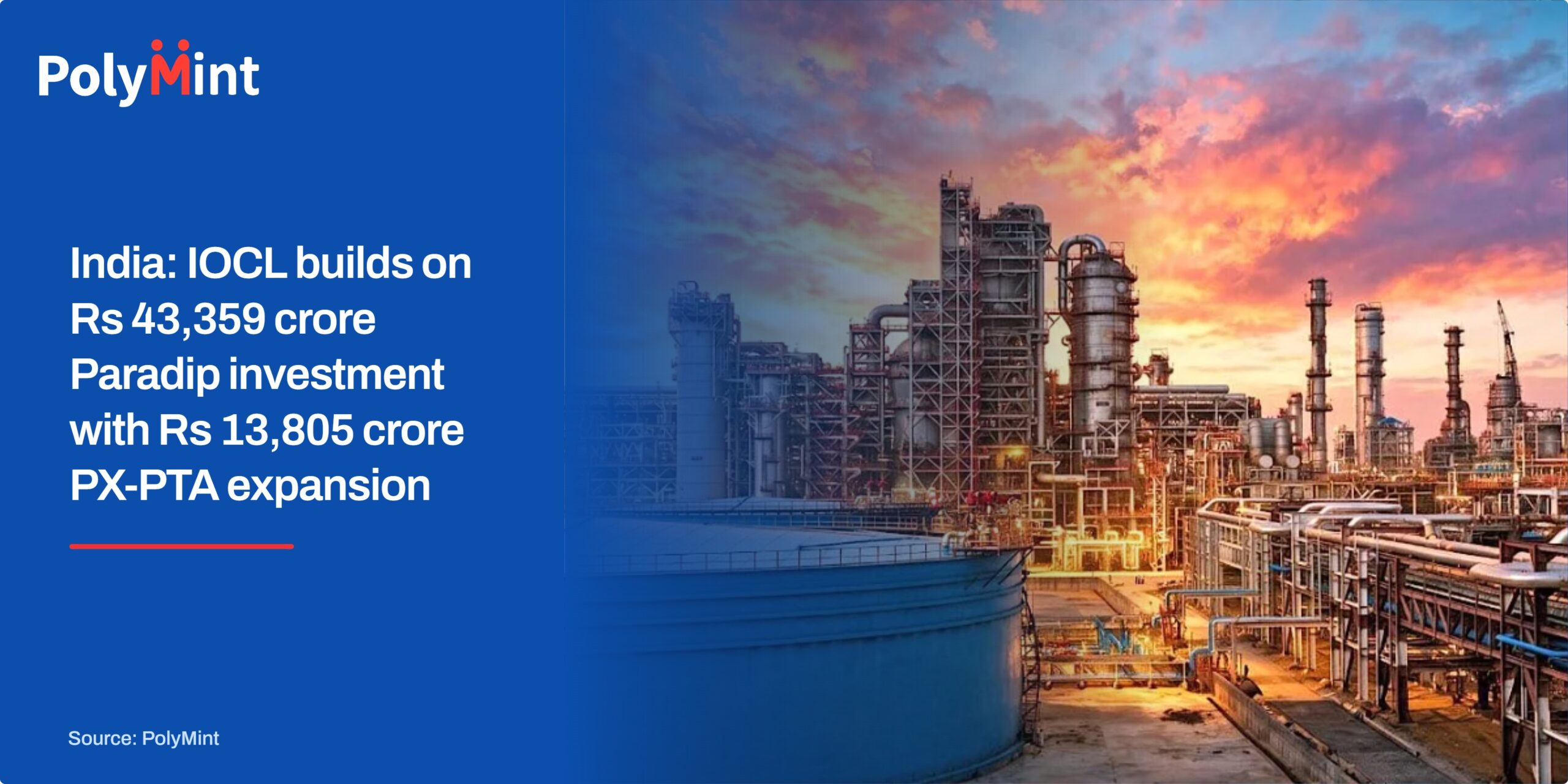
Indian Oil Corporation Ltd.’s (IOCL) cumulative investment of Rs 43,359 crore at Paradip marks a significant shift in India’s refining strategy from conventional fuel production towards integrated petrochemicals and downstream manufacturing. Beyond expanding refining capacity, the investments are strengthening domestic value addition, reducing import dependence on key petrochemical feedstocks and creating a platform for long-term industrial growth in eastern India.
The company’s integrated investment programme spans refining, petrochemicals, textiles and sustainable fuels, positioning Paradip as one of India’s largest integrated energy and petrochemical hubs. As domestic demand for polymers, polyester and specialty chemicals continues to grow, the project is expected to improve supply chain resilience while enhancing India’s manufacturing competitiveness.
Market context
IOCL has invested Rs 34,555 crore in the Paradip Refinery, Rs 3,150 crore in a polypropylene (PP) plant and Rs 5,654 crore in a mono ethylene glycol (MEG) facility. These investments have diversified the refinery’s product mix from transportation fuels towards higher-value petrochemical products, increasing overall value addition across the complex.
The refinery processed a record 16.35 million metric tonnes of crude during FY2025-26, reflecting improved operational efficiency and higher capacity utilisation. The commissioning of a standby Sulphur Recovery Unit-III and a new Hydrogen Generation Unit further strengthens operational reliability while supporting cleaner fuel production.
Supply analysis
The next phase of expansion focuses on increasing domestic petrochemical feedstock availability.
IOCL is investing an additional Rs 13,805 crore in the paraxylene-purified terephthalic acid (PX-PTA) project. The integrated complex includes a 1.2 million tonnes per annum PTA unit that is nearing completion. Once operational, the project is expected to reduce India’s dependence on imported PTA, a critical raw material used in polyester fibres, films and packaging materials.
The company has also announced a Rs 4,382 crore investment in a textile park at Bhadrak through a joint venture with MCPI Private Ltd. The project is intended to create an integrated polyester and textile manufacturing ecosystem linked directly to PTA production at Paradip, extending value addition beyond petrochemical manufacturing into downstream textiles.
In parallel, IOCL plans to invest Rs 1,064 crore in a hydroprocessed esters and fatty acids (HEFA)-based sustainable aviation fuel (SAF) project through a joint venture with M11 Energy Transition Pvt Ltd. The investment diversifies the company’s product portfolio while supporting India’s transition towards lower-carbon aviation fuels.
Demand analysis
India’s demand for petrochemicals continues to expand across packaging, automobiles, construction, healthcare, textiles and consumer goods. Rising domestic consumption has increased the need for additional local production capacity, particularly for feedstocks such as PTA that continue to rely on imports.
The Paradip expansion addresses this structural demand by integrating refining with petrochemical manufacturing, allowing greater conversion of crude oil into higher-value chemical products instead of transportation fuels alone. The strategy supports improving domestic self-sufficiency while enhancing margins through greater product diversification.
Trade flow analysis
Higher domestic production of PTA and other petrochemical intermediates may reduce India’s reliance on imported feedstocks over time while strengthening export opportunities for value-added petrochemical products.
Paradip’s coastal location also enhances logistics efficiency by providing direct access to imported crude oil as well as export markets for refined petroleum products and petrochemicals. The integrated manufacturing model is expected to improve supply chain efficiency for downstream industries located across eastern and southern India.
Key risks
Execution remains an important factor as large integrated petrochemical projects require timely commissioning and successful synchronisation across multiple production units.
Future profitability will also depend on crude oil prices, petrochemical spreads, domestic demand growth, and global polyester market dynamics. Any delays in downstream ecosystem development could postpone the full economic benefits expected from the integrated investment programme.
Market implications
The scale of investment is expected to encourage downstream industries including plastic processing, polyester manufacturing, packaging materials, specialty chemicals and textiles to establish manufacturing facilities around Paradip.
The refinery currently supports the livelihoods of more than 12,500 people across direct and indirect employment. During FY2025-26, the complex contributed over Rs 30,392 crore through taxes, duties and levies, reinforcing its importance to both the state and national economy.
The integrated investment strategy also aligns with India’s broader objective of increasing domestic manufacturing, improving value addition within the refining sector and reducing dependence on imported petrochemical feedstocks.
Outlook
Paradip is expected to play a larger role in India’s refining and petrochemical landscape as the upcoming PX-PTA, textile park and sustainable aviation fuel (SAF) projects are commissioned. The integrated investments are likely to strengthen domestic petrochemical production, support downstream manufacturing, and reduce dependence on imported feedstocks.
Reflecting the company’s long-term vision, Kausik Basu, Executive Director and Head of Paradip Refinery, said the continued investments reaffirm Indian Oil’s commitment to developing Paradip into a world-class integrated refinery and petrochemical hub that strengthens India’s energy security while promoting sustainable industrial growth.
Leave a Reply